
Pitru Paksha 2026 dates and the shraddh tithi calendar, day by day
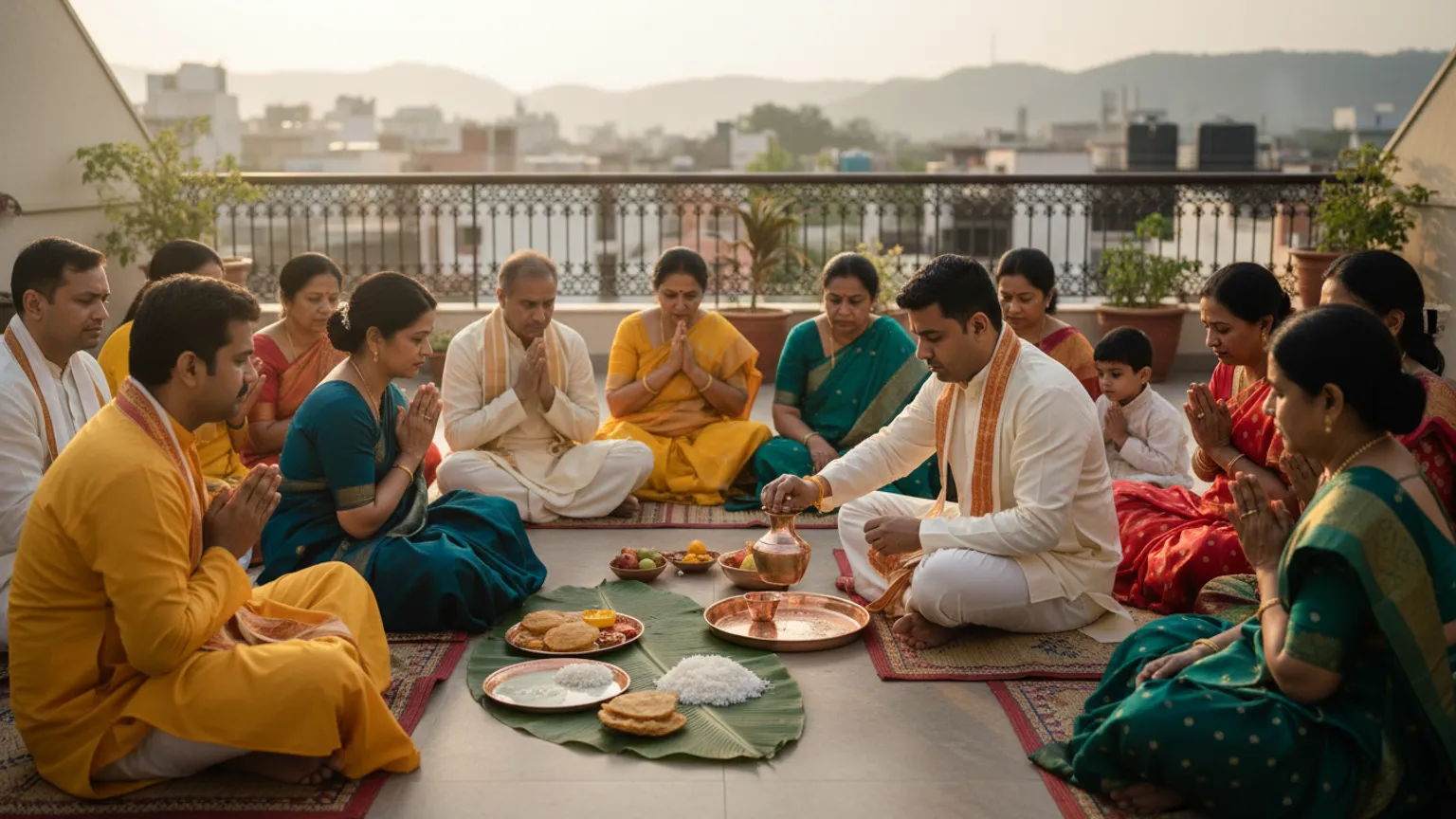
The first time the responsibility for our family shraddh landed on me, I got the date wrong by four days. My father was travelling, my koka's (grandfather's) shraddh had always "just happened" while I was a guest at it, and I assumed — the way most of us quietly assume — that it fell on the same September date every year. It does not. I called our family pandit to confirm the venue and he asked me, gently, "kis tithi ko gaye the woh?" — on which tithi did he pass? I didn't know. I had a calendar date in my head and no tithi, and the two are not the same thing.
That phone call taught me what Pitru Paksha actually asks of the person organising it. It is not a festival you decorate for or send invitations to. It is a fortnight in which each family observes its shraddh on the specific lunar tithi on which its ancestor departed — and the whole job of hosting it is, first, knowing which calendar day that tithi lands on this year, and then quietly getting the right people, the pandit, and the right food into the house on that one morning. This guide is the calendar I wish I'd had that year, plus how to turn it into a plan.
When is Pitru Paksha in 2026?
Pitru Paksha 2026 runs from Saturday, 26 September to Saturday, 10 October — the fortnight of Krishna Paksha in the month of Ashwin, ending on the new-moon day. It opens with the Purnima shraddh on 26 September and closes on Sarva Pitru Amavasya, also called Mahalaya Amavasya, on 10 October.
Here is the part that trips up almost everyone the first time: shraddh is performed on the tithi, not on a fixed English date. A tithi is a lunar day, and it begins and ends at an astronomical moment rather than at midnight — so the same tithi can shift by a day from one year to the next, and occasionally lands differently depending on your city. That is why your neighbour's shraddh and yours can fall on different mornings in the same fortnight. It is also why "it's around the same time as last year" is a trap. Get the tithi, then find the date.
The Pitru Paksha 2026 tithi calendar, day by day
This is the full mapping of shraddh tithi to calendar date for 2026. There are sixteen named shraddhas across fifteen calendar days — because this year Chaturthi and Panchami both fall on Wednesday, 30 September, so two tithis share one date.
| Shraddh tithi | Date (2026) | Day |
|---|---|---|
| Purnima shraddh | 26 September | Saturday |
| Pratipada | 27 September | Sunday |
| Dwitiya | 28 September | Monday |
| Tritiya | 29 September | Tuesday |
| Chaturthi | 30 September | Wednesday |
| Panchami | 30 September | Wednesday |
| Shashthi | 1 October | Thursday |
| Saptami | 2 October | Friday |
| Ashtami | 3 October | Saturday |
| Navami (Matru Navami) | 4 October | Sunday |
| Dashami | 5 October | Monday |
| Ekadashi | 6 October | Tuesday |
| Dwadashi | 7 October | Wednesday |
| Trayodashi | 8 October | Thursday |
| Chaturdashi | 9 October | Friday |
| Sarva Pitru Amavasya | 10 October | Saturday |
One honest caveat, and it matters more here than for any festive post: tithi start and end times vary by location, and panchangs can differ by a day for a tithi that changes hands near sunrise. Treat this table as your planning skeleton, and confirm your family's specific day against a local panchang or your pandit before you lock anything. Never take a blog's date — mine included — as the final word on a shraddh.
Which day is your family's day?
For most families, the shraddh is performed on the tithi on which the person passed away — the Krishna Paksha tithi of their death, mapped onto the fortnight above. So the single most useful thing you can do this week is find out that tithi, if you don't already know it. In my family it lived in exactly one place: an older relative's memory. If yours does too, ask now, not on the morning.
A few days carry a special meaning worth knowing:
| Day | Date (2026) | Traditionally for |
|---|---|---|
| Navami / Matru Navami | 4 October | The departed married women of the family — mothers, and by many traditions those who passed as married women |
| Chaturdashi | 9 October | Those who died an untimely or unnatural death, by accident or weapon |
| Sarva Pitru Amavasya | 10 October | All ancestors together — and the day to observe if you do not know the tithi, or missed the specific day |
That last row is the safety net, and it is a real one. If you genuinely cannot establish your family's tithi this year, or the exact day is impossible for the household to gather, Sarva Pitru Amavasya on 10 October is when shraddh can be offered for every ancestor at once. It is not a lesser option; for many families it is the main one.
Planning the shraddh bhoj
Once the date is fixed, the hosting begins, and it is quieter and smaller than any festival. There is no decor, no rangoli, no "invite." What there is: the pandit or the brahmins you will feed, the immediate family gathered, and a specific satvik meal cooked at home.
The food is the heart of it, and it is deliberately simple and pure — no onion, no garlic, cooked with care. What goes on the leaf varies by region and family, but the common shape is:
- Kheer (rice pudding), which is close to universal for shraddh
- Puri and a simple sabzi, often a seasonal one like lauki or a chana dal preparation
- Rice and a plain dal
- The departed's favourite dish, if the family remembers one — this is a genuinely moving part of it, and worth asking an elder about
- The panch bali portions set aside before anyone eats: small offerings for the cow, the crow, the dog, the deva and the ants
On quantities, don't inflate it. A shraddh bhoj is not a party buffet; it is a measured meal for the brahmins and the family present. The arithmetic of turning a headcount into real cooking amounts — per-person rice, dal, puri — is the same whether the meal is joyful or solemn, and I've laid it out in the prasad and catering math guide. Use the method, scale it down, and err toward simplicity. Excess is the opposite of the spirit of the day.
Getting the right people there on the right morning
Here is where the "host" problem in Pitru Paksha actually lives: it is a coordination problem dressed in solemn clothes. The shraddh must happen on one specific tithi. The pandit has fifteen other families that fortnight. Your uncle in another city may want to be present. And nobody can attend a morning they were never clearly told about — a soft "iss baar shraddh hai na" is not a date.
So the messages you send are short, plain and phone-first for elders. No festivity, no emojis, just clarity. Copy these and edit the names, the tithi and the timing.
Template 1 — confirming the tithi with an elder who knows (Hindi)
प्रणाम काका। इस बार पितृ पक्ष का श्राद्ध किस तिथि को करना है, ज़रा बता दीजिए — मुझे पंडित जी से समय तय करना है और सबको बताना है। तिथि पता हो तो अंग्रेज़ी तारीख भी मैं देख लूँगा।
Template 2 — informing the close family of the fixed day (Hinglish)
Pranaam. Is baar ghar par [koka] ji ka shraddh [tithi] tithi ko hai — English date [date], [day] subah. Pandit ji [time] baje aayenge. Aap sab subah tak pahunch jaayein, yahi vinti hai. Koi doubt ho toh phone kar lena.
Template 3 — the quiet ask to an outstation relative (Hinglish)
[Name] bhaiya, is saal shraddh [English date] ko rakh rahe hain, [day] ki subah. Aap aa paayenge toh bahut accha lagega — bas bata dena taaki hisaab se plan kar lein. Nahi aa paayein toh koi baat nahi, samajh sakte hain.
That third one carries the right tone. Pitru Paksha attendance is not an RSVP you chase the way you'd chase a birthday. You inform clearly, you ask once, and you leave room — because people's ability to travel for a weekday-morning shraddh is genuinely constrained, and pressure has no place in it. When you do need a gentle, respectful follow-up with an elder, the phone-first approach I wrote about in following up with elders is exactly the register to use here — warm, unhurried, never a group blast.
The week-before checklist
Run this once the tithi is confirmed. It is short by design; a shraddh does not need a project plan, only a few things not forgotten.
- Tithi confirmed with an elder and cross-checked against a local panchang
- English date and day fixed, written down, not held in memory
- Pandit booked for that specific morning, with the time confirmed
- Close family informed clearly — date, day, time — not just "shraddh hai"
- Outstation relatives given the date early so travel is possible
- Menu decided — kheer, puri, the plain satvik dishes, and the favourite dish if known
- Cook or kitchen help arranged if the household can't manage the morning alone
- Brahmin bhoj count settled with the pandit — how many will be fed
- A quiet space prepared at home for the ritual, away from the day's noise
When you don't need to organise anything at all
The honest part. For most families, a shraddh is small — the pandit, your parents, you, maybe a sibling. There is nothing to coordinate beyond a phone call and a morning's cooking, and reaching for any tool would be slightly disrespectful to how intimate the day is meant to be. Keep it in a phone call, keep it simple. That is the correct way to host it.
The one situation that turns into genuine logistics is the large, scattered family — an extended clan across several cities trying to align on a date, travel and stay. That is the coordination problem we built Inyeet to hold: one clear message per person over your own WhatsApp, and a running sense of who is actually able to come. But I'd say it plainly — that belongs to the larger, multi-family kind of gathering, not to the quiet home shraddh a single call arranges. If your Pitru Paksha is the small kind, use nothing. Let it be small.
FAQ
What are the Pitru Paksha 2026 dates?
Pitru Paksha 2026 runs from 26 September to 10 October. It begins with the Purnima shraddh on 26 September and ends on Sarva Pitru Amavasya (Mahalaya) on 10 October. Individual families observe their shraddh on the specific tithi within this fortnight matching the day their ancestor passed away, so confirm your family's tithi against a local panchang.
What if I don't know my family's shraddh tithi?
If the tithi is genuinely unknown, or the exact day is impossible for the household, shraddh can be performed for all ancestors together on Sarva Pitru Amavasya — 10 October in 2026. This is a widely followed and completely valid option, not a compromise. Where possible, though, ask the oldest member of the family first; the tithi often survives in one person's memory.
What food is prepared for a shraddh bhoj?
A shraddh meal is satvik and simple, cooked without onion or garlic. Kheer is close to universal, alongside puri, a plain sabzi, rice and dal, and — where the family remembers it — the departed's favourite dish. Small panch bali portions are set aside for the cow, crow, dog, deva and ants before the meal is served. Keep quantities measured; excess runs against the spirit of the day.
The one thing to take away: Pitru Paksha is organised around a tithi, not a fixed date. Find your family's tithi first, map it to the 2026 calendar above, confirm it with your pandit, and everything else — the pandit's time, the family's morning, the simple meal — follows from that one settled day.
Related reading
Shraddh bhoj: how many to invite and what to serve at the meal
A shraddh bhoj is a measured satvik meal, not a party. How many brahmins and family to invite, the traditional menu, real quantities, and copy-paste messages.
Can you host a party, griha pravesh or wedding during Pitru Paksha?
Pitru Paksha is traditionally no time for shubh functions. A host's honest guide to griha pravesh, weddings and parties — should you hold, move, or go ahead?
Navratri 2026 dates and the nine-day plan for a home host
Navratri 2026 runs 11 to 20 October: the full nine-day tithi calendar, how hosting differs by tradition, and where guest-list pressure actually lands.