
Sarva Pitru Amavasya: the last day, and the meal that closes the fortnight
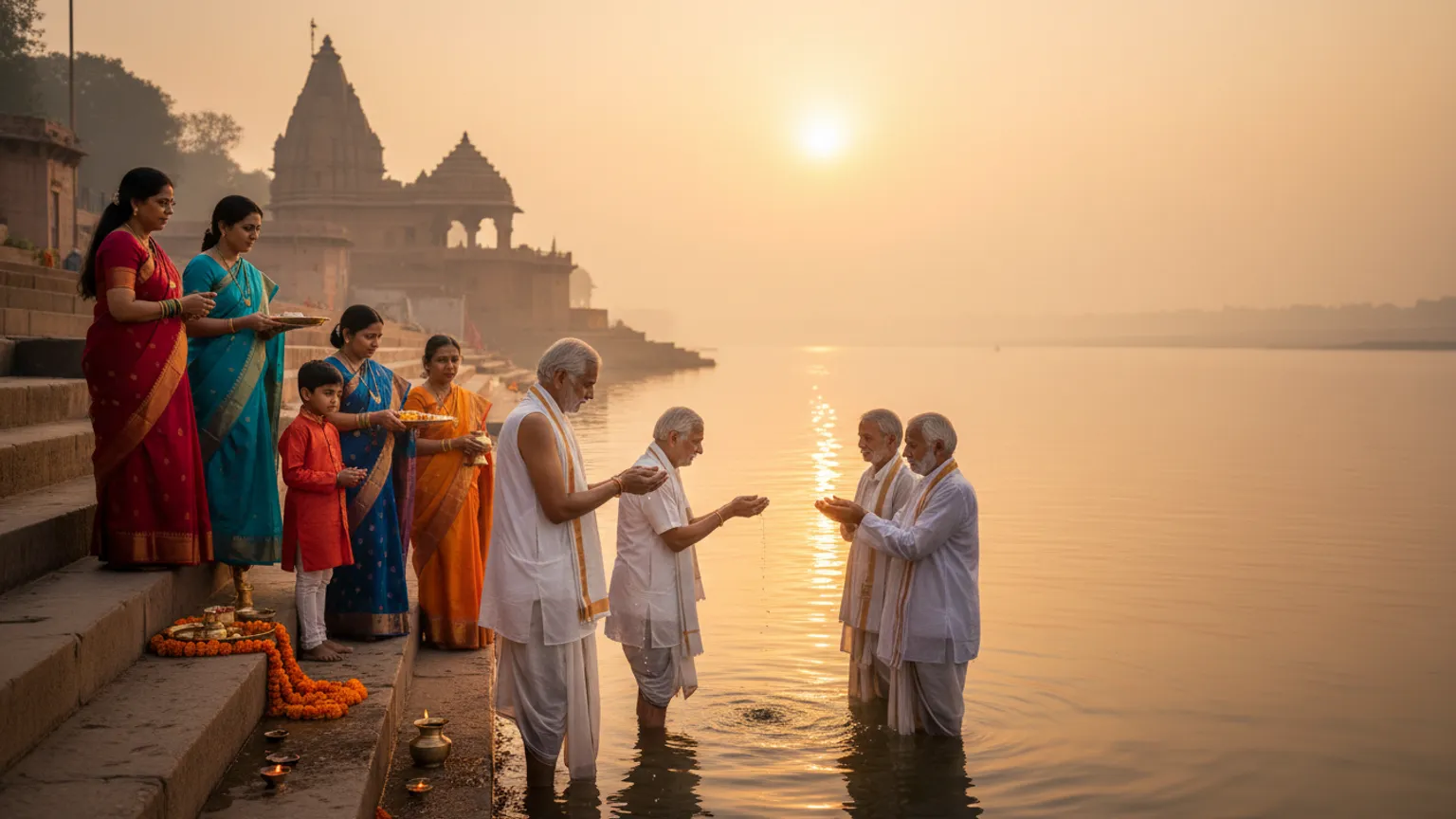
The year my dadi's tithi finally went quiet — the one relative who held it in her memory had passed, and nobody left could say for certain which day of the fortnight was hers — I panicked in the wrong direction. I started trying to reconstruct a date from old photographs and a hospital discharge slip, as if precision were the point. My father watched me for a while and then said the thing that dissolved the whole problem: "Sarva Pitru Amavasya ko kar lenge. Woh din sabke liye hai." We'll do it on the last day. That day belongs to everyone.
I am writing this for the version of you a few weeks out from Sarva Pitru Amavasya, which falls on Saturday, 10 October 2026 — the new-moon day that closes Pitru Paksha. Maybe you know your family's tithi and this is just the fortnight's end for you. But if you are the one quietly worried that you don't know it, or that the exact day is impossible for your scattered family to gather on, this last day is the reason you can stop worrying. It is the built-in safety net, and it is also, for many families, the main event.
The day that belongs to everyone
Through Pitru Paksha, each family performs its shraddh on the specific lunar tithi on which its ancestor departed — I wrote the full tithi calendar and how badly I got mine wrong the first time if you need to map yours. That per-family tithi is what makes the fortnight feel like a coordination puzzle: your day and your neighbour's day are different mornings, and both shift year to year.
Sarva Pitru Amavasya is the one day that escapes all of that. Sarva means all. It is the day shraddh and tarpan can be offered to every ancestor at once — the known and the unknown, the ones whose tithi survives in someone's memory and the ones whose day was lost a generation ago. Traditionally it holds three kinds of people:
| The last day is for | When it applies |
|---|---|
| Ancestors whose tithi you genuinely don't know | The memory is gone, or was never passed down |
| The specific day you had to miss | Travel, illness, or the household simply couldn't gather |
| All the pitru together, in one observance | Many families choose this over separate tithis by design |
That middle-generation loss — a tithi nobody wrote down — is more common than anyone admits at the time. Sarva Pitru Amavasya exists precisely so that it is not a failure. It is not a lesser, consolation observance either; for a great many households it is simply the day they gather, every year, and the individual tithis are left to those who keep them.
Why the last day becomes the family's gathering day
Here is the part that turns this from a ritual note into a hosting one. Because Amavasya is fixed and universal, it is the only day in the whole fortnight a large, scattered family can actually align on. An individual tithi asks four cousins in three cities to take a weekday morning off on a date that means nothing to their calendars. The last day asks them to gather on a single, known Saturday that everyone can see coming a month away.
So the last day quietly does something the earlier days can't: it pulls the clan into one room. That year my dadi's tithi went quiet, we ended up with more people at the Amavasya tarpan than had come to any single-tithi shraddh in a decade — an uncle from Pune, my cousins from Delhi, my father's sister who had not been able to travel for the specific days in years. The unknown tithi, which had felt like a loss, became the reason the family assembled.
And that is the host's real job on this day. Not the ritual — the pandit carries that. The job is getting a spread-out family onto one morning without it dissolving into a dozen half-answered WhatsApp messages the night before.
Getting a scattered family onto one morning
The register here is inform, not invite — plainly, early, phone-first for elders, no festivity and no emojis. What the last day needs that a single-tithi shraddh doesn't is a little more lead time, because people are travelling for it. Send the date now, in September, not in the first week of October.
Copy these and edit the names, the place and the time.
Template 1 — informing the wider family (Hinglish)
Pranaam. Is baar Sarva Pitru Amavasya — Saturday, 10 October — ko ghar par sabhi purvajon ka shraddh aur tarpan kar rahe hain. Panditji subah [time] baje aayenge, bhoj dopahar mein. Jo aa sakein, subah tak pahunch jaayein. Date abhi bata raha hoon taaki aap travel plan kar lein. Koi doubt ho toh phone kar lena.
Template 2 — the gentle ask to an outstation elder (Hindi)
प्रणाम बुआजी। इस बार दस अक्टूबर, सर्व पितृ अमावस्या को घर पर सबके लिए श्राद्ध रख रहे हैं। आप आ पाएँ तो बहुत अच्छा लगेगा — बस बता दीजिए ताकि उसी हिसाब से इंतज़ाम कर लें। न आ पाएँ तो कोई बात नहीं, समझ सकते हैं।
That second one carries the right tone. This is not a birthday RSVP you chase; you inform once, you ask once, and you leave room, because a weekend-morning journey across states is genuinely hard for older relatives. When someone goes quiet and you need to confirm gently, the warm, one-at-a-time, phone-first approach to following up with elders is exactly the register — a call, never a group blast, never pressure.
The meal that closes the fortnight
There is a particular quality to the meal on the last day. Through the fortnight the household has been observing, restraining, keeping things pure and small. Amavasya's bhoj is the one that closes all of it — the final tarpan offered, the panch bali set aside, the brahmins fed, and then the family eating together in a way that feels less like an obligation discharged and more like a fortnight gently laid down.
The food itself follows the same satvik shape as any shraddh — kheer, puri, a plain seasonal sabzi, rice and dal, cooked without onion or garlic — and I've laid out the who-to-invite and real cooking quantities in the shraddh bhoj guide. The one difference on the last day is scale: because the wider family often gathers, this can be the largest of the fortnight's meals. Use the quantity method, count the actual heads coming, and still resist the urge to make it a buffet. A complete, measured plate for a full room is the goal — abundance for its own sake runs against the day.
A short list for the host, once the count is settled:
- Date fixed and sent early — Saturday, 10 October — so outstation family can travel
- Pandit booked for the morning, arrival time confirmed
- Brahmin count settled with the pandit; bhoj timed around the tarpan
- Menu decided — kheer, puri, the plain satvik dishes; the departed's favourite dish if the family remembers it
- No-onion-no-garlic briefed to everyone in the kitchen
- A real headcount of who is actually coming, not a guess held in your head
That last line is the one that slips. When it is your parents and one pandit, the count lives easily in a phone call. When it is an extended family converging from several cities on the one day they all can, holding who-is-actually-coming across four chat windows is the part that unravels the night before. That specific many-household problem — one clear message per person, a running sense of who can make it — is the kind of gathering we built Inyeet to hold. For the small home observance, it is overkill, and I'd say so plainly.
When the last day is quiet
Because most Sarva Pitru Amavasya observances are small. If yours is your parents, you, and the pandit on a familiar Saturday morning, there is nothing to coordinate and nothing to reach for. A call to the pandit, a call to a sibling, a quiet kitchen — that is how to host it, and reaching for a tool would be slightly out of place in how intimate the morning is meant to be.
The last day only becomes logistics when the unknown tithi, or simple habit, turns it into the family's gathering day — the one morning a scattered clan actually assembles. If that is your Amavasya this year, send the date now while October is still a month away. And when the tarpan is done and the room is full and the fortnight is finally set down, you'll understand why my father said it so simply: the last day belongs to everyone.
Related reading
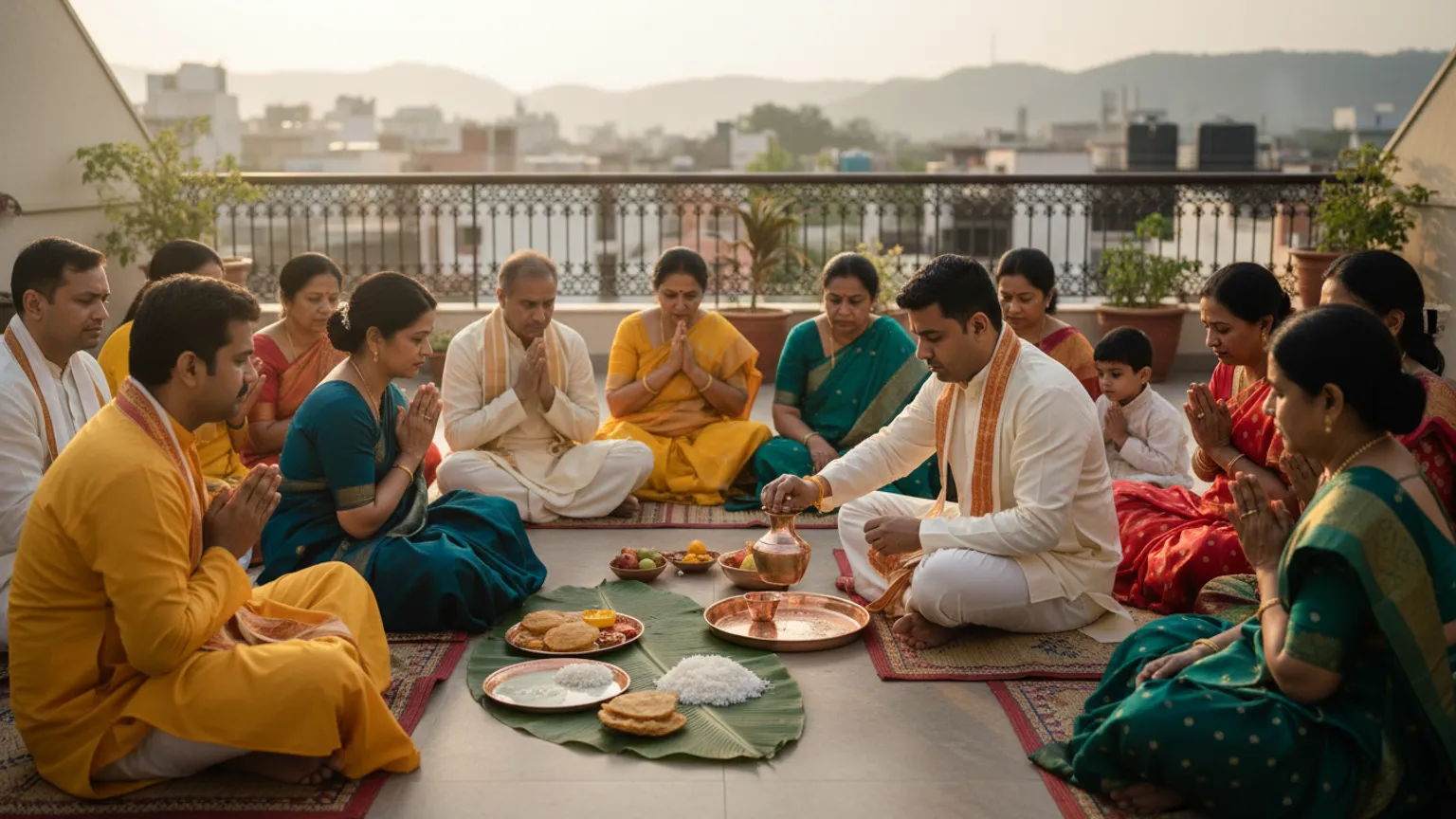
Pitru Paksha 2026 dates and the shraddh tithi calendar, day by day
Pitru Paksha 2026 runs 26 September to 10 October. The full shraddh tithi calendar day by day, plus how to find your family's tithi and plan the bhoj.
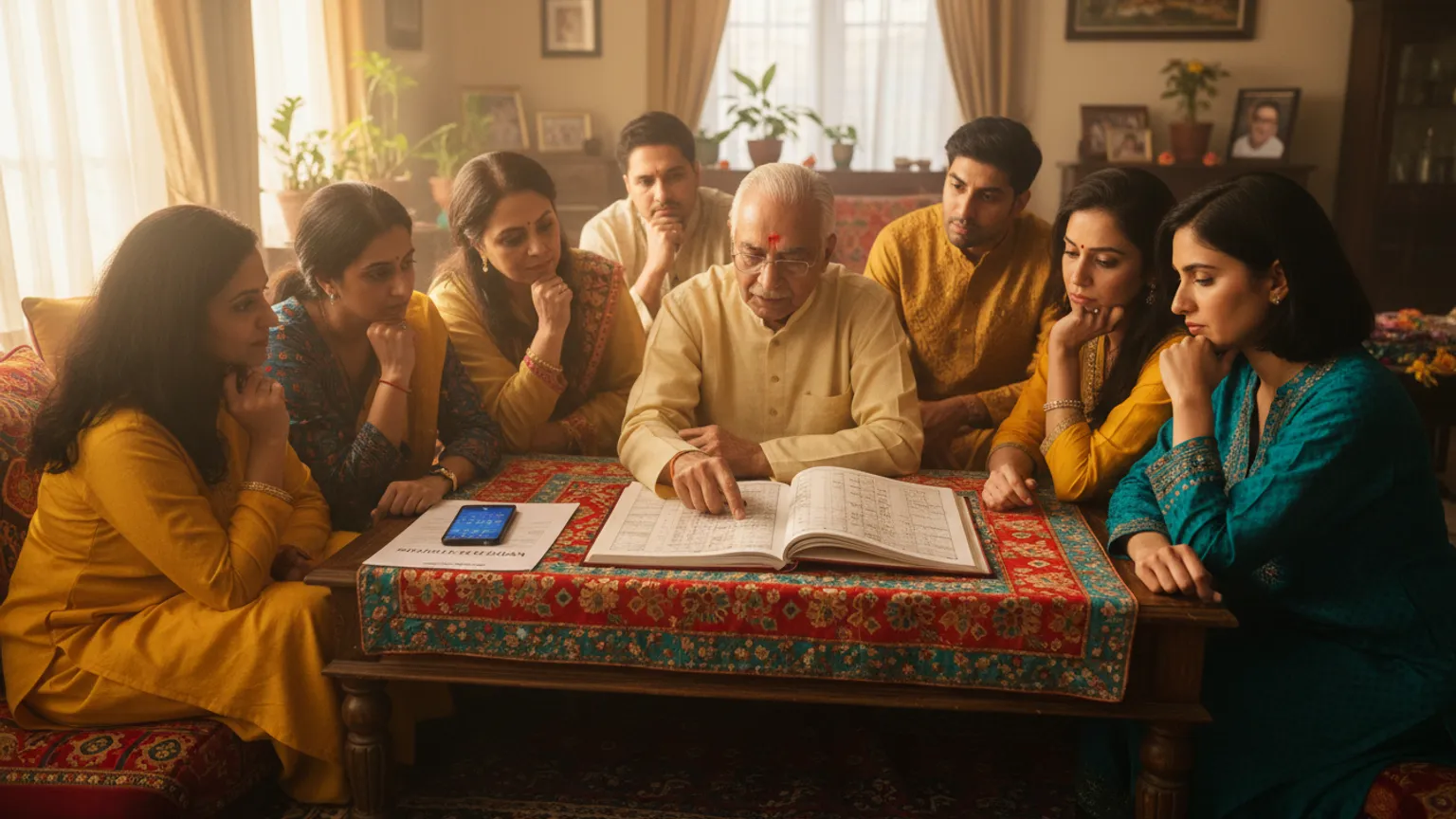
Can you host a party, griha pravesh or wedding during Pitru Paksha?
Pitru Paksha is traditionally no time for shubh functions. A host's honest guide to griha pravesh, weddings and parties — should you hold, move, or go ahead?
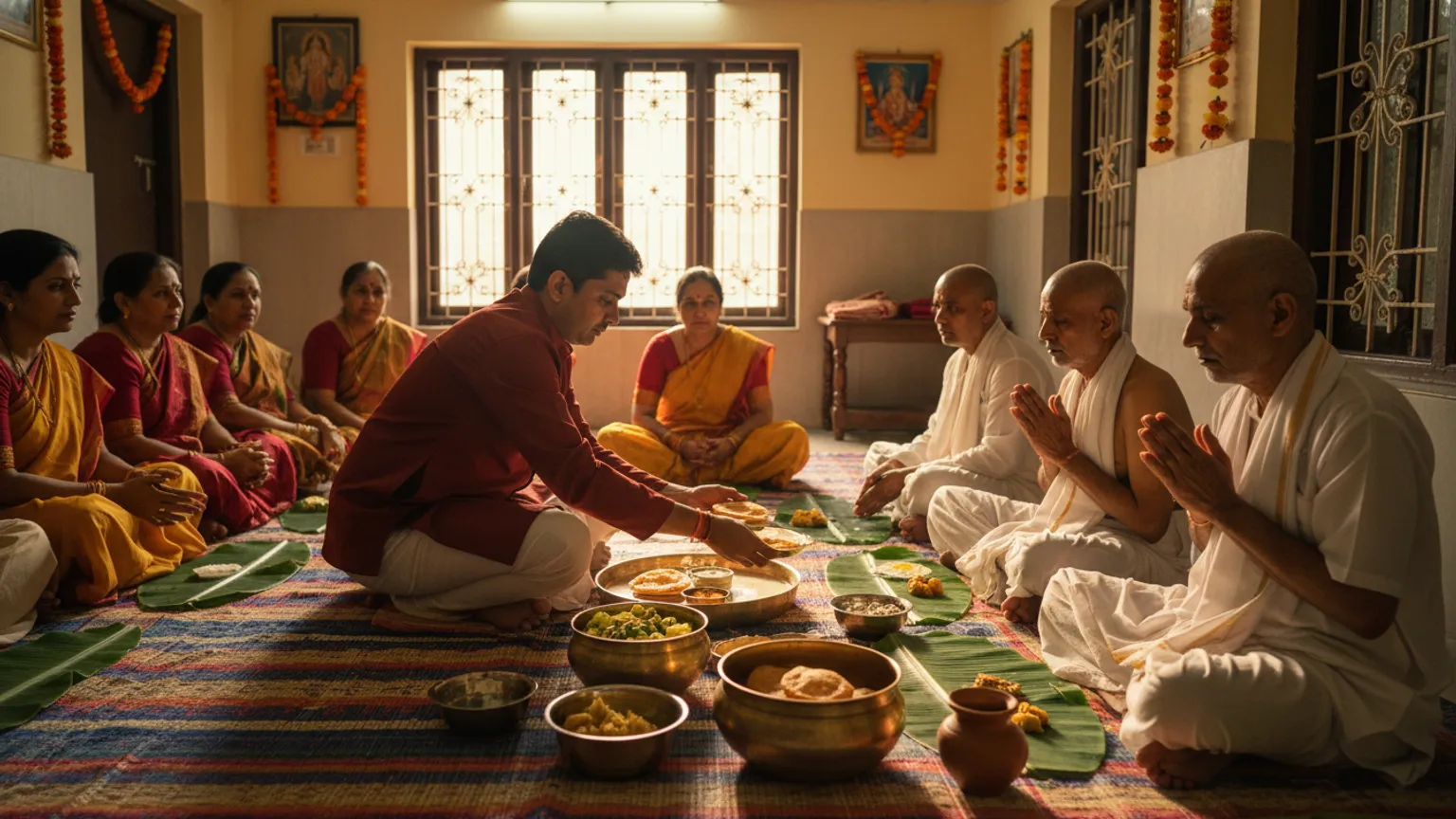
Shraddh bhoj: how many to invite and what to serve at the meal
A shraddh bhoj is a measured satvik meal, not a party. How many brahmins and family to invite, the traditional menu, real quantities, and copy-paste messages.