
Following up with elders: phone-first etiquette in a link-first world
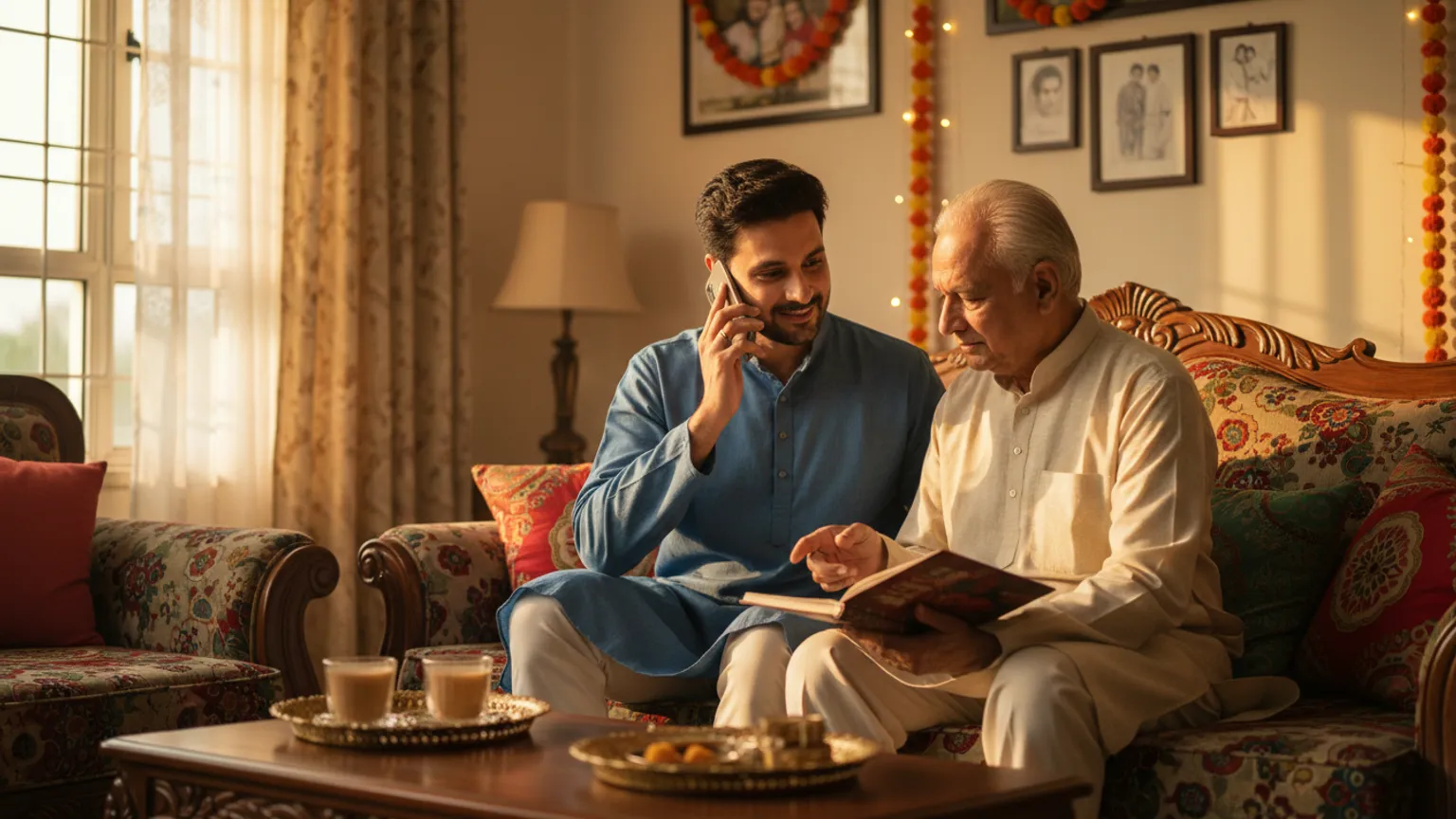
The first time I sent my Nanaji an invitation link, I felt very modern and very stupid at the same time. It was for a small puja at our place. I had this neat little card with a tap-to-confirm button, forwarded it on WhatsApp with a proud "Nanaji, aap zaroor aaiyega," and then waited. And waited. Two days later my mother called me, half-laughing: "Nanaji ne poocha, yeh neela wala shabd kya hai? Dabau toh kuch nahi hota." That blue word — the link — did nothing when he pressed it, because he was pressing the text, not tapping it, and honestly why should he know the difference.
I had done the thing so many of us do now. I built a beautiful digital front door and then acted surprised when the people who raised me couldn't find the handle. The lesson stuck: for a whole category of your guest list, the link is not the invitation. The phone call is. Treating the two the same is how you accidentally make the elders you most want there feel like an afterthought.
So this is the piece I wish someone had handed me — how to invite, follow up with, and actually count elders in a world that has quietly decided everyone RSVPs by tapping a button. The fix isn't to drag them onto your system. It's to meet them on the phone, where they've been the whole time.
Why the link fails elders (and why that's not their fault)
Let me be clear about something, because it matters for your tone: an elder not replying to your link is not an elder being difficult, forgetful, or "bad with phones." The link fails for reasons that are completely rational from where they sit.
A tap-to-confirm button assumes you trust the sender, understand what "RSVP" means, believe pressing something won't break anything or cost money, and accept that a machine's record counts as a real answer to a real person. For a lot of our parents and grandparents, the last assumption is the deepest one that fails. To them, telling a phone "yes" isn't the same as telling you yes. Attendance at a family function is a relationship, not a checkbox — and it gets confirmed the way relationships do: voice to voice.
Once I understood that, I stopped seeing the phone call as extra work for the "non-tech" guests. It's not a workaround. For elders, the call is the correct channel, the same way the link is correct for my cousins in Bangalore. Different guests, different doors.
Sort your elders before you dial
Not every older guest is the same, and treating them identically is the second mistake I made. Some are on the family WhatsApp group all day forwarding good-morning flowers; some have never opened a chat in their life. Before a single call, I now sort the older half of my list into three rough buckets, because each needs a different approach.
| Elder type | How they actually engage | Right channel | Follow-up rhythm |
|---|---|---|---|
| The phone-only elder (no smartphone, or won't use it) | Voice calls only; a link is invisible to them | You call, personally | First call early, one warm reminder 3–4 days before |
| The WhatsApp-watcher (reads messages, never replies) | Sees everything, taps nothing | Send the card, then call to confirm | Call to close the loop; don't wait for a tap |
| The tech-helped elder (a child/grandchild manages their phone) | Replies through a helper | Message the helper, call the elder for warmth | Coordinate via the helper, confirm by voice |
The point of the table isn't the boxes — it's that you decide the channel before you reach out, so you're not sitting there refreshing a dashboard waiting for a reply that was never coming. If Dadaji is a phone-only elder, his "reply" was always going to be a call. Put it in your plan as a call, and it stops feeling like a pending item.
The two-step invitation elders actually expect
Here is a piece of etiquette that digital invites quietly erased, and that elders still feel the absence of: the invitation to an elder is traditionally two moments, not one.
First, the news — a warm call to say "we're having a function, and I want you there." Then, closer to the date, the confirmation — "so it's set, you're coming, let me arrange things." Younger guests collapse both into a single link. Elders notice when you skip the first one. A card that arrives cold, with no preceding "beta, khushkhabri hai" call, lands as oddly transactional to someone who expected to hear your voice first.
So for the elders who matter most — grandparents, your parents' siblings, the family priest — I make the first contact a call, not a card. The card follows after, with the address and time. But the human moment comes first. It costs three minutes and it's the difference between an elder feeling honoured and one feeling processed.
What to actually say on the call
The call itself trips people up, especially younger hosts calling much older relatives. You want to be warm, brief, and to leave with a real number without it feeling like an interrogation. Here's the shape I use.
The first invitation call (warm, unhurried):
"Namaste [Nanaji/Chachaji], main [name]. Sab theek? … Ek khushi ki baat batani thi — [date] ko humare yahaan [function] rakha hai, aur aapke bina toh baat hi nahi banti. Aap zaroor aaiye. Main saari details aur address bhej dunga/dungi, par pehle aapse baat karni thi."
Notice what it does not do: it doesn't demand a headcount in the first breath. You invite, you make them feel wanted, and you signal that details will follow. The number comes on the second call.
The confirmation call (a few days before, gently closing the loop):
"[Chachaji], bas confirm karne ke liye phone kiya — aap aur [Chachiji] aa rahe hain na [date] ko? … Bahut badhiya. Aap dono ke liye gaadi ya koi aur intezaam chahiye toh bata dijiyega, main dekh lunga/lungi."
That "gaadi ka intezaam" line does double duty: it's genuinely kind, and it's the most natural way on earth to extract exactly who and how many are coming, because you're now solving their logistics, not filling your spreadsheet.
When the elder is tech-helped: message the helper, honour the elder
A huge chunk of elders today reply through a middle person — a son who manages Papaji's phone, a granddaughter who reads Bua's WhatsApp aloud. This is where a short, respectful message to the helper saves everyone time. Send it to the helper, but let the warmth still flow to the elder.
To the tech-helper (Hinglish):
"Hi [name], [function] [date] ko rakha hai. [Elder]ji ko main alag se call kar raha/rahi hoon, par aapse ek chhoti help — unke aane ka aur kitne log honge, woh aap confirm kara doge toh count set ho jaayega. Address aur card yeh raha: [link]. Thank you!"
Then still call the elder directly, even if the helper handles the logistics. The helper gives you the number; the call gives the elder the respect. Don't let the convenience of the middle person turn into the elder never hearing from you.
Following up without becoming a nuisance
Follow-up is where respect is won or lost. With elders, the failure mode isn't under-contacting — it's the tone of the contact. A blunt "aapne abhi tak bataya nahi" (you still haven't told me) reads as scolding to someone twice your age. Never chase an elder the way you'd nudge a college friend.
My rules, learned the slightly hard way:
- One reminder, maximum, and always a call — never a "seen?" text. If they've gone quiet, a warm "bas yaad dilane ke liye phone kiya" call closes it. A second reminder starts to feel like pressure on someone who deserves patience.
- Frame every follow-up as your logistics, not their delay. "Main khaana final kar raha hoon, isliye pooch raha tha" puts the burden on you, where it belongs, not on them.
- Route the reminder through the right person. If calling your grand-aunt directly feels awkward given the age gap, ask your mother or father to make that call. In many families, elder-to-elder or a specific relationship is simply the correct channel, and forcing a young voice into it can feel off.
- Accept the graceful non-answer. "Dekhte hain beta, tabiyat theek rahi toh zaroor" from an eighty-year-old is not a maybe to convert — it's love with a health caveat. Mark it kindly and move on. I unpack that whole vocabulary of soft replies in the 'dekhte hain' decoder, but with elders especially, the soft answer usually is the answer.
Count them by hand, in a line of their own
Here's the practical bit that saves your final headcount from chaos: elders confirmed by phone must be written down by you, immediately, in a place that doesn't depend on them ever touching your system. Keep a separate handwritten or note-app line — "Phone-confirmed: Nanaji + Naniji (2), Sharma uncle + family (4)…" — and fold that number into your total yourself.
This is also the honest limitation of every RSVP app, including the one I'm building. A dashboard can only count the people who interact with it. The elders who confirm by voice live slightly outside it, and pretending otherwise is how hosts end up short four chairs at the front row — which, at an Indian function, are exactly the chairs the elders sit in. If you want the mechanics of a reply-by date around all this, I covered it in how to set an RSVP deadline without sounding rude; the short version for elders is that the deadline is yours to track, never theirs to meet.
A quick checklist before your next function
- Split your older guests into phone-only, WhatsApp-watcher, and tech-helped.
- Make the first contact a warm call for the elders who matter most — news first, card later.
- Use the confirmation call to solve their logistics (gaadi, timing) and get the number naturally.
- For tech-helped elders, message the helper and call the elder.
- One gentle reminder only, framed as your logistics, routed through the right relationship.
- Write every phone-confirmed elder into a separate line and add it to your total by hand.
The takeaway
The link-first world is convenient, and for half your guest list it's the right tool. But building a house of buttons and expecting your grandparents to move in was never realistic, and never their failing. Elders reply the way they've always replied — with a voice, to a voice — and the most modern thing you can do is respect that instead of overriding it.
Call first. Confirm gently. Count them by hand. If a dashboard helps you keep the tapped confirmations and the phone-confirmed elders in one honest total, that's the quiet problem Inyeet is trying to solve — but the calls are yours to make, and always should be. Do that, and the front row stays full of exactly the people it's meant for. The Android app that holds that one honest total is free to use.
Related reading

When guests bring extra people: preventing the +4 surprise politely
The 'haan aa rahe hain' that quietly becomes six people. How to ask headcount without sounding stingy — with WhatsApp scripts, a table and a checklist.
How to set an RSVP deadline without sounding rude
A deadline feels pushy — until you anchor it to a real reason. Here's how to pick the date, phrase it warmly, and get honest counts. Scripts included.
The 'dekhte hain' decoder: what soft answers really mean
A field dictionary of India's softest RSVP replies — dekhte hain, aate hain, try karenge — with what each really means and a three-step way to convert them.