
Can you host a party, griha pravesh or wedding during Pitru Paksha?
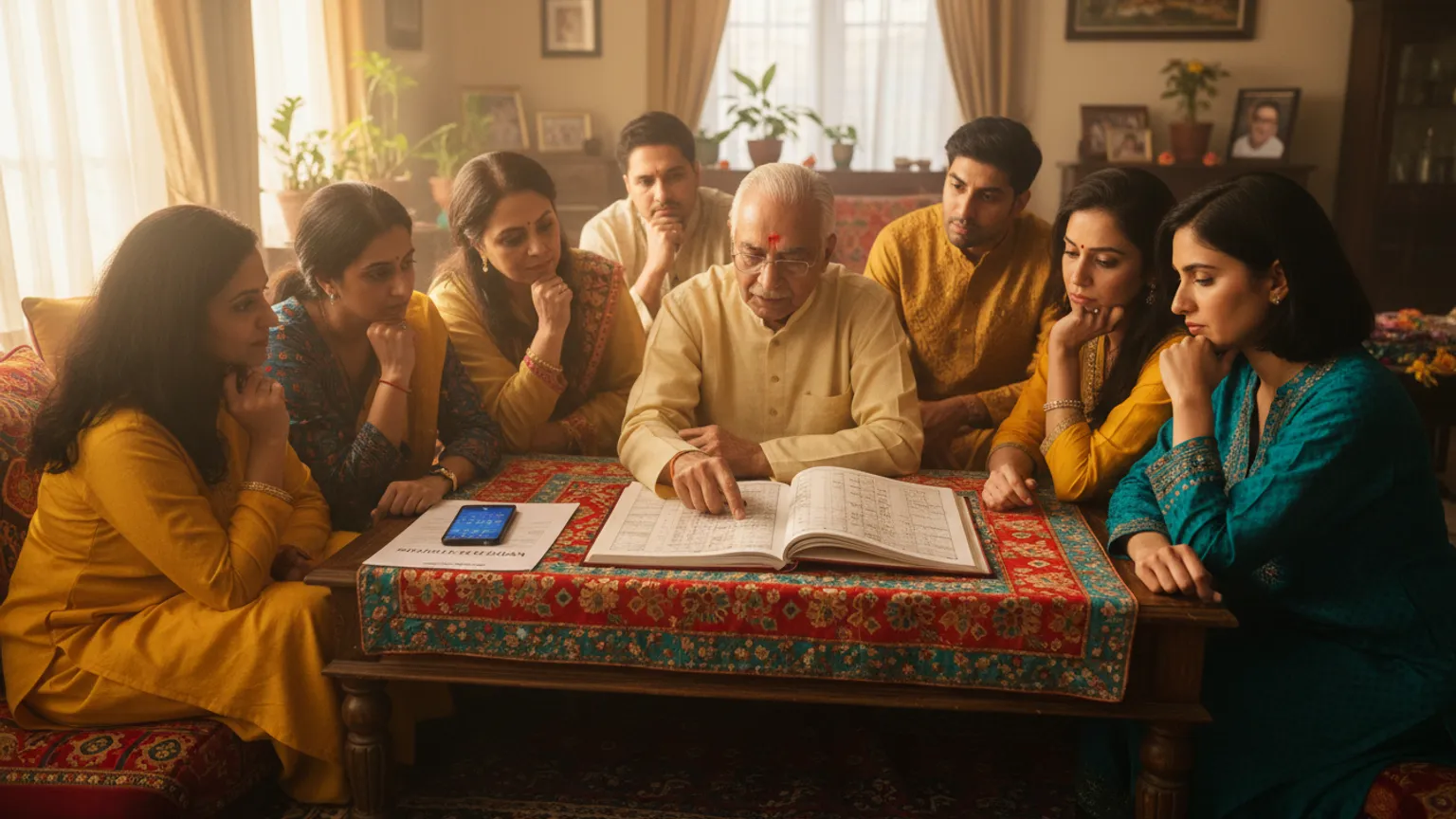
A cousin called me one September evening, three weeks before his griha pravesh, genuinely stuck. The flat was ready and his mother had already told half of Ghaziabad the housewarming was "iss mahine." Then his nani, visiting, asked one quiet question over dinner: "Shraddh ke beech mein? Beta, itni jaldi kya hai?" He put me on speaker, half hoping I'd take his side. I didn't have one. What I had was a clearer view of the actual problem — not "is Pitru Paksha auspicious," a question for his pandit and elders, but "what happens to a function, and to the people I've invited, if I hold it during this fortnight."
That is the honest split this guide keeps. Whether a shubh muhurat exists during Pitru Paksha is not mine to rule on — that belongs to your family's pandit and the elders who carry the practice. What a host can be given is the practical map: what the tradition generally holds, what it does to your guest list, and exactly what to send if you move the date or go ahead anyway.
What the fortnight traditionally means for shubh work
Pitru Paksha is the fortnight when families turn toward their ancestors — the shraddh period, running in 2026 from 26 September to 10 October. Its mood is inward and solemn, and across most of North and West India the long-standing practice is to pause shubh kaam, the auspicious beginnings, until it ends. Griha pravesh, weddings, engagements, mundan, a new vehicle, a shop opening: these are the ceremonies most families hold back.
Two things are worth separating cleanly, because hosts blur them and then argue past each other at the dinner table.
First, the muhurat question — whether the panchang offers an auspicious window at all. For weddings this is almost moot: Pitru Paksha sits inside Chaturmas, the four-month period when shubh vivah muhurats simply pause, and in 2026 the wedding calendar doesn't reopen until Chaturmas closes in mid-to-late November. So "can I have a wedding during Pitru Paksha" usually answers itself — there is no muhurat to have it on. Confirm your own dates against a panchang and never let anyone, me included, invent a muhurat time for you.
Second, the social question — what your guests and elders will feel about a celebration held now, regardless of what a calendar technically permits. This one has no astronomy in it, and it is the part a host manages. Even families relaxed about muhurats find that guests quietly observe the fortnight, and a full house is hard to gather when many of the people you'd invite are doing tarpan for their own ancestors that same week.
If you want the calendar side of the fortnight laid out day by day — the tithis, and why your family's shraddh may fall on a different morning than your neighbour's — I wrote that up separately in the Pitru Paksha 2026 dates and tithi calendar.
Which situation are you actually in?
Hosts asking this question are almost never in the same boat. Sort yourself first — the right move depends entirely on which of these you are.
| Your situation | What it usually calls for |
|---|---|
| Planning a shubh function (griha pravesh, wedding, engagement, mundan) and free to pick the date | Wait for the window to reopen after 10 October; there is almost nothing to gain by holding it now |
| A shubh function is date-locked (venue, muhurat, out-of-town family already committed) and overlaps the fortnight | Talk to your pandit and elders first; if it must proceed, invite with care and expect declines |
| A non-shubh, unavoidable event — a child's birthday, a work obligation, a guest already travelling in | Generally fine to host quietly; keep it low-key and let elders opt out gracefully |
| A big celebration you could move (a party, a reception, an anniversary bash) | Move it — the guest turnout and the family mood both improve on the other side |
The pattern underneath the table: the more auspicious and elective the function, the stronger the case to wait. A first-birthday party you can absolutely hold; a griha pravesh you almost certainly want to move a fortnight; a wedding the calendar has already decided for you.
What actually happens to your guest list
This is the part hosts underestimate, and I can speak to it plainly. Go ahead with a housewarming or party during Pitru Paksha and you won't get a wave of refusals — Indian guests rarely say a flat no. You get the soft stuff: "dekhte hain," "koshish karenge," a read message with no reply, an elder who says "aap log manao, hum aa nahi paayenge iss time." Some of it is scheduling; a lot of it, this fortnight, is the period itself.
The consequence is that your confirmations run thinner and vaguer than usual, right when you most want a clean headcount for food. Those soft answers carry a real planning tax — I decoded them in the "dekhte hain" decoder, and every pattern runs stronger during shraddh. Plan for a later-confirming guest list, and do not over-cater on optimism.
If you decide to postpone
For an elective shubh function, this is usually the call — and moving a date is far less painful than hosts fear, if the message is clean. Two rules: tell people early, and give the new date in the same breath (or at least "date follows"). A vague "we're pushing it" invites a dozen "kab?" replies you answer one by one. And since you're already messaging everyone, a postponement is a fresh chance to lock the new headcount — so ask the one question that matters.
Template 1 — postponing a griha pravesh, before invites went wide (Hinglish)
Namaste 🙏 Ghar taiyaar hai, par hum griha pravesh Pitru Paksha ke baad rakh rahe hain — shubh muhurat mein. Nayi date [date] tay ho gayi hai, [day] subah [time]. Purani "iss mahine" wali baat ko aap ignore kar dijiye, yahi final hai. Aap aa rahe hain ya nahi, bas ek line reply kar dena taaki khaana theek se plan ho.
Template 2 — moving a party / reception you'd already announced (Hinglish)
Sabko pyaar bhara namaste. Humne socha ki [function] ko thoda aage badha dein — Pitru Paksha ke baad, jab sab log khul ke aa paayein. Nayi tareekh [date], [day] hai, wahi jagah. Save kar lijiye, aur agar plan clear ho toh confirm kar dena. 🎉
Template 3 — the short elder-facing version, phone-first (Hindi)
प्रणाम। हमने गृह प्रवेश पितृ पक्ष के बाद, शुभ मुहूर्त में रखने का निर्णय लिया है — नई तिथि [date], [day] सुबह। आपका आना ज़रूरी है, समय से बता दीजिएगा।
For elders, don't rely on a text landing. A phone call first and the message second, as a written record of the date, is the register that works — the same approach I laid out for following up with elders, phone-first. A moved muhurat is news they'd rather hear in your voice than read in a group.
And because vendors are half the battle: if you've paid a venue advance or booked a caterer, call them the day you decide, not the week before. Why the advance and the final count sit on different timelines is in venue advance versus headcount booking. Moving inside Chaturmas is common enough that most halls shift you without a fight — ask early and you'll usually keep the advance.
If you choose to go ahead anyway
Sometimes the function is fixed and the fortnight simply overlaps it — a wedding whose muhurat was set months ago, a booking that can't move — or your community observes Pitru Paksha lightly and the elders have signed off. Fine. Host it well, and host it aware.
- Invite with a soft edge, not full festivity. Warmth is right; loud celebration jars against the week for the people observing it. Skip the confetti-heavy tone.
- Let guests decline without friction. Say "samajh sakte hain" in the invite itself. People observing shraddh will bless you for the exit and remember that you offered it.
- Keep elders' consent visible. If the family's own elders are attending, say so lightly — it reassures the invited generation that the decision was taken with respect, not around them.
Template 4 — inviting to a function that must happen during the fortnight (Hinglish)
Namaste 🙏 [Function] [date], [day] ko hai — muhurat pehle se tay tha, isliye humne aage badhaya. Aapka aana humein bahut khushi dega. Aur agar iss time aap ghar par shraddh/paath mein hain, toh bilkul samajh sakte hain — koi sankoch mat rakhiyega. Bas bata dena, taaki hum theek se intezaam kar sakein.
That last line does two jobs — it honours the period and gets you the confirmation you need for the food. That is the whole host game this fortnight: clarity without pressure.
The honest nuance — when this barely applies
I'd be misleading you if I made Pitru Paksha sound like a nationwide freeze. It isn't. Observance varies sharply by region and community. Many South Indian families keep Mahalaya Paksha with deep seriousness for shraddh yet don't extend a blanket "no shubh kaam" the way parts of the North do. Plenty of urban families observe the shraddh morning devoutly and otherwise carry on with birthdays and work events untouched. Non-ceremonial life — a kid's party, a colleague's farewell, hosting relatives passing through — rarely raises an eyebrow.
So the real test isn't a rulebook. It's two questions: is this function shubh and elective? and will the people I care about feel it's wrong to celebrate now? If both are yes, wait the fortnight. If either is no, use your judgement and your elders' — and don't let a blog talk you out of a gathering your own family is perfectly at ease with.
A short host checklist
Run this once, this week, and the decision stops circling.
- Named the function honestly — is it shubh and elective, or ordinary and unavoidable?
- Asked the elders before announcing anything, not after
- Checked the muhurat against a panchang for any shubh function (and remembered weddings sit inside Chaturmas)
- Picked a lane — hold, move, or go ahead — and stopped relitigating it
- If moving: new date fixed before the message goes out, vendors called the same day
- If proceeding: invite written with a graceful opt-out for those observing shraddh
- Planned for softer confirmations and did not over-cater on "dekhte hain"
- Set a follow-up window so the final headcount lands a few days before, not the night before
When you don't need to organise anything
The honest close, because I say it on every one of these: most of the time, this decision is a phone call to your parents and a text to twenty people. Nothing to install, nothing to coordinate. If your function is small and your family is aligned, keep it exactly that simple.
The one version that turns into genuine logistics is the moved big event — a griha pravesh or reception for a scattered, multi-city family, where a date change means re-informing sixty people, chasing softer-than-usual confirmations, and re-counting for food twice. That is the coordination knot we built Inyeet to hold: one clear message per person over your own WhatsApp, and a live sense of who's actually coming — worth most when the "dekhte hain" rate is high. If you're planning that kind of larger family gathering, a moved date is when it earns its keep. If not, you already have everything you need in your contacts app. Let it stay small.
FAQ
Can we do griha pravesh during Pitru Paksha 2026?
Traditionally, no — griha pravesh is a shubh function and most North and West Indian families hold it back until after the fortnight ends on 10 October 2026, choosing an auspicious muhurat once the window reopens. Practice varies by region, so the real answer is your family pandit's. If the flat is ready and you're free to pick the date, there's little to gain from holding it now, and a fuller, easier gathering waits a fortnight later.
Are there wedding muhurats during Pitru Paksha?
Effectively none — Pitru Paksha falls inside Chaturmas, the four-month period when shubh vivah muhurats pause, and in 2026 the wedding calendar reopens only after Chaturmas closes in mid-to-late November. A wedding landing in this fortnight is unusual; verify any date against a panchang and never accept an invented muhurat time.
Is it okay to host a birthday or a casual party during the fortnight?
Generally yes. Non-shubh, ordinary events — a child's birthday, a farewell, hosting relatives passing through — are not what the "no shubh kaam" custom is about. Keep it low-key, offer elders and anyone observing shraddh an easy way to opt out, and you're on safe ground with most families.
The one thing to take away: the question isn't really whether Pitru Paksha "allows" your function — that's for your elders and your pandit. It's whether the function is shubh and elective, and whether your people will feel right celebrating now. If both point one way, wait the fortnight and gather a fuller house on the other side. If they don't, host with a soft edge and a clean, pressure-free invite.
Related reading
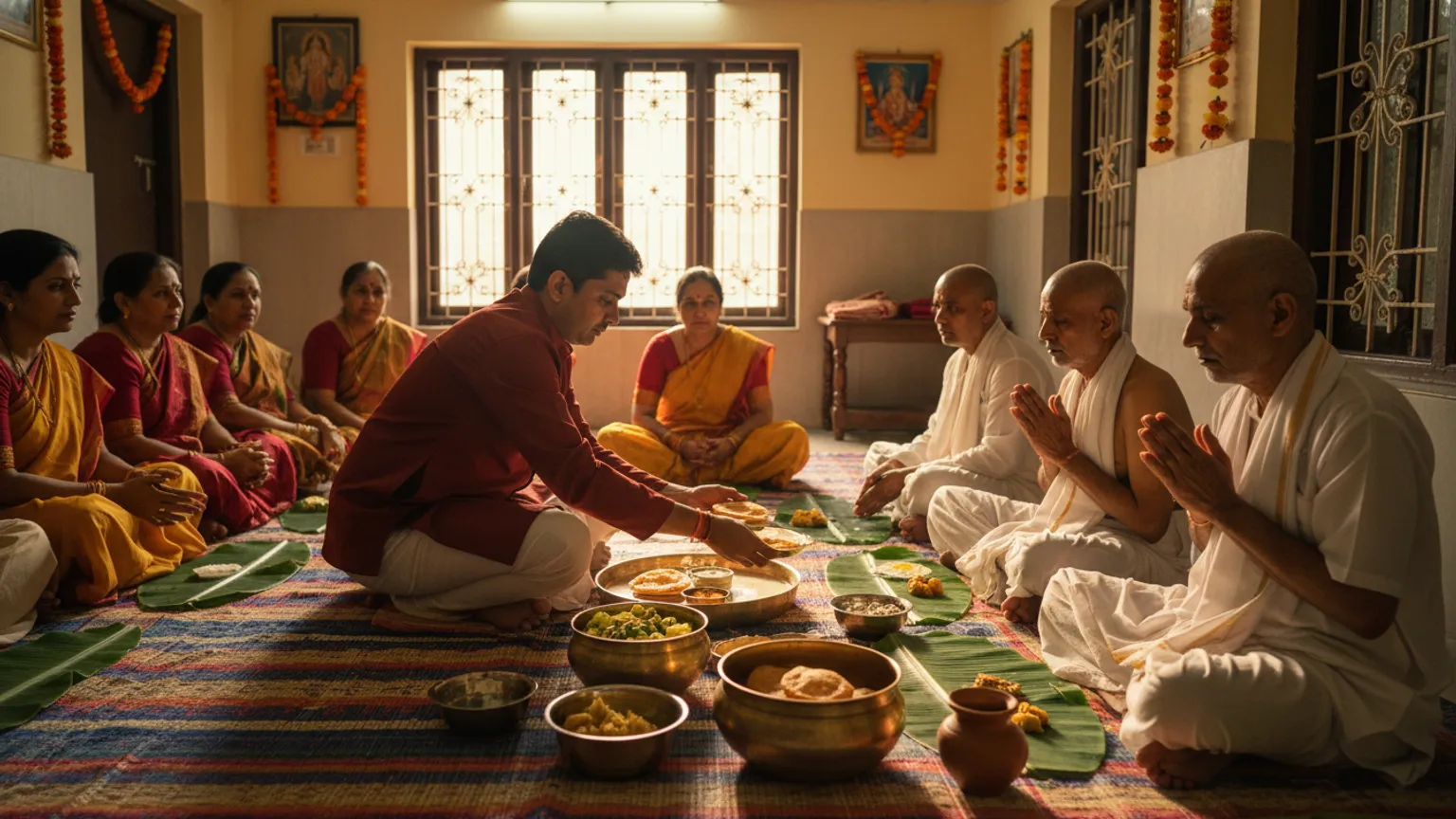
Shraddh bhoj: how many to invite and what to serve at the meal
A shraddh bhoj is a measured satvik meal, not a party. How many brahmins and family to invite, the traditional menu, real quantities, and copy-paste messages.
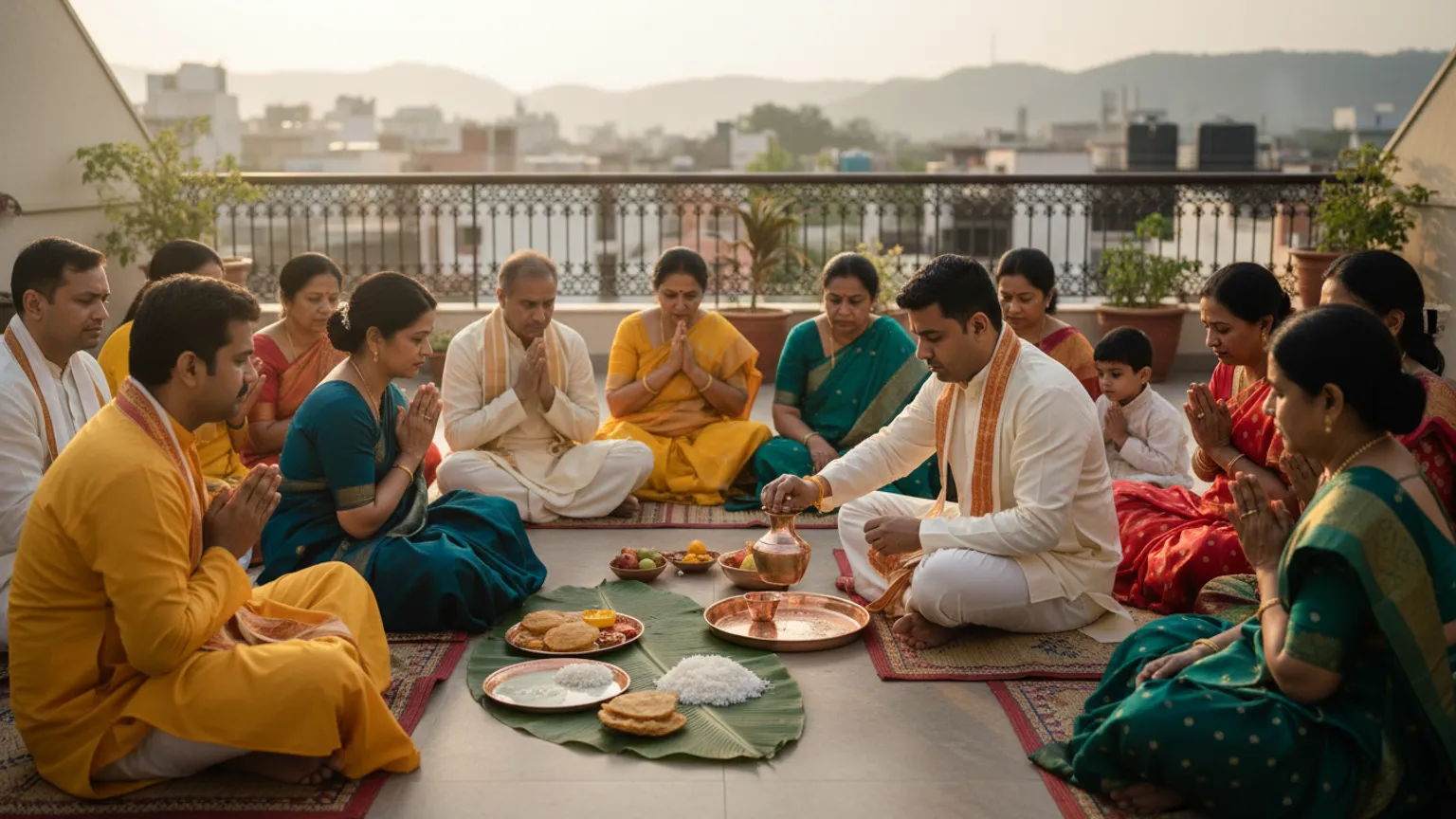
Pitru Paksha 2026 dates and the shraddh tithi calendar, day by day
Pitru Paksha 2026 runs 26 September to 10 October. The full shraddh tithi calendar day by day, plus how to find your family's tithi and plan the bhoj.
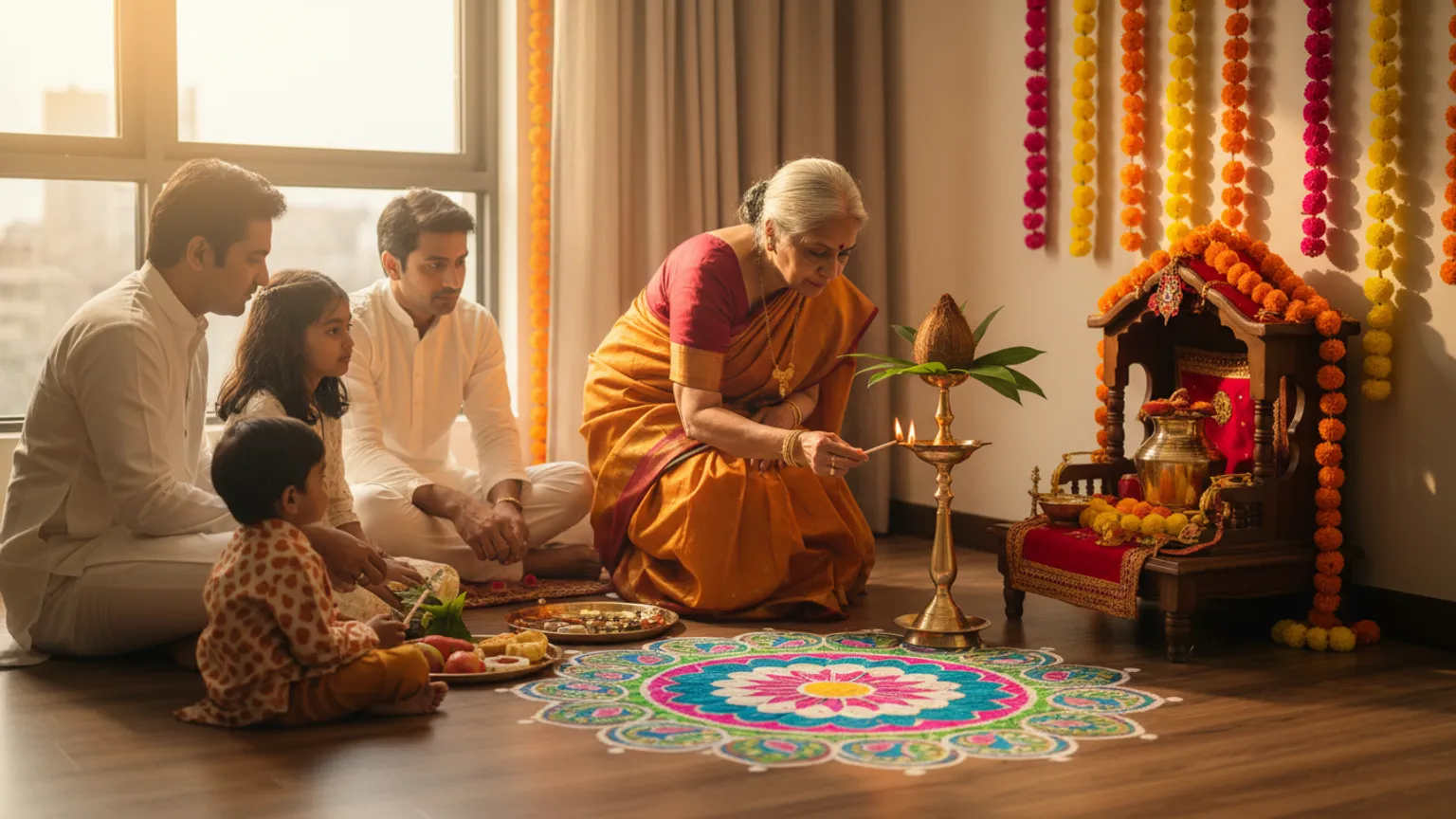
Navratri 2026 dates and the nine-day plan for a home host
Navratri 2026 runs 11 to 20 October: the full nine-day tithi calendar, how hosting differs by tradition, and where guest-list pressure actually lands.