
Onam sadya at home: serving a full thali to a house of guests
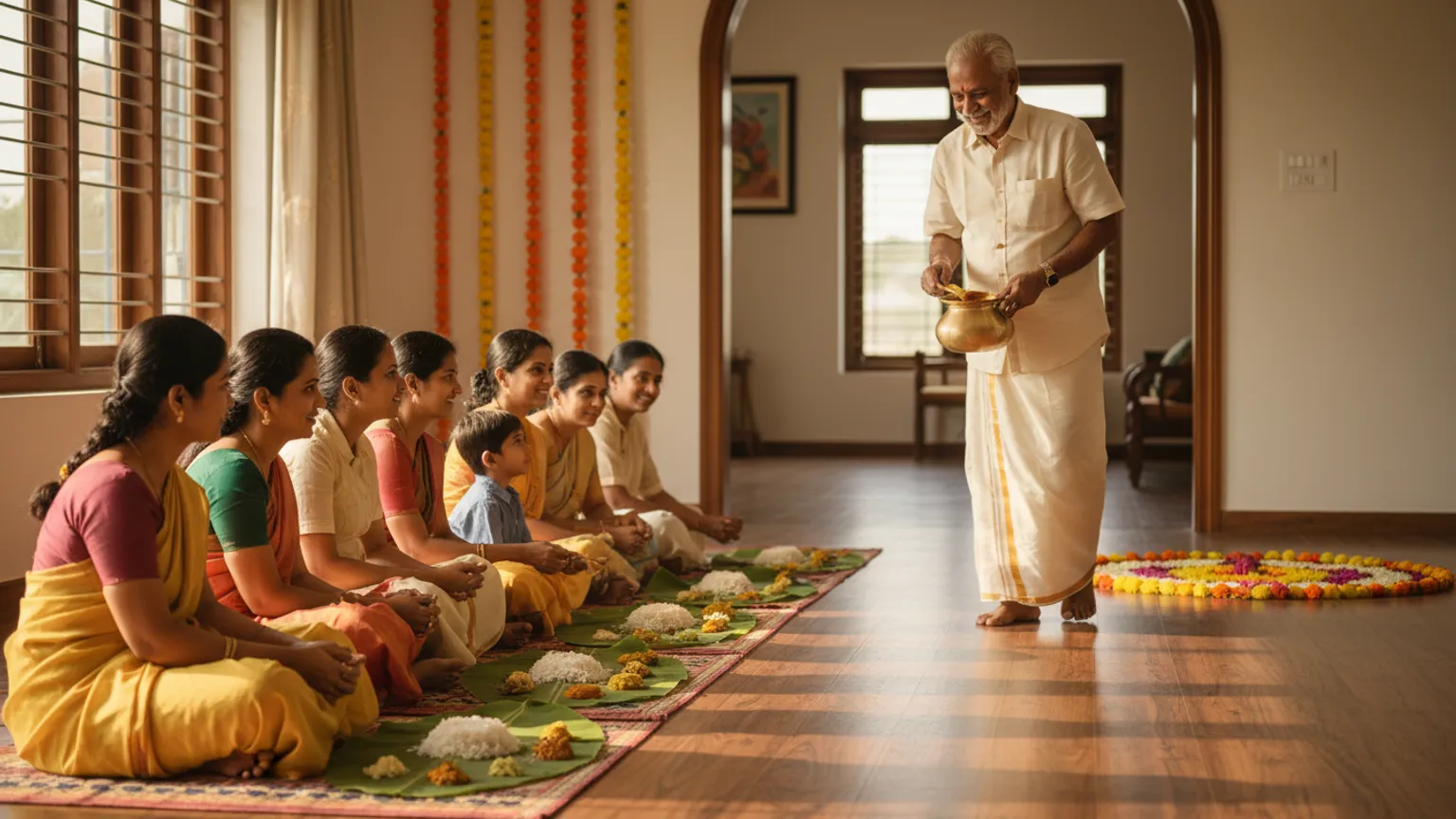
The first Onam sadya I properly helped serve was not at my own house. It was my friend Vineeth's, two floors up in our building, and I had wandered in expecting to be a guest. Twenty minutes later I was walking down a row of seated people with a pot of sambar and no idea how much to pour, while his mother called out from the kitchen which dish came next. I grew up with Bihu lunches at my nani's in Guwahati, not sadyas — so everything about that afternoon was new to me: the leaf, the order, the way a whole row of people ate in a rhythm someone was quietly conducting from the kitchen door.
What I took away, and what I have leaned on every Onam since when we host one at home, is this: a sadya is not a cooking problem. The cooking, if you are honest, can be catered or shared across three aunties. The thing that actually breaks a host is the serving — getting twenty-odd dishes onto a leaf in the right places, in the right order, for a house full of people who are all hungry at the same time. This is a guide to that part.
Why the sadya is a serving problem, not a cooking one
A regular lunch, you set out on the table and people help themselves. A sadya does not work that way. Everyone sits in a row on the floor — a panthi — with a fresh banana leaf in front of them, and the food comes to them, dish by dish, poured and placed by whoever is serving. Nobody gets up. Nobody reaches. That is the whole grace of it, and it is also exactly why it is hard to host.
Because now your constraint is not the kitchen — it is the row. You can only seat as many people as you have floor space and leaves for, and you serve them all at once, in sync, then clear and reset for the next batch. A house that can feed thirty in a day can often only seat ten at a time. The number you are planning around is not your guest count. It is your row size, and how many rounds of the row you have the hands to run.
If you are catering the food and only running the seating yourself, it is still worth reading how caterer counts break into tiers and plates before you lock a number — a sadya's second and third helpings mean the food quantity and the head count are two different figures, and the gap surprises first-time hosts every year.
What goes where on the leaf
Lay the leaf with its narrow, tapering end pointing to the diner's left — that is the one rule everyone at the table will silently check. The top half of the leaf holds the small stuff: pickles, the tangy relishes, the dry sides. The big empty bottom half is for rice, and it stays empty until almost the end.
Here is the layout I was taught, laid out left to right. Regions and families vary — a Thrissur sadya and a Palakkad one will not agree on everything — so treat this as a sensible starting frame, not scripture:
| Position on the leaf | What goes there | Notes |
|---|---|---|
| Top-left corner | Salt, then puli inji (ginger-tamarind relish), pickles (mango, lime) | The relishes go down first — guests nibble these while they wait |
| Top row, moving right | Thoran, avial, olan, kaalan, erissery, koottukari, pachadi, kichadi | Small mounds, a spoon each; don't crowd them |
| Top-right | Banana chips (upperi), sharkara upperi, pappadam, one nendran banana | The dry, sweet-salty things that survive sitting there |
| Bottom half (centre) | Rice — served last of this first laying | Kept clear until everything above is placed |
Only once the top half is full does the rice go down in the centre. Then come the wet dishes, poured over the rice — and their order is the part people actually get wrong.
The order it is served in
The dishes don't all arrive at once, and they don't arrive in a random order. Roughly, the sequence runs like this:
- Pappadam and chips first, while people settle and the leaf fills up top.
- Rice, a modest first mound — not a mountain, because it gets refilled.
- Parippu (dal) and a spoon of ghee over the rice. This is the first proper mouthful.
- Sambar, poured generously. This is the round most people eat the most of.
- Payasam — often served right about here, in a bowl or ladled onto a clean corner of the leaf, not saved for the very end.
- A second rice, then rasam, lighter and more digestive.
- A final rice with curd or pulissery, to close.
You do not have to be rigid about it, but the shape matters: parippu, then sambar, then payasam somewhere in the middle, then rasam, then curd to finish. If you serve rasam before sambar, someone's grandmother will notice, and she will be right.
Planning the count when helpings are free
The trap in a sadya is that "how many are coming" tells you almost nothing about how much to cook, because the whole point is unlimited helpings. Someone will have three rounds of rice and sambar; a child will eat one banana and the chips and nothing else. So you plan two numbers separately, the same way you would for a puja where prasad and the meal are different counts: the seat count (how many leaves, how many rounds of the row) and the cook volume (built for generous seconds, not per head).
A rough working frame for a home sadya:
| What you're counting | How to think about it |
|---|---|
| Leaves | One per diner per sitting, plus 15–20% spare — they tear, and drop-ins happen |
| Row size | However many you can seat and serve in sync — usually 8–12 in a flat |
| Rounds | Total guests ÷ row size, rounded up; each round needs a reset |
| Rice & sambar | Built for seconds and thirds — these two always run first |
| Payasam | The one nobody refuses; make more than feels sensible |
The reason to get the seat count honest early is that a sadya cannot absorb a surprise the way a buffet can. Ten unexpected people at a buffet just means a longer queue. Ten unexpected people at a sadya means a fourth round you don't have leaves, rice or floor space for. This is the same quiet problem behind why guests don't RSVP — nobody confirms a number, everybody assumes, and the host absorbs the gap.
The messages that get you a real number
A sadya invite has to ask for something a normal lunch invite doesn't: not just are you coming, but how many, and roughly when, because you are seating in batches. Two you can copy and adapt:
To confirm the head count (Hinglish):
Onam sadya lunch at ours this Onam — pakka veg, banana leaf, full works. Bas ek count chahiye: kitne log, aur kitne bacche? Reply kar do taaki leaves aur seating theek se plan ho jaye. 🌸
To stagger the seating into rows (Hinglish):
Sadya seating do batches mein rahega — pehli pankti 12:30, doosri 1:30. Aap log pehli mein aa jaana, reach by 12:15 taaki aaram se baith sakein. No rush, khaana khatam nahi hoga. 😊
That second message is the whole trick to a calm sadya: you decide the batches, and you tell each family privately which one they're in, so nobody feels ranked. A single "aa jao 12 baje" to the group chat is how thirty people land in the same ten minutes and you end up serving a row while another row waits, cold, in the next room.
When to just make it simple
Here is the honest part. If your Onam is your own family of six around one leaf-lined table, ignore almost all of the above. The layout still matters — that's what makes it a sadya and not just a thali — but batches, seat counts and confirmation messages are over-engineering for a lunch you could set up in your sleep. This planning earns its keep only when three or four households are converging and you are seating them in rows you have to run yourself.
And when it does get to that size — when you are the house that does Onam for the extended family, and next month it'll be Ganpati, and after that Navratri — the count is the part that quietly eats your morning. Keeping it in your head across four WhatsApp chats is where it goes wrong. A shared list where each household fills in its own number, veg count and children included, is the kind of thing Inyeet was built to handle, and the functions it actually helps with are exactly these multi-family, multi-sitting ones. For a single calm sadya with your own people, though, a notebook and two messages the night before will do the whole job.
The food, in the end, mostly takes care of itself — someone's mother has cooked a sadya forty times and it will be wonderful. What decides whether the afternoon feels like a feast or a scramble is quieter: whether the leaf faced the right way, whether the sambar came before the rasam, and whether the second row got to sit down before the first one had finished. Get those right, and all you have left to do is find a leaf for yourself.
Related reading
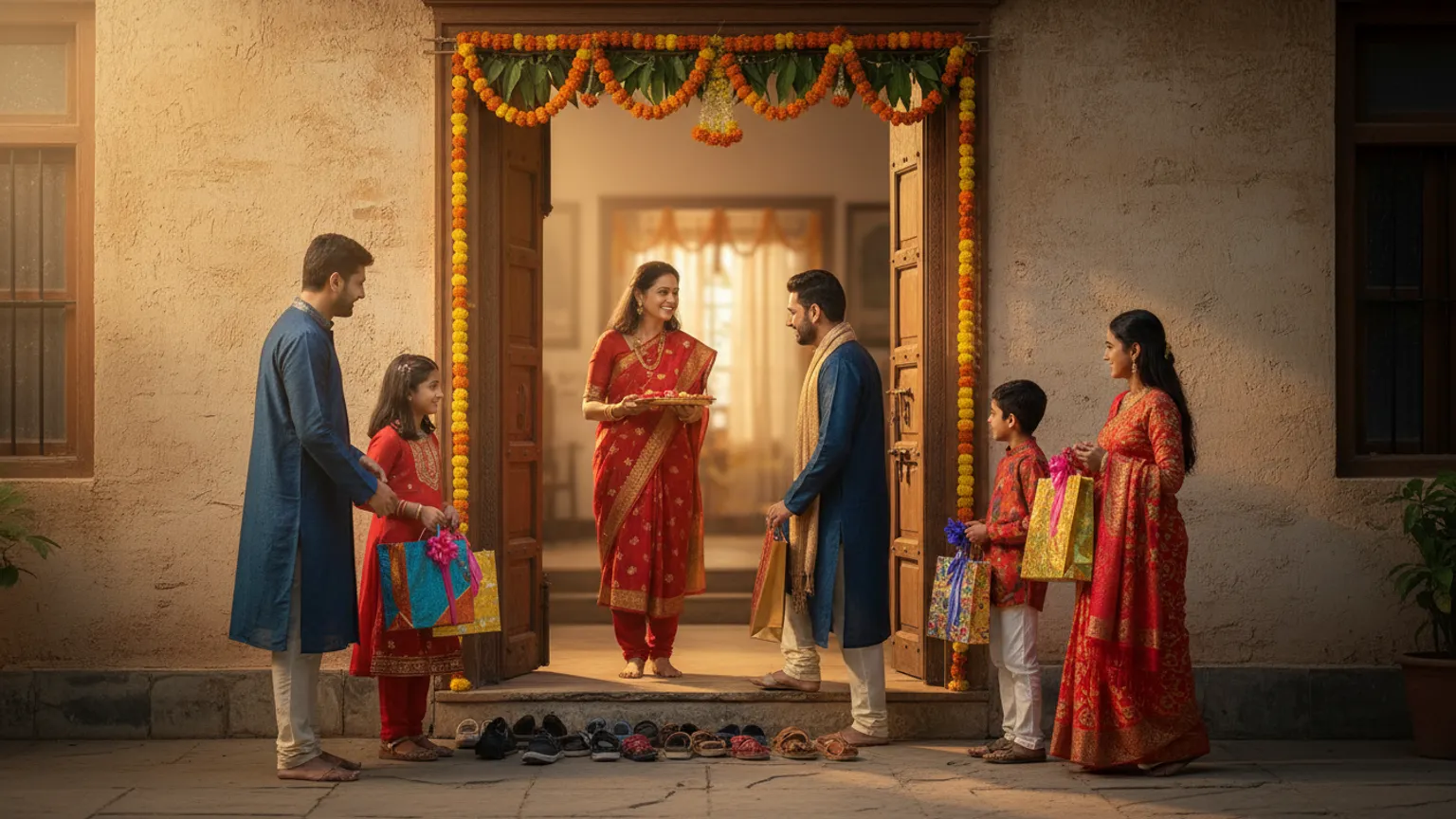
Raksha Bandhan at home: hosting siblings and cousins who all arrive together
When several sibling families land at your door in the same fifteen minutes, Rakhi becomes an arrivals problem. A host's plan for the stagger and the crowd.
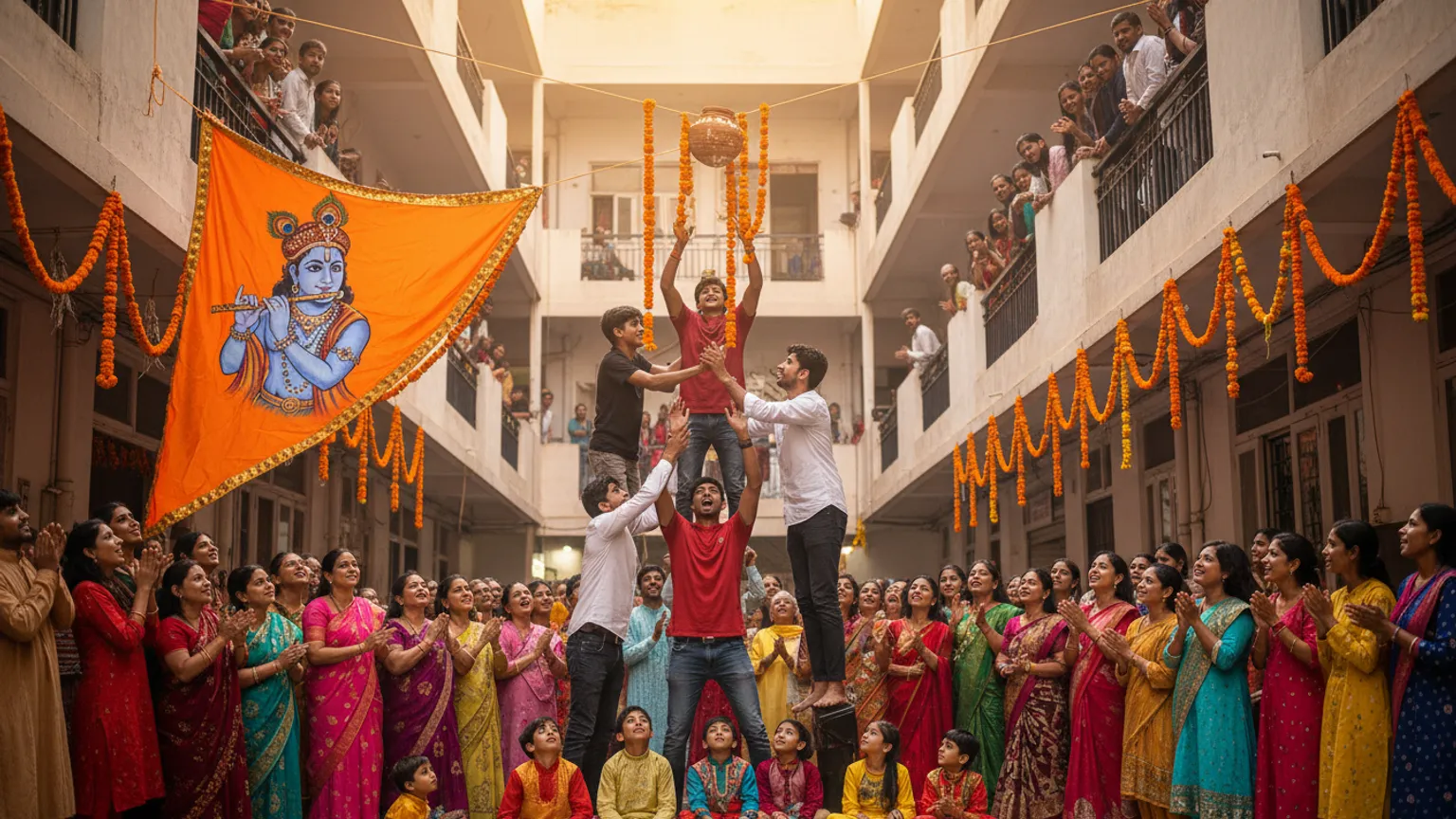
Dahi handi day: coordinating a society gathering the whole building turns up to
Dahi handi in a housing society is a coordination job, not a puja. A host's plan for the chanda, the govinda troupe, the prasad count and the whole crowd.
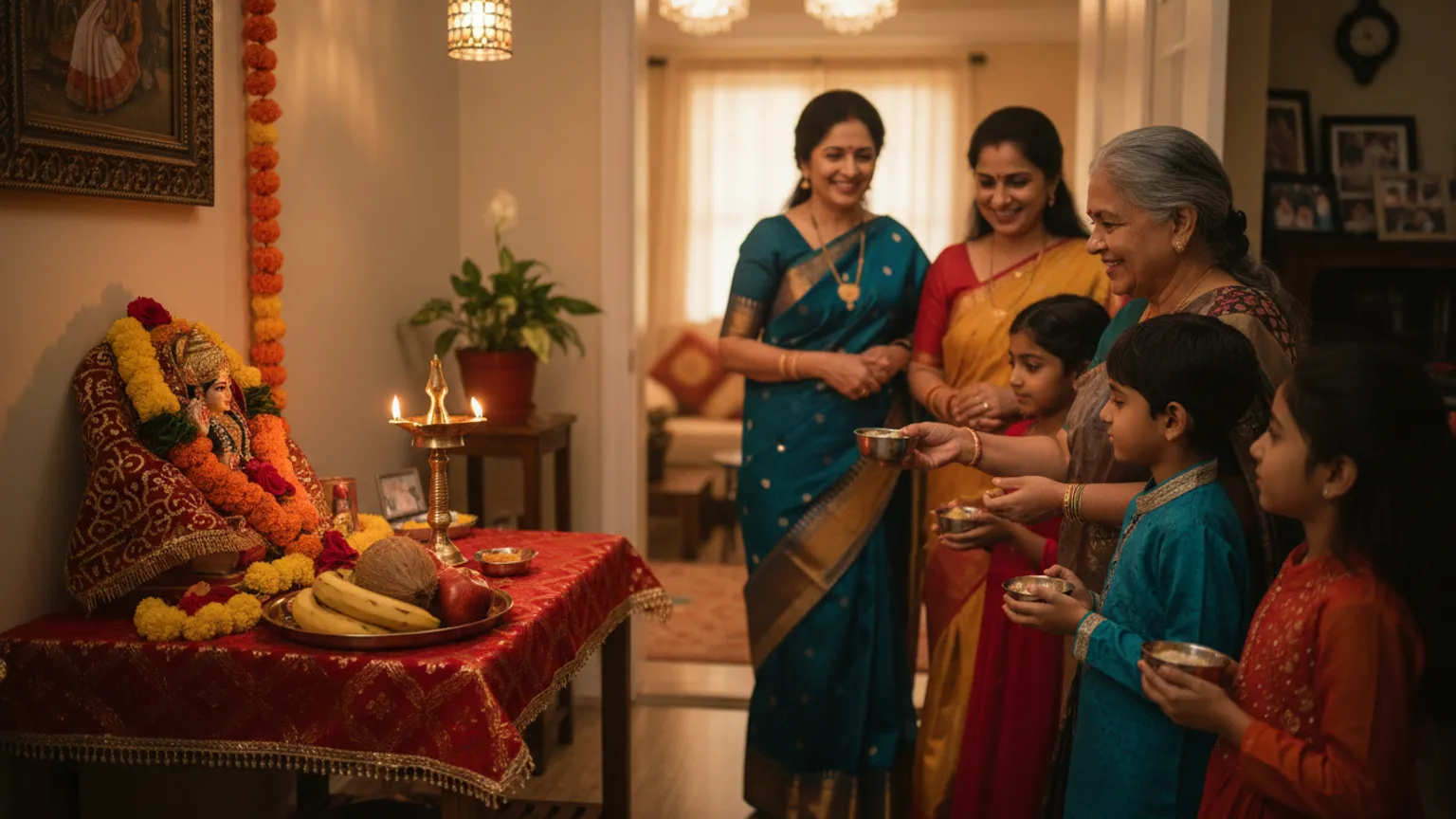
Navratri bhog and prasad quantities: planning nine days of aarti visitors
How much Navratri bhog and prasad to make across nine days of aarti drop-ins: daily per-person quantities, a nine-day bhog table and WhatsApp headcount lines.