
Dahi handi day: coordinating a society gathering the whole building turns up to
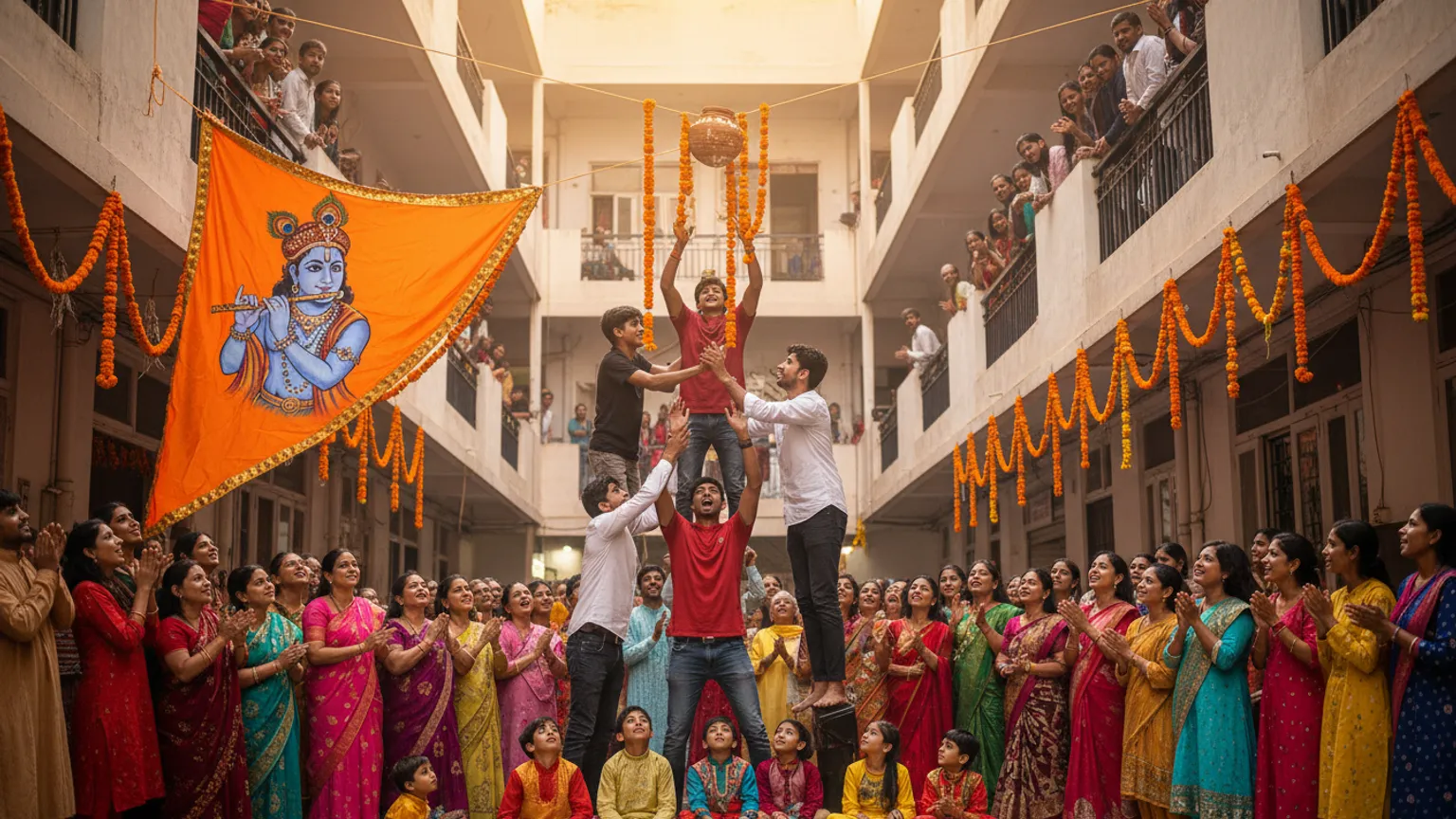
The first dahi handi I had anything to do with, I was handed a clipboard, not a shot at the pyramid. I grew up in Guwahati, where Janmashtami meant a midnight aarti at home and a tiny Krishna asleep in a jhula — no handi, no govinda troupe, nothing strung between two buildings. So when we moved to a society on the edge of Mumbai and the committee found out I "was good with lists", I got volunteered. My job was the part nobody else wanted: who is coming, who is paying, and how much poha to soak.
That first year taught me the thing this post is about. A society dahi handi is not, at its heart, a puja you perform — it is a logistics event a hundred people show up to at roughly the same time. The pot and the pyramid take about four minutes. Everything that decides whether the morning after Janmashtami feels like a celebration or a scramble happens in the two weeks before, in the counting.
Why a society handi is a list problem, not a puja
Think about who is actually involved. In a home Janmashtami, it is your family and maybe your floor. A society handi pulls in every wing of the building at once: the uncles who want a proper Krishna flag and a sound system, the teenagers who want to form the pyramid, the young mothers asking whether it is safe for their kids to watch from the front, the treasurer who needs the chanda collected before he can pay the govinda troupe, and the twenty flats who will simply appear at 11 a.m. for prasad without having told anyone they are coming.
None of those groups is talking to the others. That is the real shape of it. The pot breaks in four minutes; the coordination of five different constituencies onto one courtyard, on one morning, is the actual event — and it is exactly the kind of many-households, one-count problem that a whole society announcement can either solve or make worse, depending on what you ask for.
Decide the three numbers before you decide anything else
Everything downstream — the budget, the prasad, the govinda booking — hangs on three counts, and most society handis go wrong because someone guessed all three instead of asking.
- Paying households. How many flats are actually contributing, not how many live in the building. These are never the same number, and the gap is your shortfall.
- Pyramid participants. How many residents genuinely want to climb, versus how many said "haan haan" in the group and will be missing on the morning. You book the troupe around this.
- Prasad heads. How many people — residents plus the relatives visiting them that week — will eat gopalkala. This is always the biggest and most underestimated number.
Get these three honestly a week ahead and the rest is arithmetic. Guess them and you will either be short of money, short of climbers, or short of prasad in front of the whole building.
The chanda conversation, done once and cleanly
Collecting contributions is where society WhatsApp groups go to die. Someone posts "everyone please contribute for dahi handi", nobody replies, three flats pay, and the treasurer chases the rest for a week. The fix is not more reminders — it is a single message that states the amount, the deadline, and the how, and then a private nudge only to the flats who haven't paid, so no one is shamed in the group.
State a per-flat figure rather than "as per your wish". People pay a number far more readily than an open question, and a stated figure lets a flat quietly opt out without a conversation. Keep one running list of who has paid — in a place the whole committee can see, not in your head — so two members don't chase the same flat twice.
A morning timeline that keeps the pyramid safe
Dahi handi lands the morning after Janmashtami — this year, Janmashtami falls on 3 September 2026, so the handi is that first-week-of-September morning after. The window matters because govinda troupes, if you hire one, hop between several societies in a single morning and hold you to a slot. A rough shape that has worked for us:
| Time | What is happening | Who you need in place |
|---|---|---|
| Two days before | Chanda closed, troupe confirmed, poha and dahi ordered | Treasurer, one buyer |
| Handi morning, 90 min before | Pot strung, height set, rope tested, chairs for elders out | Two-three volunteers |
| 45 min before | Sound on low, Krishna flag up, prasad counters soaking poha | Kitchen group |
| The slot itself | Aarti, then the pyramid, then the break | Everyone |
| Straight after | Gopalkala served, courtyard cleared, sound down by the agreed time | Prasad + cleanup group |
Two things on that list save the most grief. Set the pot height for your building's actual climbers, not for a viral video — a society handi is not a professional competition, and a broken wrist is the one outcome that turns a festival into a WhatsApp war. And agree the sound cut-off time before the day, so a neighbour with a sleeping baby or a board exam in the flat above is not the reason your celebration sours.
Prasad for the whole building, counted properly
Gopalkala — the poha, dahi, cucumber, groundnut and pomegranate mix that is the prasad of this day — is cheap to make and easy to run out of, because the eating count is never the paying count. Every contributing flat brings the people staying with them, and the neighbours who didn't pay still get a katori, as they should. This is the same trap behind prasad and catering headcounts at any puja: the number who eat is not the number who RSVP'd.
Plan the volume off your prasad-head count, not your flat count, and build in a generous margin — nobody minds leftover gopalkala, and everybody remembers the year it ran out:
| Item | Rough working amount | Note |
|---|---|---|
| Poha (thick) | a katori's worth per head, soaked | It swells overnight; soak the evening before |
| Dahi | set extra a day ahead | Fresh dahi that morning is thin; day-old sets better |
| Cucumber, groundnut, pomegranate, green chilli | to taste, mixed in fresh | Cut the morning of, or it weeps |
| Spare plates and spoons | 20% over your head count | The visitors nobody counted always land here |
That "20% over" line is not padding. It is the single most reliable surprise at a society function — the cousins and out-of-town relatives who are staying with residents that week and are genuinely part of the morning. If you have ever wondered why a headcount is so hard to pin down, it is because nobody confirms a number and everybody assumes; the host, or in this case the committee, absorbs the gap.
The messages that actually get you a count
The whole thing hinges on messages that ask for something specific instead of broadcasting into silence. A few you can adapt tonight.
The society-wide announcement (Hinglish):
🪔 Dahi handi is on the morning after Janmashtami, in the main courtyard around 11 am. Sab log aa jao — bacche, elders, sab. Do cheezein chahiye har flat se: (1) contribution ₹___ per flat by [date], aur (2) reply with how many people from your flat will eat prasad. Bas do line ka reply, taaki poha aur seating theek se plan ho jaye. 🙏
The chanda nudge, sent privately to a flat that hasn't paid:
Hi [name], bas dahi handi ka contribution pending hai aapka — ₹___, [UPI / to whom]. Koi rush nahi, jab convenient ho. List band kar raha hoon [date] ko taaki troupe ko time pe pay kar sakein. 🙂
The pyramid call, to the residents' group:
Govinda pyramid banane ke liye jo genuinely climb karna chahte hain, please reply with your name — height low rakhenge, safe rahega, no small kids on top. Need a real count by [date] taaki plan kar sakein.
Notice what each one does: it names an amount, a date, or a number, and it asks for a reply you can actually count. "Please contribute and do come" gets you nothing you can plan around.
Keep the govindas low and the little ones off the pyramid
Here is the honest part, and it matters more than any template. A society handi is a neighbourhood celebration, not a stadium event. Keep the pyramid to two, at most three tiers; keep genuinely young children out of it and watching from the front instead; put a couple of steady adults at the base; and don't string the pot so high that breaking it needs a stunt. The morning is a success when the pot breaks, the poha gets eaten and everyone walks home — not when it looks like something off television. Every year the news carries avoidable injuries from societies that treated a friendly handi as a competition. Don't be that building.
And skip the sound system entirely if your society is small. A dhol, a speaker on low, and a hundred people cheering is plenty — louder is not more devotional; it is just the thing the RWA fields complaints about the next day.
When your handi doesn't need any of this
If your "dahi handi" is one wing, fifteen people, a pot in the corridor and a packet of poha someone's mother mixed — ignore almost all of the above. Chanda, timelines and prasad tables are over-engineering for a gathering that small; you will all be in the corridor anyway, and a plan just gets in the way of a good morning. This earns its keep only when the whole building turns up and you are the one holding the list.
When it does reach that size — when you are the committee member who ends up counting for the handi, and then the Ganpati aarti, and then the Navratri garba — the counting is the part that quietly eats your week across four WhatsApp chats. A shared list where each flat fills in its own number, visitors included, is the kind of thing Inyeet was built to handle, and the gatherings it actually helps with are exactly these many-household society ones. For a fifteen-person corridor handi, though, one message and a notebook will do the whole job.
The pot takes four minutes to break. What decides whether the morning after Janmashtami feels like your building at its best is quieter — whether the chanda came in without a fight, whether the pyramid stayed low and safe, and whether the last neighbour to arrive still got a katori of gopalkala. Get those right, and all that is left is to stand at the back and watch the kids reach for the rope.
Related reading
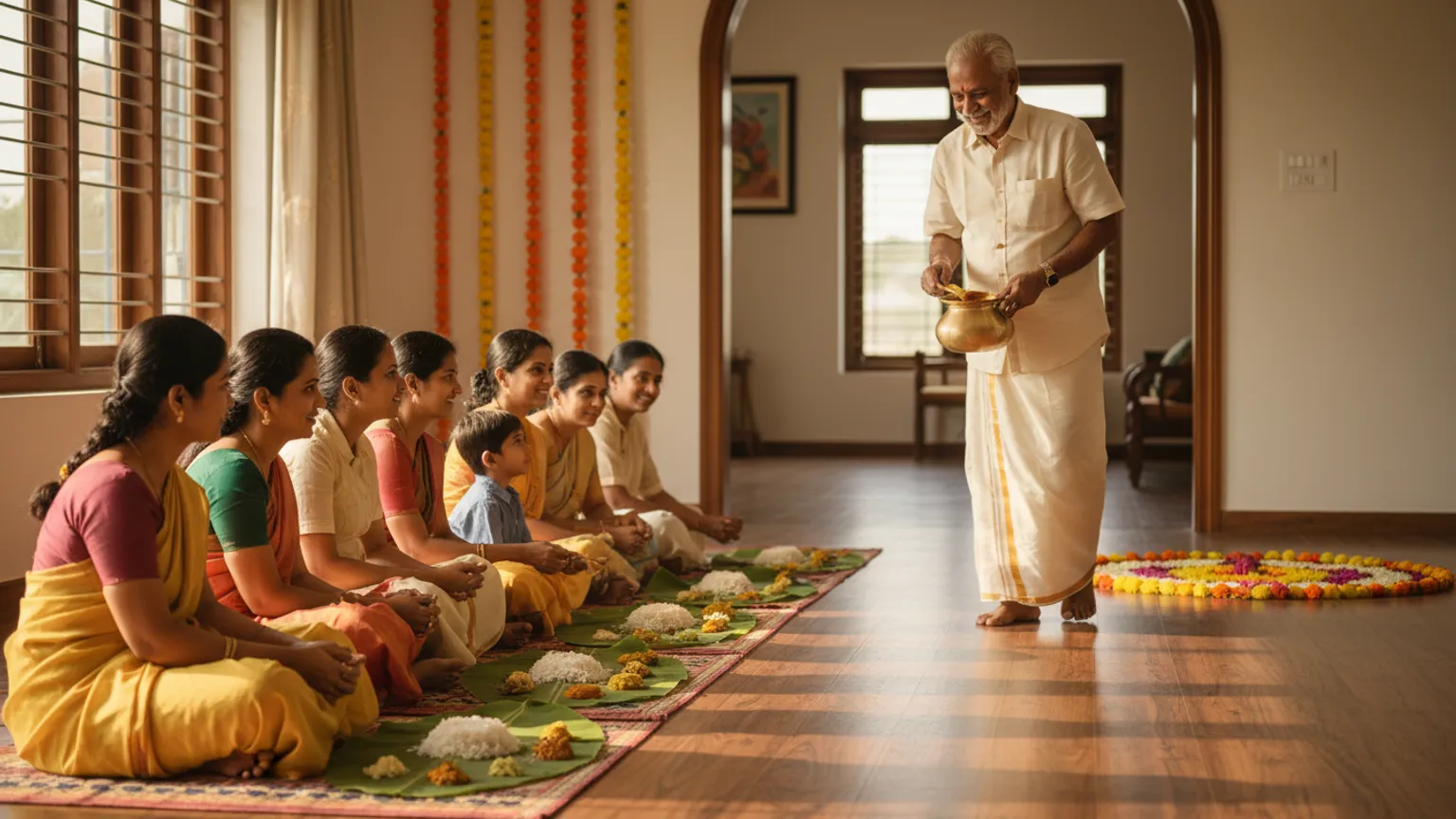
Onam sadya at home: serving a full thali to a house of guests
A sadya is a serving problem, not a cooking one. A host's guide to the banana-leaf layout, the order dishes go down, and seating a full house in calm rows.
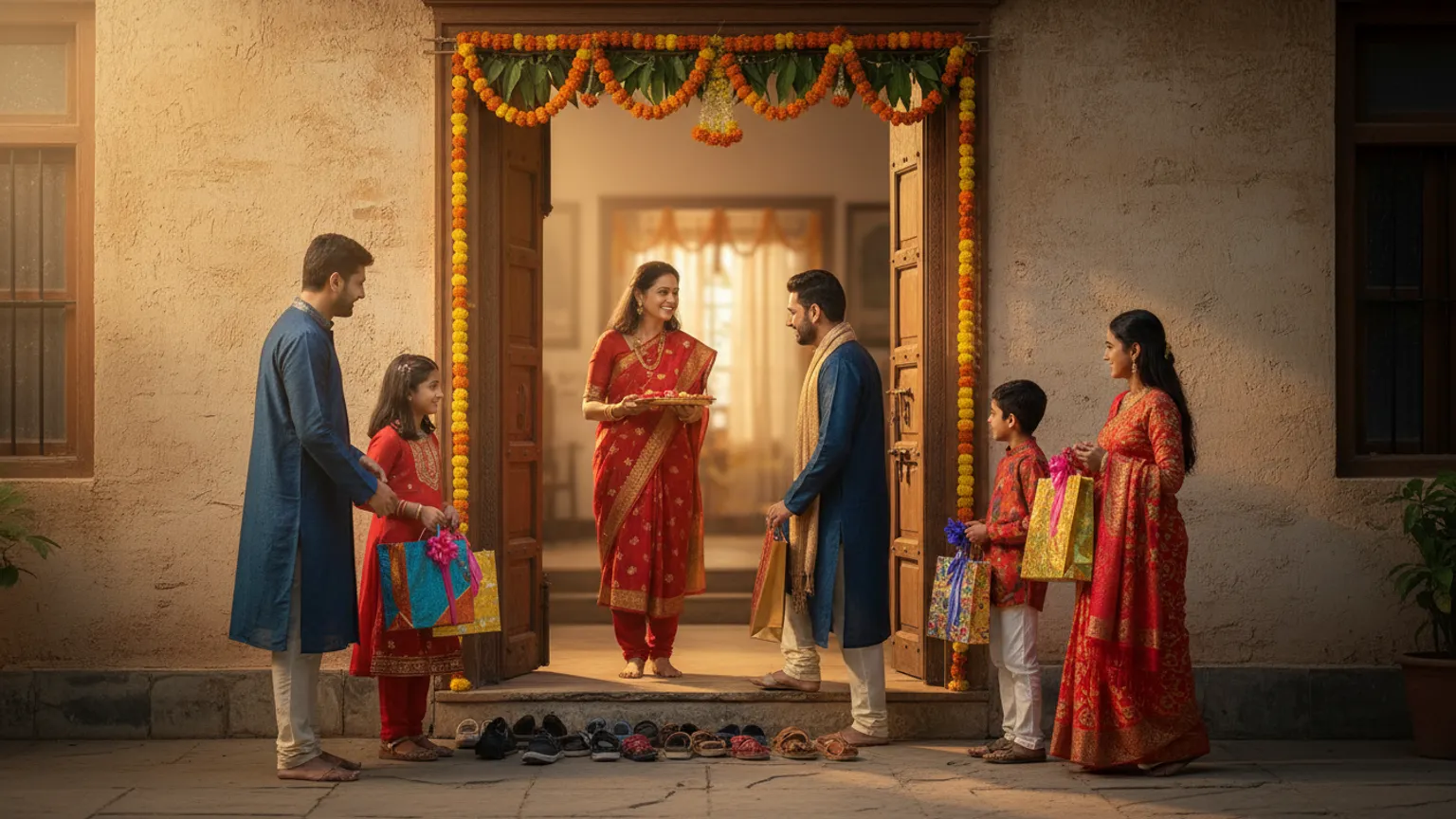
Raksha Bandhan at home: hosting siblings and cousins who all arrive together
When several sibling families land at your door in the same fifteen minutes, Rakhi becomes an arrivals problem. A host's plan for the stagger and the crowd.
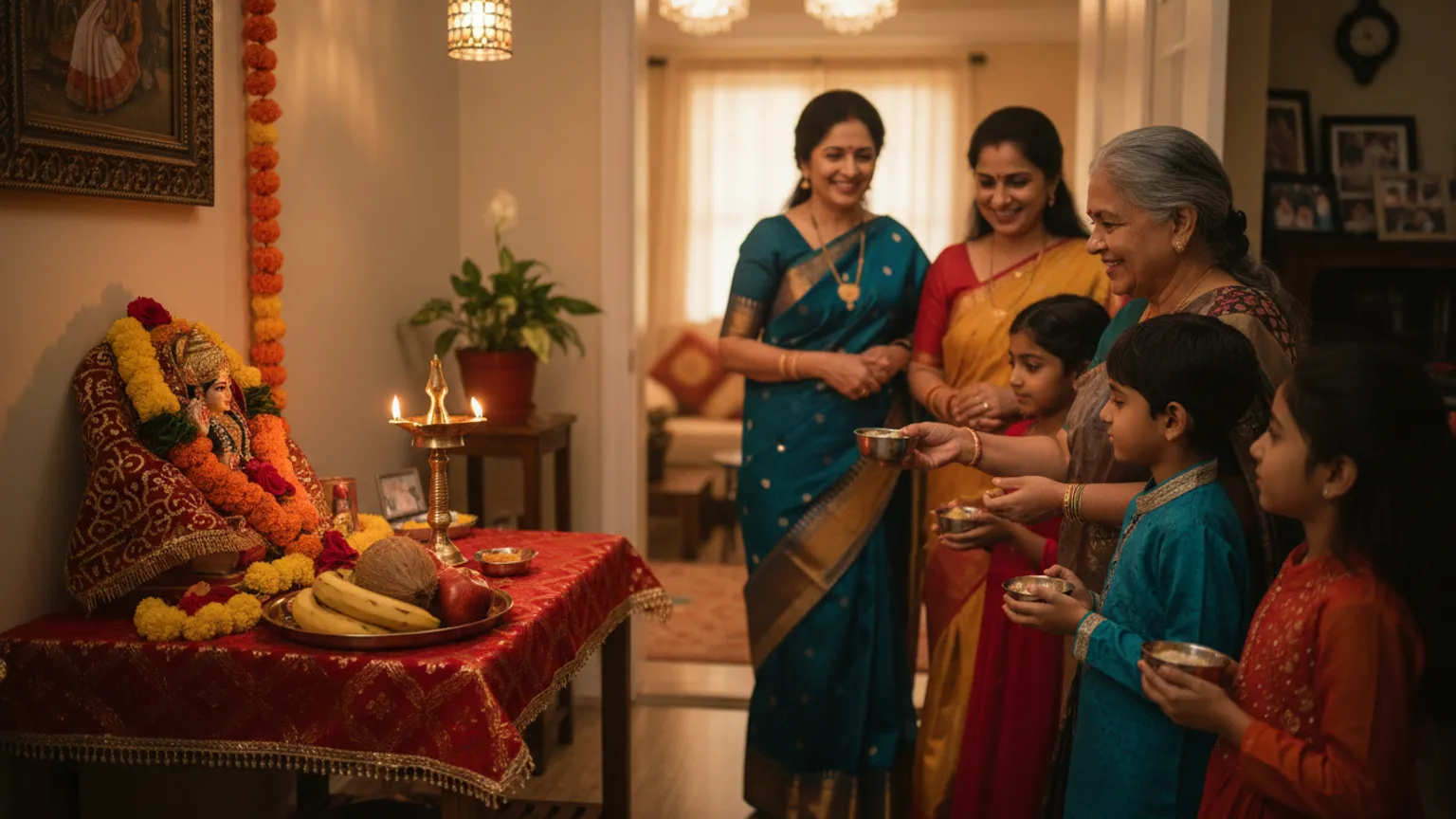
Navratri bhog and prasad quantities: planning nine days of aarti visitors
How much Navratri bhog and prasad to make across nine days of aarti drop-ins: daily per-person quantities, a nine-day bhog table and WhatsApp headcount lines.