
Sthapana morning: from murti arrival to the first aarti
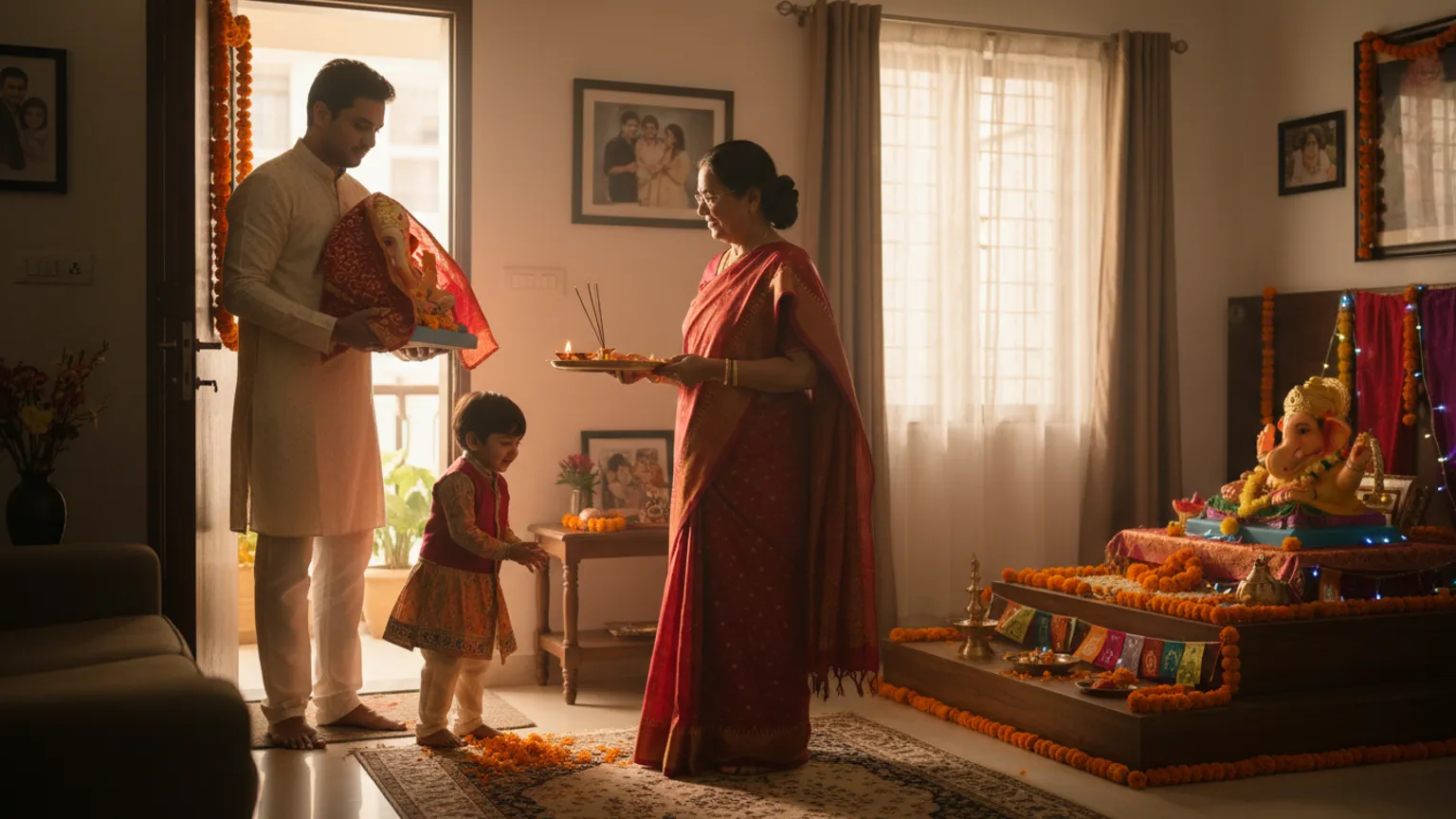
The first year we brought Bappa home, I thought the hard day would be visarjan. It wasn't. The morning that nearly undid me was the very first one — sthapana morning, the two hours between the murti arriving at our door and the first aarti. I had pictured it as a single calm ceremony. What it actually is, I learned standing in my own living room with flower garlands in one hand and my phone buzzing in the other, is four different things stacked on top of each other, all wanting to happen in the same ninety minutes.
So this is written for the version of you who is a week or two out from that morning, still imagining it as one smooth event. It isn't one event. Naming its parts before the day is the whole difference between a morning you remember and one you only survive.
Sthapana morning is four things, not one
Break the morning down and here is what is actually competing for the same stretch of time:
- The arrival. Bappa comes home — carried up the stairs, usually draped in cloth, sometimes with a small procession of family behind. This is a moment people want to be present for, which means they want to arrive before it.
- The muhurat. The sthapana has an auspicious window, and it does not move for anyone. Verify your city's timing against Drik Panchang; do not take a forwarded WhatsApp muhurat as gospel, because it shifts by region.
- Pran pratishtha. The invocation that turns a beautiful idol into Bappa in your home. For the ten or fifteen minutes it runs, you genuinely cannot be interrupted — and this is exactly when the doorbell tends to go.
- The first aarti. The emotional peak everyone came for, the one where the whole room sings Sukhkarta Dukhharta together.
The trap is that all four feel like "the ceremony", so guests treat the entire block as come-anytime. They don't realise that arriving at 10:40 means walking in during the one part of the morning that can't pause for them. The year it went wrong for me, a cousin rang the bell mid-pran-pratishtha, and I had to choose between the invocation and the intercom. Nobody had done anything rude. I just hadn't told anyone that the morning had a shape.
Split the morning into two lanes before the day
The fix that has held up every year since is embarrassingly simple: I stopped trying to be the host and the yajman at the same time. Sthapana morning needs two people running two lanes, decided in advance.
- Lane one — the ritual. One person (for us, me) stays with Bappa from arrival through the first aarti and does nothing else. No door, no phone, no "beta glass kahaan hai". If the pandit needs something, someone else fetches it.
- Lane two — the house and the people. One person owns the door, the arrivals, the shoes piling up, the "where do I keep this" prasad someone's brought, and the phone. For us that is usually my wife or my brother, briefed the night before on exactly what happens when.
You are not being cold by dividing it. You are protecting the ten minutes that are the actual point of the day. A helper who knows they own the door will quietly intercept the cousin who arrives early, seat them, and let the invocation finish — instead of that cousin finding you and pulling you out of it.
Write the arrival window so nobody lands mid-invocation
The single most useful thing you can send before sthapana morning is not "aa jaao", it is a window. Tell people when to arrive by and what happens if they're late — warmly, so it reads as help, not a rule.
Arrival-window message (Hinglish):
Bappa kal subah ghar aa rahe hain! 🙏 Sthapana muhurat 10:30 baje hai. Aap 10:15 tak aa jaana taaki murti ke aane aur pran pratishtha ke waqt saath ho. Pran pratishtha ke beech (10:30–10:45) darwaza thodi der band rahega — agar us waqt pahuncho toh bas ek minute ruk jaana, hum aarti se pehle bula lenge. Pehli aarti 11:00 baje, uske baad prasad. 😊
That one message does three jobs at once: it gives a real arrive-by time, it tells latecomers not to hammer the bell during the invocation, and it names the aarti as the thing worth being on time for. If you are also spreading visitors across the following days so day one doesn't drown, I've written the full choreography for that in managing darshan timings across three days — sthapana morning is day one of that plan, deliberately kept small.
A rough shape for the morning
Timings are yours to set around your muhurat; this is only the order and the breathing room, so nothing important lands on top of something else:
| Time (example) | What's happening | Who's on it |
|---|---|---|
| The night before | Platform, decoration, samagri laid out, thali ready | Both, together, unhurried |
| ~30 min before muhurat | Murti brought home, welcomed at the door | Lane one leads; lane two holds the door |
| At the muhurat | Sthapana and pran pratishtha | Lane one only — no interruptions |
| +15 min | First aarti | Everyone; lane two stops the door |
| After aarti | Prasad, darshan, the house relaxes | Lane two runs it; lane one can finally breathe |
The reason the night-before row matters most is that every minute you spend hunting for the second garland or the matchbox at 10:25 is a minute stolen from the muhurat. Lay the samagri out the evening before against a list — if you don't have one, the full puja samagri list with quantities is the one I check against — so the morning is only ritual, never a scavenger hunt.
A short pre-morning checklist
- Muhurat and pran pratishtha timing verified against Drik Panchang, not a forward
- Two lanes assigned, and both people actually briefed — not assumed
- Arrival-window message sent to everyone coming on day one
- Samagri, decoration and aarti thali set out the night before
- One person told: door and phone are yours from arrival to aarti
- Prasad for the first aarti ready, not still cooking at muhurat time
When you don't need any of this
If your sthapana is you, your parents and the pandit — six people, one aarti, no crowd — put this whole article down. Two people and a quiet morning don't need lanes or arrival windows; you'll flow through it, and it'll be lovely precisely because it's small. This planning earns its keep only when relatives, neighbours and friends are converging on one flat in one ninety-minute window.
And when it is that bigger morning, the part that quietly eats you is not the ritual — it's knowing who's turning up when, so the door lane can do its job. Keeping that in your head across four WhatsApp chats on the busiest morning of the festival is where it slips. A live per-day count, where each family says which day they'll come, is the exact thing Inyeet was built for, and the multi-family functions it actually helps with are precisely these; for a fifteen-person home Ganpati, a note on the fridge does the same job with less fuss, and you should use that instead.
Whichever it is, the aim is the same. When the muhurat arrives and the pran pratishtha begins, you want to be fully inside it — not half-listening for the doorbell. Get the morning's shape decided beforehand, hand the door to someone you trust, and the first time the aarti thali goes around your living room, you'll actually be there for it. Ganpati Bappa Morya.
Related reading
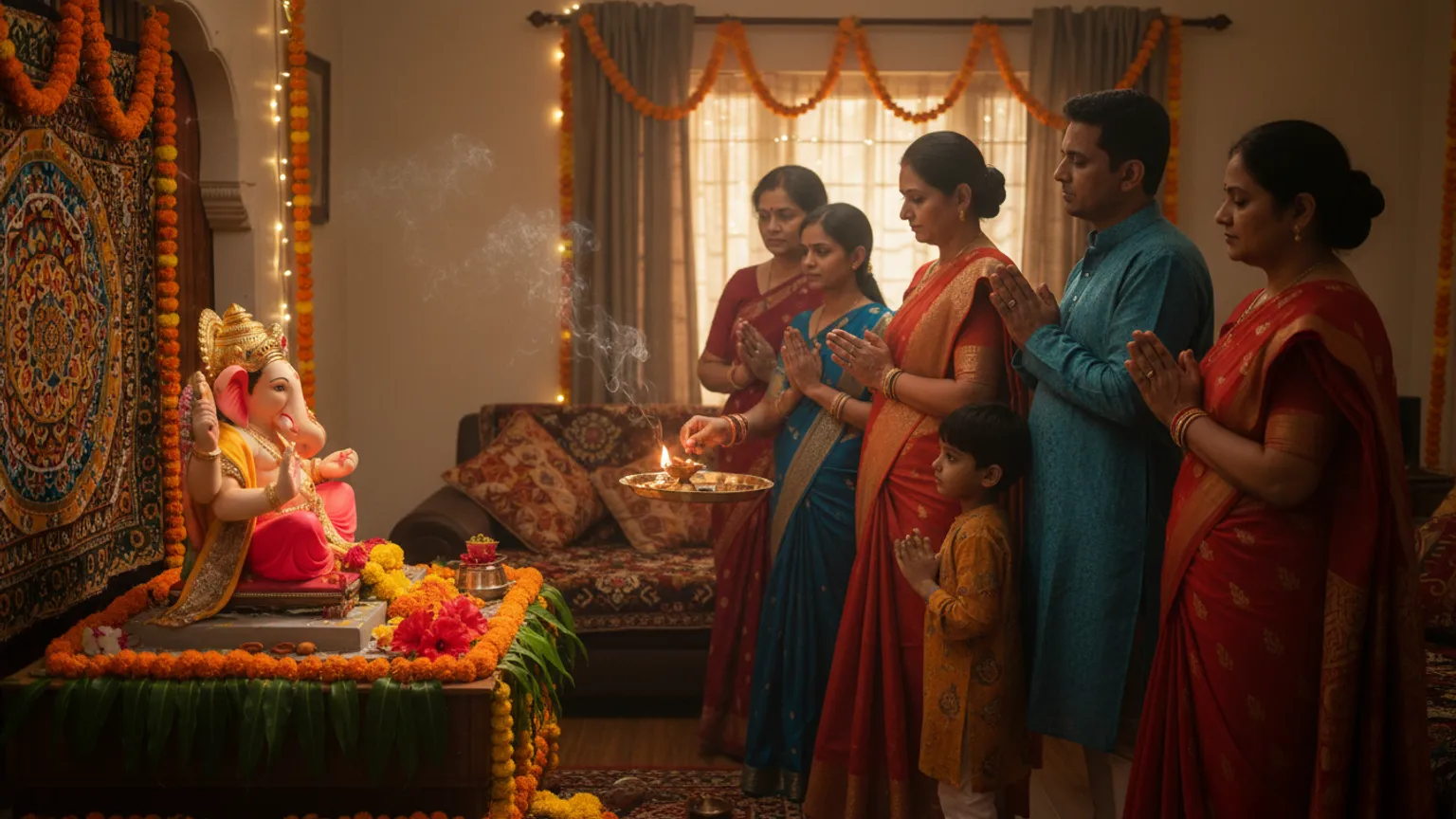
Ganpati sthapana invites: managing darshan timings across three days
How to invite people to a three-day home Ganpati without one crowded evening — a darshan schedule by circle, aarti timings, and ready WhatsApp templates.
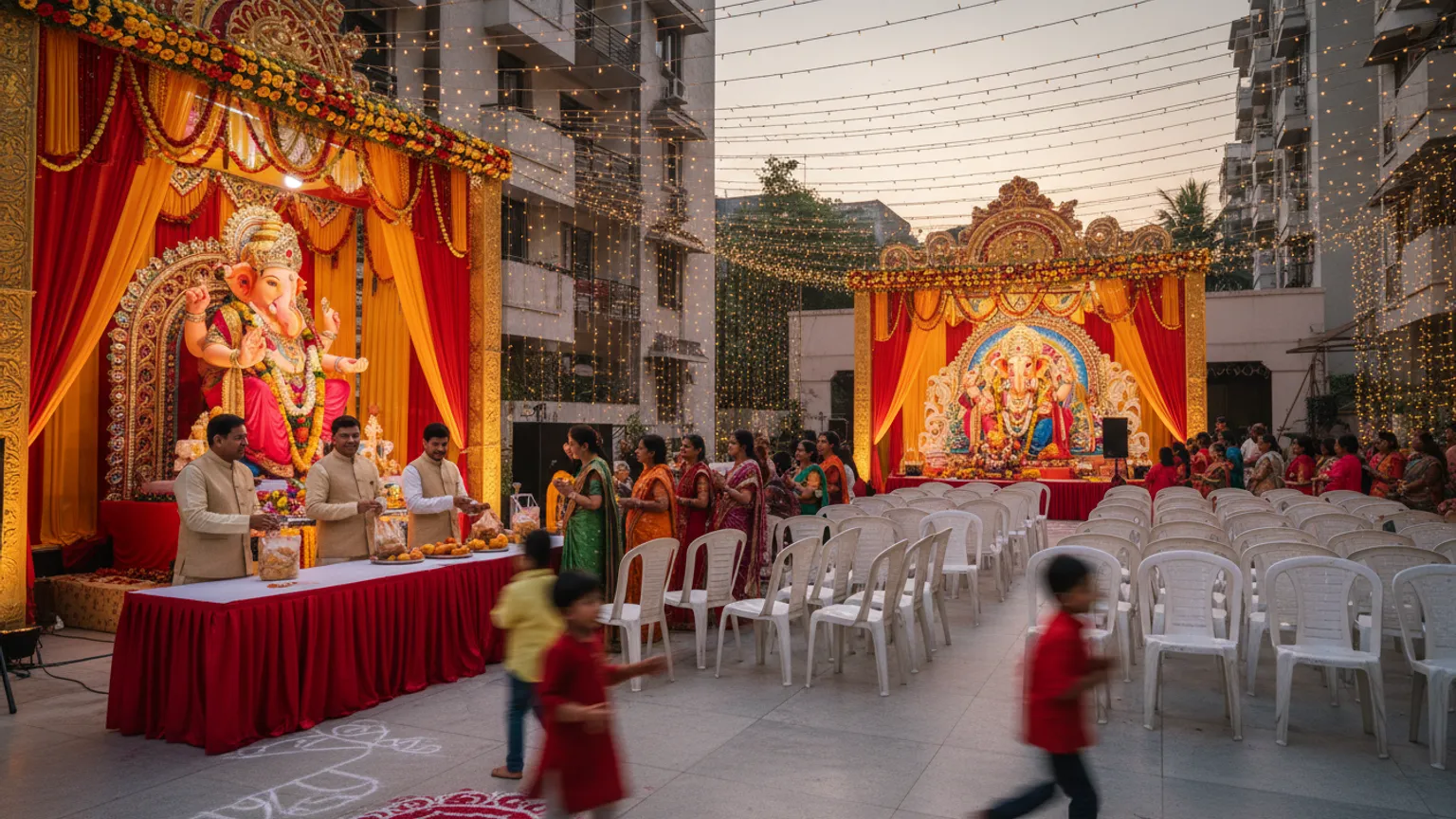
Society Ganpati versus home Ganpati: how the guest list changes
Society Ganpati and home Ganpati are two different hosting jobs. How the guest list, headcount, prasad and coordination change between them, with templates.
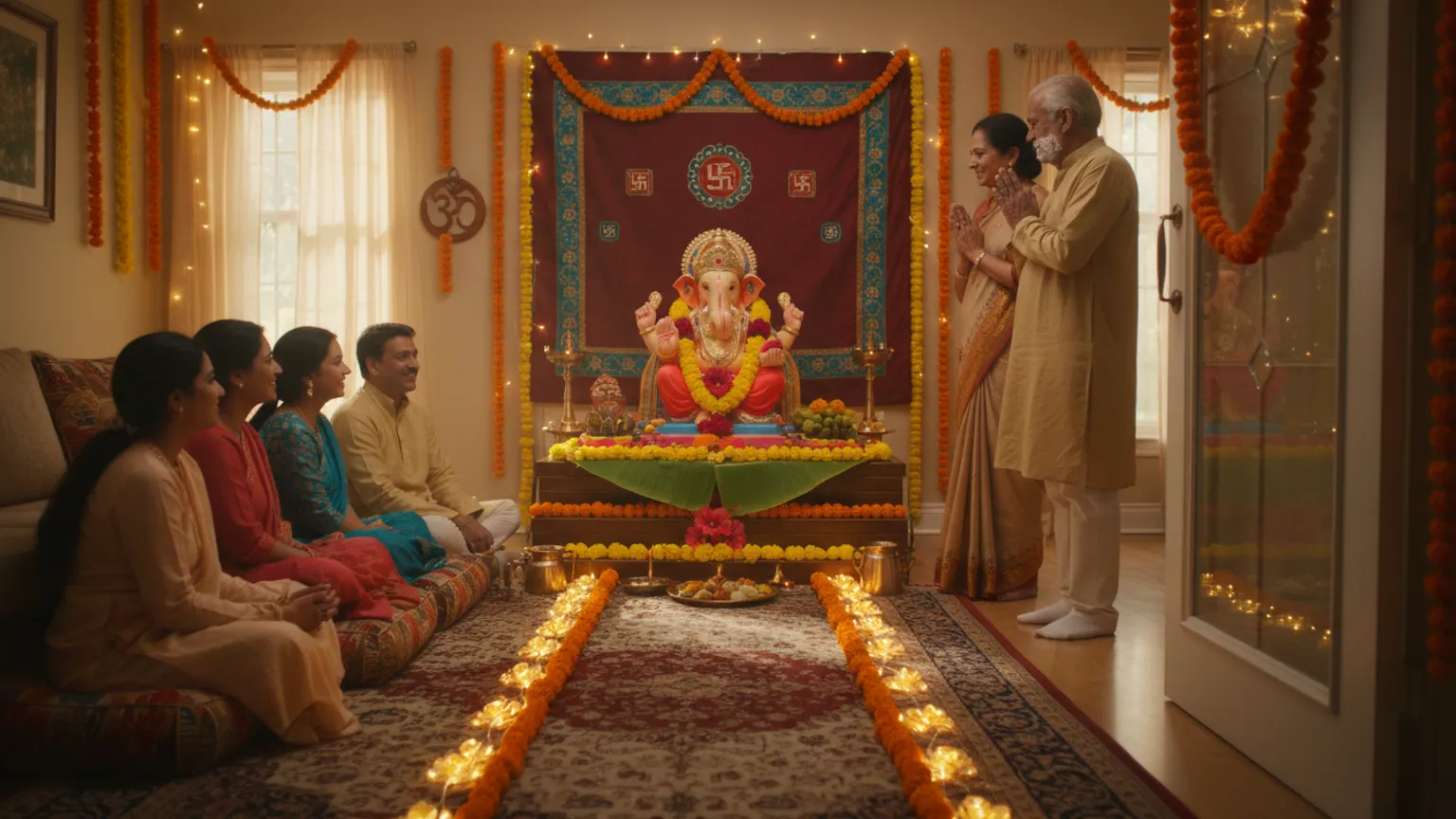
Ganpati decoration and seating: planning space for a stream of visitors
A home Ganpati is a foot-traffic problem, not a decoration one. A host's guide to placing the murti, three-zone seating, and keeping a walkway clear.