
Running low on prasad mid-Ganpati: restocking without the panic
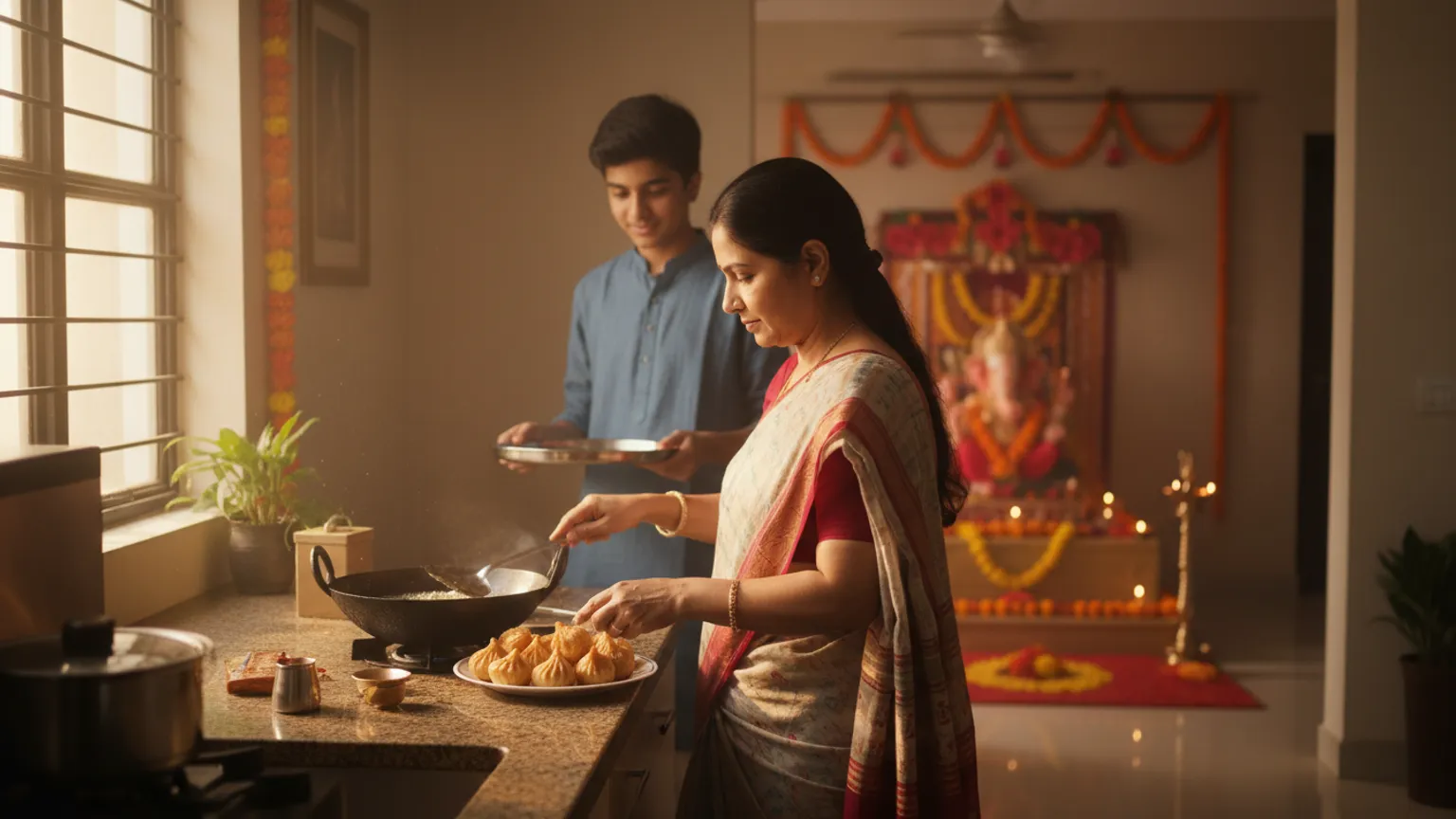
There is a particular quiet dread that arrives around day four or five of a home Ganpati, and it has nothing to do with the aarti. It's the moment you lift the prasad box, feel how light it has become, and do the math against the doorbell that just rang again. On our second home Ganpati, I remember standing in the kitchen holding a nearly empty steel dabba of modak while my mother-in-law's cousins — six of them, unannounced, lovely — were slipping off their chappals at the door. The big darshan days I had planned for. This ordinary Wednesday, I had not.
This is written for the version of you a week or so out from that Wednesday: still picturing the sthapana morning and the crowd on the weekend, not yet picturing the flat, mid-festival Tuesday when the reserve runs thin and there's no crowd to explain it. Naming that day now — and keeping a small reserve for it — is the difference between a calm refill and a mid-aarti dash to a shop that has also run out of besan.
Why you run out in the middle, not at the start
Almost nobody runs short on day one. You've just cooked, the boxes are full, the excitement is high. And almost nobody runs short on the big planned day either, because you braced for that one — you made extra, you kept a buffer, you were watching the tray.
You run short in the middle, on the days you didn't circle on the calendar. Ganpati is not one event; it's a ten-day open house, and visitors don't arrive in the neat waves you imagined. The office friend who couldn't make the weekend comes Tuesday evening. A neighbour brings her visiting parents "bas do minute ke liye." Kids from the building cycle through twice a day because word gets out that your prasad is good. None of these are big numbers on their own. But strung across the quiet middle days, they drain a reserve you mentally assigned to the weekend — and they do it precisely when your energy and your stock are both at their lowest.
The mistake isn't making too little. It's making one big batch at the start and treating it as if it has to last ten days on its own. It won't, and it shouldn't.
Keep a restock kit, not just a stockpile
The thing that saved me the following year wasn't cooking more up front. It was keeping a small restock kit — the dry ingredients for one fast batch of prasad, set aside in a labelled bag and not touched for anything else. When the tray ran low, refilling was a thirty-minute job at home instead of an hour lost to the market. A stockpile of finished prasad goes stale and gets eaten as a midnight snack; a kit of raw ingredients waits patiently until you actually need it.
Here's what lives in mine through the festival. Quantities are for roughly one fresh batch serving 25–30 people — scale to your own crowd.
| In the kit | Roughly | Makes |
|---|---|---|
| Sooji (rava) | 500 g | A big kadhai of sheera in 20 minutes |
| Ghee + sugar | 250 g + 400 g | Shared across sheera and ladoo |
| Besan | 500 g | Besan ladoo when you have a spare half-hour |
| Desiccated coconut + boora | 200 g + 200 g | No-cook coconut ladoo, ready in minutes |
| Dry fruits / makhana | 1 packet | Roasted makhana or a dry-fruit bowl as instant "prasad" |
| A tin of good pedas or chakli | 1 | The genuine no-time fallback |
The logic is simple: sheera is your fastest cooked refill, no-cook coconut ladoo is your fastest effortless refill, and the tin is your "guests at the door right now" insurance. You are never more than a few minutes from something clean to offer.
Match the restock to the time you actually have
The panic comes from treating every shortfall as a full cooking session. It isn't. Read the clock first, then pick the smallest thing that solves it.
- Guests already at the door, tray empty. Don't cook. Open the tin, or plate a bowl of dry fruit, makhana or a good mithai. Prasad is a blessing offered with warmth, not a cooking contest — a few kaju and a peda offered gladly beat hot sheera served flustered.
- Twenty minutes before the evening rush. Sheera. It's forgiving, it smells like the festival, and it stretches. This is what the sooji-ghee-sugar reserve is for.
- A calm afternoon, low stock for tomorrow. This is your window to actually cook — a proper batch of besan or coconut ladoo that resets the reserve for the next two days.
- Genuinely out of everything and no time. Buy, without guilt. A box of pedas or motichoor from a trusted halwai is prasad too. Offer it the same way you'd offer what you made.
The point of the list is permission: mid-festival, "restocking" almost never means a two-hour cook. Nine times out of ten it's a tin, a bowl, or twenty minutes of sheera.
The count is what actually drains the reserve
Here's the deeper fix, the one I wish someone had told me before that Wednesday. You don't run out because you cooked too little. You run out because you can't see the middle days coming — the drop-ins aren't on any list, so you can't plan the reserve against them.
The lever isn't more cooking. It's knowing, even loosely, who's coming on which day, so the quiet Tuesday doesn't ambush you. A single message sent when Bappa arrives does most of that work:
Bappa ghar aa gaye hain! 🙏 Aarti har shaam 7 baje, prasad ke saath. Ghar chhota hai, toh agar aap bata dein kis din aa rahe hain, hum us din theek se intezaam kar lenge. Koi formality nahi — bas andaaza mil jaata hai. Ganpati Bappa Morya! ❤️
That one note turns invisible drop-ins into a rough per-day count, and a rough count is all your reserve needs. If you're deliberately spreading visitors so no single evening drowns, I've written the full choreography in managing daily darshan footfall, and the up-front arithmetic — how much prasad a given headcount actually eats — is worked out in the prasad math guide. Read those two together and the restock kit becomes a safety net you rarely have to use, rather than a rescue you're always scrambling for.
Holding that per-day count across four WhatsApp groups is the part that slips, and it's exactly the kind of multi-day home function Inyeet is built for — each family says which evening they'll come and a running count sits in one place instead of your tired head. For a fifteen-person home Ganpati, though, a note on the fridge does the identical job; here's how the whole flow works if you want to judge for yourself whether it's worth it. Reach for the tool only when the numbers get big and uncertain at the same time.
When not to bother with any of this
If your Ganpati is small and self-contained — your family, a couple of neighbours, one evening aarti — throw this whole article away. Your mother already knows how much sheera your people eat, better than any table I can offer, and a small crowd doesn't drift the way a building-wide one does. Keeping a "restock kit" for ten guests is like keeping a spare tyre for a walk to the corner shop.
The kit and the count earn their place only when your flat becomes a genuine ten-day open house — where the middle days carry real, uncountable footfall and running short would mean sending someone to the market while the aarti is still going. If that's the festival you're heading toward, do the small kind thing for your future self now: set aside the reserve bag, send the count message before the crowd builds, and let the quiet Tuesday find you ready. Ganpati Bappa Morya.
Related reading
What a house that has fed sixty people looks like at midnight
The midnight after a big Ganpati darshan day, when sixty guests have come and gone. A host's plan for the reset, the leftover prasad and tomorrow's count.
Gauri aavahan: the day your Ganpati guest list doubles
Gauri brings married daughters and half the family back home mid-Ganpati — the day a host's guest list quietly doubles. A plan for who comes and feeding them.

Sthapana morning: from murti arrival to the first aarti
The morning Bappa comes home is four rituals stacked into ninety minutes. A host's plan for the murti, the muhurat, pran pratishtha and the first aarti.