
Navratri 2026 dates and the nine-day plan for a home host
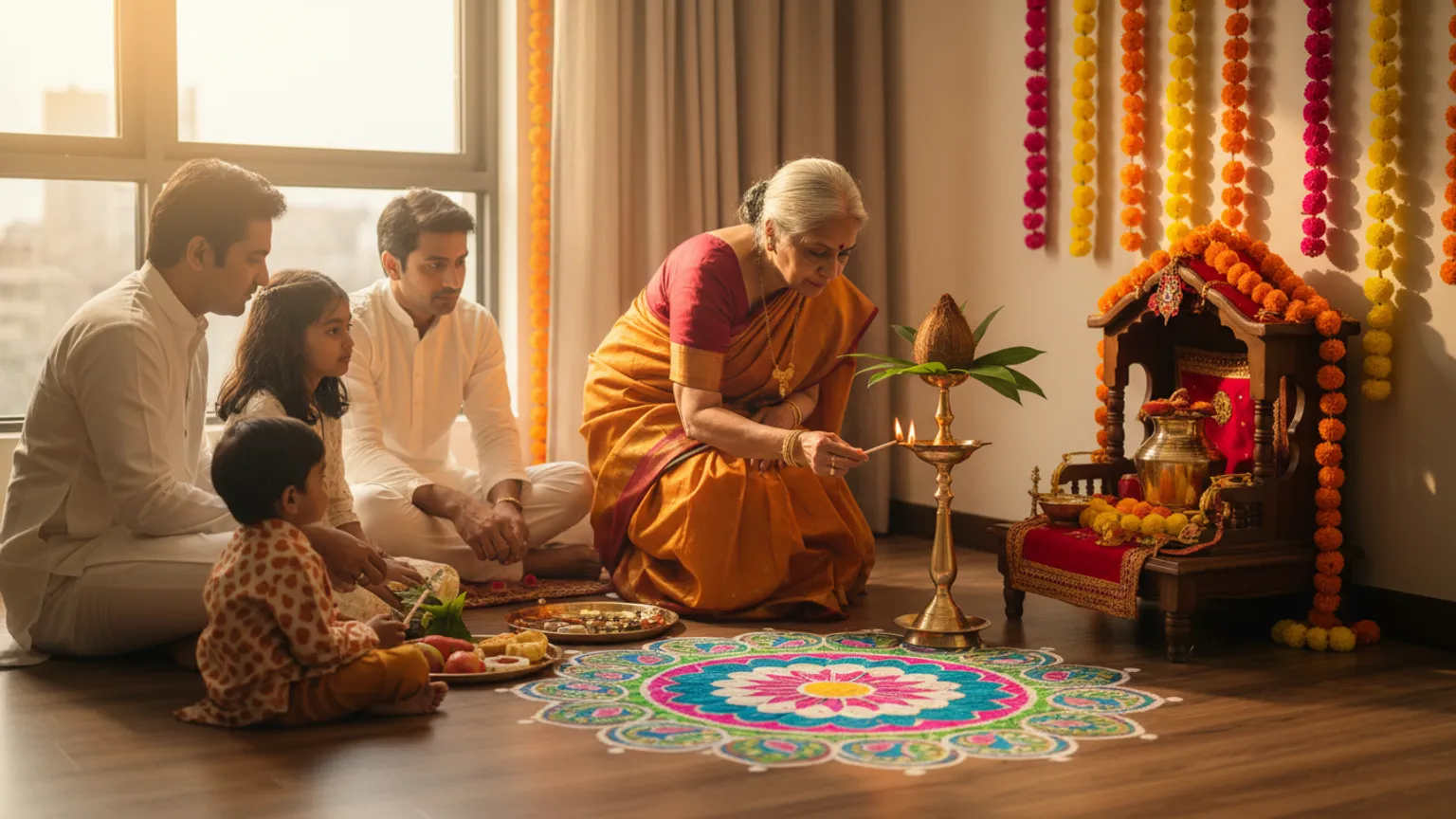
Three years ago, one WhatsApp group nearly broke my head every October. My wife's Gujarati college friends were planning which society's garba to hit on which night. My mother was asking whether the akhand jyoti diya needed to be lit before or after the Ghatasthapana muhurat. And a colleague from Kolkata kept messaging me pandal-hopping routes for Durga Puja as if we were all doing the same festival. We were, technically — all of us were "doing Navratri" — and we were planning three completely different nine days.
That's the thing nobody tells a first-time host: Navratri isn't one event with one shape. It's a nine-night window that different families, regions and even individual households fill in completely differently — dandiya every evening, or a quiet akhand jyoti and a strict fast, or a full Durga Puja pandal circuit. Before you can plan a single guest list or send a single invite, you need two things settled: the actual dates for this year, and which version of Navratri your household is actually hosting. This is the calendar post that settles both, so the more specific pieces — garba space, fasting menus, kanya pujan headcounts — have solid ground to stand on.
When is Navratri 2026?
Sharad Navratri — the big autumn Navratri that most of North, West and East India observes — begins with Ghatasthapana on Sunday, 11 October 2026 and runs through Maha Navami on Monday, 19 October, with Dussehra (Vijayadashami) on Tuesday, 20 October closing the cycle.
Two honest caveats before the table, the same ones I'd want if I were reading this cold:
- Tithi dates can shift by a day depending on your city and panchang. A tithi is a lunar day that starts and ends at a precise astronomical moment, not at midnight, so the source you check — and where you live — can move a date by a day, especially near Ashtami and Navami. Cross-check your local muhurat against Drik Panchang or your family's own panchang before you fix anything.
- This is Sharad Navratri, not the only Navratri. Chaitra Navratri in spring is a separate nine-day window with its own dates. If someone in your circle mentions "the other Navratri," that's what they mean — this post is about the October one.
The nine-day tithi calendar
Here's the full mapping for 2026, in New Delhi time. It's the skeleton every other decision in this post hangs off.
| Day | Tithi | Date (2026) | Day of week |
|---|---|---|---|
| 1 | Pratipada (Ghatasthapana) | 11 October | Sunday |
| 2 | Dwitiya | 12 October | Monday |
| 3 | Tritiya | 13 October | Tuesday |
| 4 | Chaturthi | 14 October | Wednesday |
| 5 | Panchami | 15 October | Thursday |
| 6 | Shashthi | 16 October | Friday |
| 7 | Saptami | 17 October | Saturday |
| 8 | Durga Ashtami | 18 October | Sunday |
| 9 | Maha Navami | 19 October | Monday |
| 10 | Dussehra / Vijayadashami | 20 October | Tuesday |
Notice the shape of the week: Ghatasthapana falls on a Sunday, which means the two heaviest social days — Ashtami and Navami — land on a Sunday and Monday respectively, and Dussehra itself is a Tuesday. If your circle tends to show up on weekends, expect the 17th and 18th (Saturday-Sunday) to be your busiest visiting window regardless of which version of Navratri you're hosting.
One festival, three different hosting jobs
This is the part that actually changes your planning, and it's the part most calendars skip. "Hosting Navratri" means wildly different things depending on your family's tradition:
- Garba and dandiya nights (common in Gujarati and many Maharashtrian households): a nightly social gathering, usually evenings 1 through 9, built around music, space and a headcount of dancers. The hosting load is spread evenly across all nine nights, and the constraints are floor space and sound — I've written the full method for that in hosting garba at home, including how many people a given terrace or hall can actually hold.
- Fasting and puja-focused households (common across much of North India): an akhand jyoti kept burning for nine days, a strict vrat for some or all family members, and a home puja rather than nightly dancing. The hosting load here is quieter but constant — someone has to be home to tend the jyoti every single day, and feeding a house where half the guests are fasting and half aren't is its own quiet math.
- Durga Puja pandal-centred households (common in Bengali, Odia and Assamese families): the real gathering happens from Shashthi to Dashami (16 to 20 October this year), centred on the community pandal rather than the home, with home hosting concentrated around specific meals and visiting relatives rather than a nightly event.
Most readers of this blog fall clearly into one of these, but plenty of us are hosting a blend — a North Indian household with a Gujarati son-in-law who wants one garba night, say. The honest first step, before any invite goes out, is naming out loud which of these three (or which mix) your own nine days actually is. Everything downstream — the guest list, the food, even which days you expect a crowd — depends on that answer.
Where the guest-list pressure actually falls
Whichever version you're hosting, the nine days aren't evenly weighted. Here's the pattern I've seen hold across families, mapped to this year's dates:
| Window | Dates (2026) | What usually happens |
|---|---|---|
| Day 1 — Ghatasthapana | 11 Oct (Sun) | Immediate family, the kalash setup, the first jyoti lighting — small and reverent, not a guest event |
| Days 2–6 — the quiet middle | 12–16 Oct | Lower footfall for most households; garba-hosting homes are mid-run by now and can use this stretch to check space and sound plans against actual turnout |
| Days 7–8 — the weekend peak | 17–18 Oct (Sat–Sun) | Highest walk-in and social visiting across almost every tradition — expect your biggest single-day numbers here regardless of what kind of Navratri you're running |
| Day 8–9 — Ashtami/Navami | 18–19 Oct | Kanya pujan for many North Indian households, and the peak puja days for Durga Puja households — a headcount-heavy stretch if your family does kanya bhoj |
| Day 10 — Dussehra | 20 Oct (Tue) | Vijayadashami visits, ravan dahan gatherings, and — for Durga Puja households — visarjan and the emotional close of the pandal season |
The practical takeaway: if you're deciding when to send invites, send them before day 1, not during the quiet middle when it's tempting to wait and see who's asking. And if your household does a kanya pujan or a Dussehra gathering, that headcount deserves its own confirmed number well before the 17th — waiting until Ashtami morning to find out how many girls are coming is how kitchens run short.
Deciding the food question before a single invite goes out
The one thing every version of Navratri shares is a mixed table: some guests fasting (fruits, sabudana, kuttu, singhare ka atta, no grains or onion-garlic), some eating normally, and increasingly a Jain guest or two who needs both. Getting this wrong is the single most common Navratri hosting mistake — not because anyone's careless, but because "who's fasting" quietly changes day by day as people start or break their vrat mid-week.
A few things I now do without fail:
- Ask preference per person, not per family, since one person's spouse may fast while they don't.
- Confirm again closer to the day for anything past day 3 or 4 — vrat plans genuinely shift.
- Keep the fasting spread separate from the start, not as an afterthought plate.
I've written the fuller system — the table I actually use, and the exact WhatsApp lines that get a straight answer instead of an awkward one — in tracking mixed veg, non-veg and Jain preferences. Read it before Ashtami if any part of your gathering involves a shared meal.
Messages you can copy and send
Announcing the nine days to family — carries dates and asks nothing yet (Hinglish):
Is baar Navratri 11 se 20 October tak hai. Humaare yahan [garba/vrat/puja] hoga — [exact detail, e.g. "roz shaam 8 baje thoda garba"]. Jis din bhi aana ho, aa jaana. Ashtami/Navami [18/19 Oct] ko kanya pujan bhi rakha hai, uska alag se bata doonga.
Society or office group — inviting to a specific garba evening (English):
Navratri update: we're hosting garba on [date] evening from 8 PM on the terrace. Would love to have you and family join — please do let us know if you're coming so we can plan space and a light dinner afterwards.
Confirming kanya pujan headcount with close family (Hindi):
नमस्ते। इस बार अष्टमी/नवमी [18/19 अक्टूबर] को कन्या पूजन घर पर रख रहे हैं। आपके यहाँ से कितनी बेटियाँ आएंगी, ज़रा बता दीजिए — उसी हिसाब से भोग और उपहार तैयार करूँगी।
Sending the whole nine-day shape up front, the way the first template does, is what prevents the question every host dreads around day six: "arre, Navratri khatam ho gaya kya?"
Where a tool actually helps, and where it doesn't
For a small home Navratri — one garba circle you know personally, or a family puja with the same fifteen relatives who always come — a WhatsApp message and a running mental list does the whole job. Genuinely, don't reach for anything more than that.
Where it gets hard to track by chat alone is the household running all nine nights as a social event, with different people confirming for different evenings and a kanya pujan headcount that needs to be locked days in advance. That's the specific shape of problem Inyeet is built for — each guest gets a private link over your own WhatsApp, picks the day or days they're likely to come, and you get a live count instead of scrolling back through nine days of replies. It's built for exactly this kind of multi-day, multi-tradition gathering, not for a small family puja that a notebook already handles fine.
Frequently asked questions
When does Navratri 2026 start and end? Sharad Navratri 2026 begins with Ghatasthapana on Sunday, 11 October, and runs through Maha Navami on Monday, 19 October, with Dussehra (Vijayadashami) on Tuesday, 20 October. Tithi timings can shift slightly by city, so confirm your exact Ghatasthapana muhurat against a local panchang.
Is Navratri the same festival everywhere in India? The dates are shared, but the hosting shape isn't. Many Gujarati and Maharashtrian households run nightly garba or dandiya; many North Indian households keep an akhand jyoti and a vrat with a home puja; Bengali, Odia and Assamese households centre the festival on community Durga Puja pandals from Shashthi to Dashami. Knowing which of these (or which mix) your own household is planning is the first real decision.
Which days of Navratri usually see the most guests? In 2026, the weekend of 17–18 October (Saptami–Ashtami) lines up with the peak social window most families see regardless of tradition, and Ashtami–Navami (18–19 October) is typically when kanya pujan headcounts matter most. Plan your food and space numbers around those two or three days specifically, not an even spread across all nine.
Shubh Navratri — whichever nine days you're actually hosting this year, may the jyoti stay lit and the headcount arrive a day before you need it, not the morning of.
Related reading

Ganesh Chaturthi 2026 date and 10-day schedule: what a host needs to plan
Ganesh Chaturthi 2026 falls on 14 September. A host's day-by-day breakdown of the ten-day arc, the common visarjan lengths, and what to plan for when.

Ganesh Chaturthi puja samagri list with quantities for a home setup
A complete Ganesh Chaturthi samagri list for a home setup — puja items, decoration and daily consumables with real quantities, a printable checklist and WhatsApp templates.
Raksha Bandhan at home: the thali, the timing, and feeding everyone afterwards
A host's guide to Raksha Bandhan: why Bhadra sets your timing, what belongs on the thali, and how much mithai and lunch a house that fills in waves needs.