
Kanya pujan 2026: how many girls to invite, what to prepare

Last Ashtami, my wife had eleven names on a list by 9 pm the night before — nine girls and two boys, ages ranging from three to whatever the Sharma twins upstairs are now — and by 9 am the next morning, three of them weren't coming. One had a fever, one's family had "kisi aur ke yahan" already committed her, and one mother simply stopped replying after the first "haanji, bhejungi." My mother-in-law, who had already portioned nine little thalis of puri-halwa-chana the night before, looked at the two empty seats on the verandah and said what every Indian host has said at some point in their life: "toh ab kya karein, building se koi aur bula lein?"
That scramble — the list, the confirmations that quietly dissolve, the last-minute call to the neighbour's flat — is the actual shape of hosting kanya pujan. Not the puja itself, which the pandit or the women of the house who've done it for decades will handle without your help. The headcount is the part that's genuinely yours to manage, and it's the part almost nothing written about Navratri actually walks through.
What kanya pujan is asking of the host, specifically
Kanya pujan is the ritual worship of young girls — kanjaks, believed to embody the nine forms of Devi — usually done on Ashtami or Navami during Navratri. A pandit or the senior women of the household lead the actual ritual: washing the girls' feet, applying tilak and mauli, offering them a meal, and giving each a small gift before touching their feet in respect. Alongside the girls, most households also invite one young boy, referred to as a langoora or bhairav, since Bhairav is traditionally worshipped alongside the Devi.
None of that ritual detail is the host's real challenge. The challenge is upstream of the puja: deciding how many children to invite, actually getting that many families to say yes and show up on the right morning, and having the right quantity of food and gifts ready for exactly that number — not too few, and not so many that you're improvising thalis at 9 am.
When kanya pujan falls in 2026
Sharad Navratri 2026 runs from Ghatasthapana on Sunday, 11 October, through Dussehra on Tuesday, 20 October — the full nine-day calendar and how the tradition splits by region is here if you haven't nailed down your own household's shape of Navratri yet. Kanya pujan is done by different households on different days within that window — most commonly on Durga Ashtami (Sunday, 18 October) or Maha Navami (Monday, 19 October), and some families who observe both days do a smaller version on Ashtami and the main one on Navami. A few do it on both mornings for different sets of relatives. There's no single correct day — it's a family tradition, so the first real decision is confirming which morning your household actually follows, not assuming everyone means the same date.
Because both days fall on a weekend-into-Monday stretch this year, expect competition for the same girls' time — a lot of buildings and family circles will want the same set of neighbourhood kids on the same one or two mornings. That alone is a reason to lock your date and your list early rather than a day before.
The numbers that matter, and why they're not arbitrary
Unlike a birthday party where you invite however many people fit, kanya pujan headcounts traditionally follow a small set of symbolic numbers, each tied to what the ritual is meant to represent that year.
| Number of kanyas | What it traditionally represents |
|---|---|
| 2 | The two forms — Jaya and Vijaya — worshipped as attendants of Devi |
| 5 | The five forms often invoked in a simpler home puja |
| 7 | The Saptamatrika, the seven mother goddesses |
| 9 | The Navdurga — the nine forms of Devi, the most common full count |
| 11 | Nine kanyas plus two langooras, or a fuller version some families keep |
Nine is by far the most common number households aim for, alongside one langoora, making ten children in total. If you're the one deciding for your household this year, that's the default to start from unless an elder in your family specifies otherwise — and it's worth actually asking, because "we always do nine" and "we always do five" are both real answers depending on which side of the family you ask.
Building the actual guest list
This is where the real work is, and it's closer to running a small RSVP campaign than a ritual. A few things that have saved me from the Ashtami-morning scramble:
- Start from a wider pool than you need. If your target is nine girls and one boy, have at least two or three backup names per age bracket. Kids get fevers, families travel, and plans change overnight — a list of exactly ten confirmed names is a list that will be short by morning.
- Ask the parent directly, not the child. A five-year-old saying "haan aaunga" at a birthday party carries no weight the next morning. Confirm with whoever is actually bringing the child.
- Note the age honestly. Tradition holds that kanyas are girls who haven't yet reached puberty — practically, this covers a wide range, roughly toddlers through early-to-mid childhood. If a family's daughter has crossed that stage this year, it's kinder to invite her for the meal and blessing without including her in the formal kanya count, and most families handle this gracefully when you're upfront about it.
- Reconfirm the evening before, not just once. A "yes" given a week ago and a "yes" given twelve hours before are different pieces of information. The second one is what your kitchen should plan around.
- Keep the langoora count separate. One or two boys is standard; treat that headcount with the same care as the girls', since the ritual and the food both include them.
What to actually prepare, by count
Once your number is set, quantities scale in a fairly predictable way. This is roughly what one home kitchen prepares per child, which you can multiply for your own count:
| Item | Per child | For 9 kanyas + 1 langoora |
|---|---|---|
| Puri | 3–4 pieces | 30–40 pieces |
| Halwa (sooji) | 1 small bowl (~80–100g) | ~800g–1kg |
| Chana (kala chana, boiled and lightly tempered) | 1 small bowl (~80–100g) | ~800g–1kg |
| Fruit or a sweet (optional, varies by family) | 1 piece | 10 pieces |
| Gift / dakshina (coins, a small toy, stationery, or an envelope) | 1 per child | 10 sets, kept ready and counted the night before |
| Chunni, bangles or a small token for each girl (many families include this) | 1 set | 9 sets |
Cook a little over your confirmed count rather than exactly to it — one or two extra thalis cost little and cover the child who shows up as someone's guest without warning, which happens more often than any host expects.
Messages you can copy and send
Inviting a neighbourhood or family WhatsApp group (Hinglish):
Namaste sabko 🙏 Is baar Ashtami/Navami [18/19 October] ko humare ghar kanya pujan rakha hai, subah [time] baje. Jinke ghar mein choti betiyan hain, unhe zaroor bhejiye — saath mein ek chota bhai ho toh use bhi le aayein. Confirm kar dijiyega kitne bacche aa rahe hain, taaki khaana aur uphaar theek se taiyaar kar sakein.
Direct message to a specific parent, once the group has gone quiet (Hindi):
नमस्ते भाभी जी। कल सुबह [समय] बजे कन्या पूजन है, आपकी बिटिया को भेज पाएंगी? बस एक बार बता दीजिए ताकि गिनती पक्की कर सकूं, बाकी सब यहीं संभाल लेंगे।
The morning-before reconfirmation, sent to everyone who said yes (Hinglish):
Kal subah kanya pujan hai, [time] baje. Jinhone haan bola tha, please ek baar confirm kar dein — ghar pahunchne ka time aur exact count final karna hai. Koi last-minute dikkat ho toh abhi bata dijiye, taaki hum adjust kar sakein.
That last message is the one that actually protects your kitchen. A yes from three days ago is a plan; a yes from last night is a headcount.
Where a tool actually helps, and where it doesn't
For most homes, this is exactly the size of problem a WhatsApp group and a notebook already solve — nine names, one building, one morning. Genuinely, don't reach for anything more.
Where it gets harder is a joint family or a society-wide kanya pujan pulling names from several buildings or several branches of an extended family, where five different people are each promising to "bhej dena" a child and nobody has the full list in one place by the night before. That's the specific shape of confusion Inyeet is built for — each family gets their own private link to confirm on their own time, and you get one running count instead of piecing it together from six different chat threads, the same way it helps with any larger multi-family gathering. For the one-building, one-morning version most of us actually host, it's more machinery than the job needs.
A short host checklist
- Confirmed which day your family observes — Ashtami, Navami, or both
- Decided the number — 5, 7, 9 plus a langoora, or whatever your family's own tradition is
- Built a list wider than the target, with backup names by age bracket
- Confirmed with parents directly, not through the child
- Reconfirmed the evening before, not relying on last week's yes
- Cooked slightly over the confirmed count — puri, halwa, chana, per child
- Gifts and dakshina counted and set aside the night before, not assembled that morning
- Langoora count and gifts kept separate from the kanya count
FAQ
How many girls should I invite for kanya pujan?
Nine is the most traditional count, representing the Navdurga, usually alongside one langoora (a young boy representing Bhairav). Some families use 2, 5, 7, or 11 instead, depending on their own tradition — ask an elder in your family which number yours follows before assuming nine is universal.
Is kanya pujan done on Ashtami or Navami in 2026?
Both are used, and it depends on family tradition. In 2026, Durga Ashtami falls on Sunday, 18 October, and Maha Navami on Monday, 19 October. Some households do a smaller version on Ashtami and the main one on Navami; confirm which morning your own family follows rather than assuming.
What if a confirmed girl doesn't show up on the day?
It happens often enough that it's worth planning for — build your invite list with two or three backup names per age bracket, and cook slightly more food than your exact confirmed count. Reconfirming the evening before, rather than relying on a yes from several days earlier, catches most drop-outs before the morning itself.
The scramble on the verandah, the last call to the flat upstairs, the extra thali made just in case — none of it is a sign you've planned badly. It's just what a house full of borrowed children, for one blessed morning, actually looks like.
Related reading
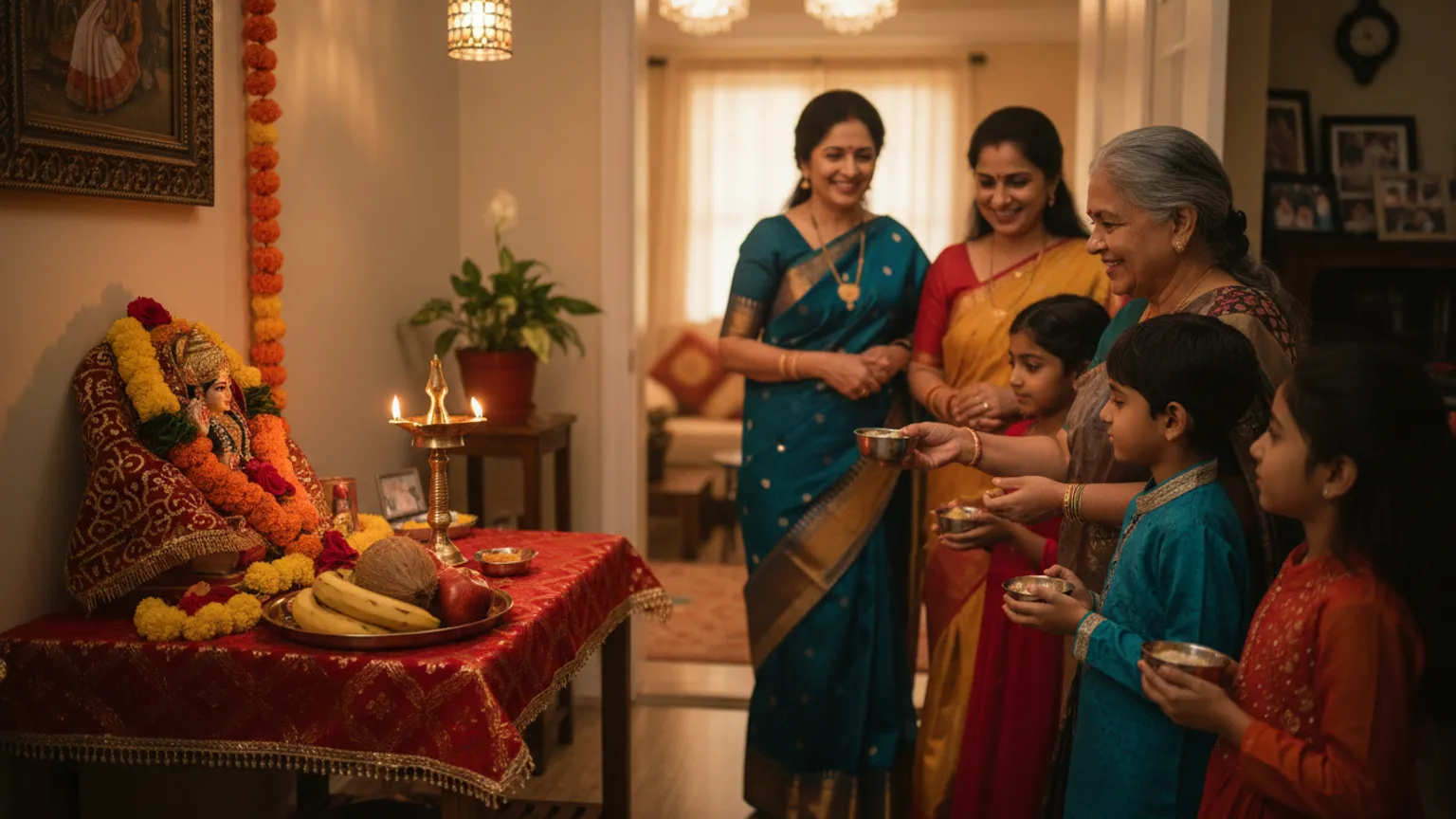
Navratri bhog and prasad quantities: planning nine days of aarti visitors
How much Navratri bhog and prasad to make across nine days of aarti drop-ins: daily per-person quantities, a nine-day bhog table and WhatsApp headcount lines.
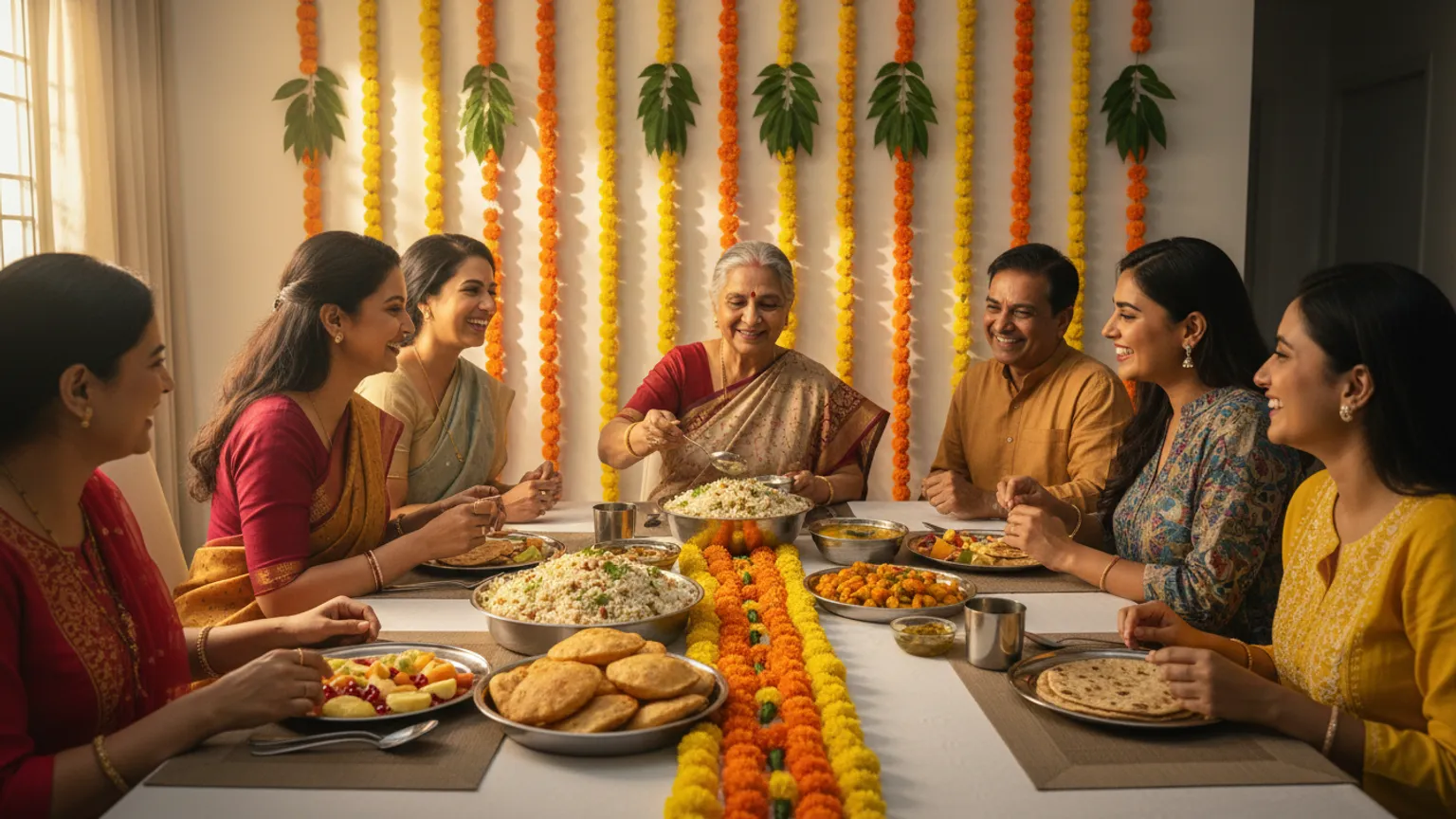
Navratri fasting guests: what to serve when half the room is on vrat
A host's guide to feeding a mixed Navratri table: what vrat food actually allows, a falahari menu that works, quantities, and messages to ask who's fasting.
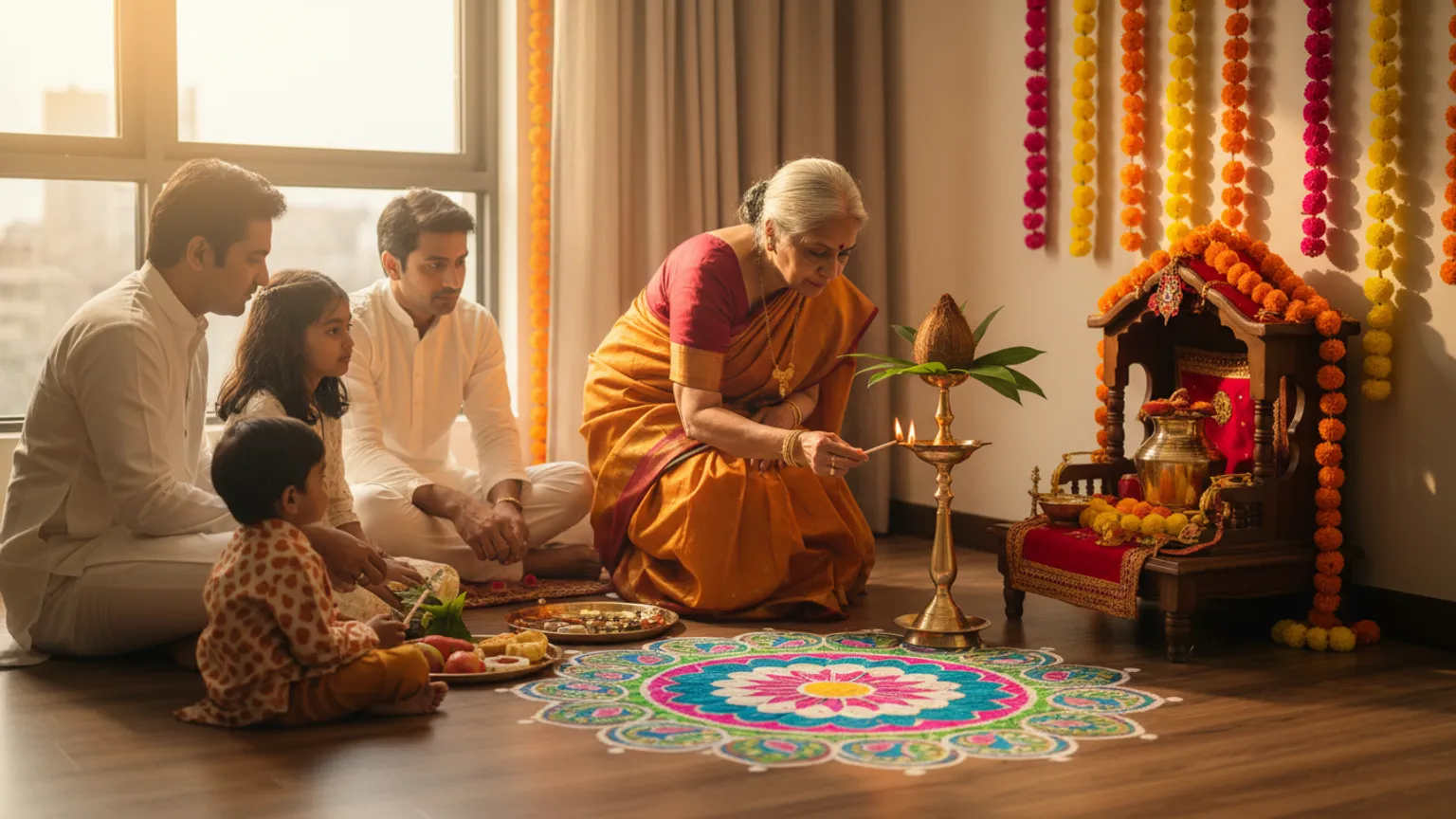
Navratri 2026 dates and the nine-day plan for a home host
Navratri 2026 runs 11 to 20 October: the full nine-day tithi calendar, how hosting differs by tradition, and where guest-list pressure actually lands.