
Gauri aavahan: the day your Ganpati guest list doubles
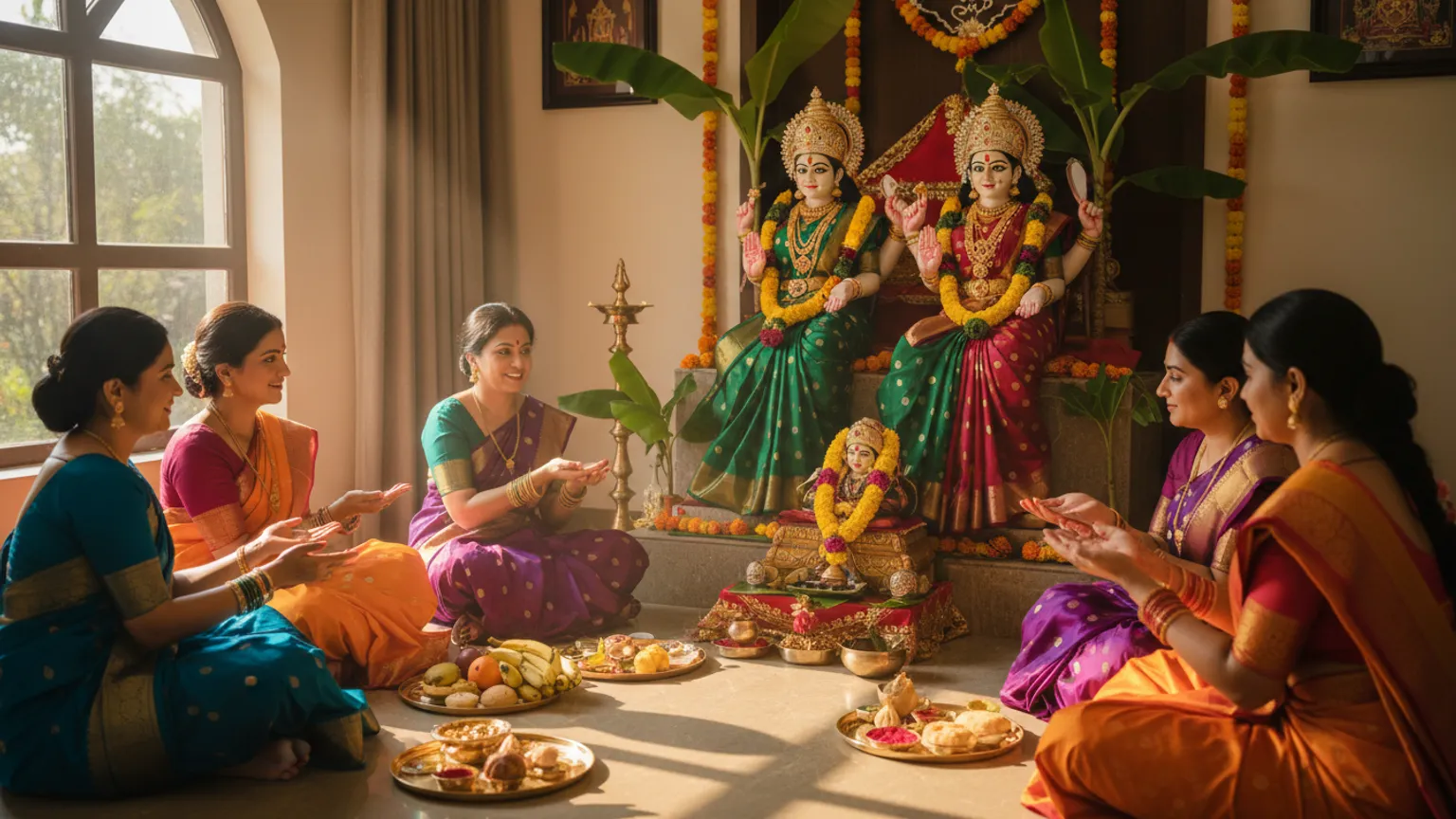
The first year we did Gauri properly, I had planned the whole ten days around the darshan evenings — who comes which night, how much prasad, the aarti at 7:30. What I had not planned for was the afternoon of Gauri Pujan, when I came home from a quick errand to find the flat holding more people than any of our biggest evenings. My mother's two sisters. My wife's sisters, who had travelled in that morning. Four women from the building I half-recognised, mid-haldi-kumkum on the floor. A pressure cooker going for a meal I hadn't budgeted for. And I stood in the doorway doing the arithmetic every host eventually does — when did the guest list double, and why did nobody tell me?
This is written for the version of you a week or two out from Gauri, still picturing the aarti line and not yet picturing that afternoon. Because in a house that keeps Gauri, the two or three Gauri days are not a bigger version of a darshan evening. They are a different gathering, with a different guest list, and if you plan only for the festival you already know, they will catch you exactly the way they caught me.
Why Gauri is the day the numbers change
Jyeshtha Gauri arrives in the middle of Ganpati — in 2026 the avahan (welcoming) falls on 17 September, the main pujan on 18 September, and the visarjan on 19 September, a few days after the murti comes home on Ganesh Chaturthi. But dates shift by region and family tradition, so confirm your own against the panchang before you plan around them; I never trust a single source for a tithi.
The reason the count jumps isn't the two Gauri idols themselves — it's who they bring. Gauri is welcomed as a married daughter returning to her maternal home, and the tradition pulls the real married daughters and sisters back with her. People who would send a "darshan kar liya, Bappa Morya 🙏" for a normal evening actually travel in for Gauri. On top of that, Gauri Pujan day carries a haldi-kumkum — the afternoon where suvasinis, the married women of the family and the neighbourhood, are invited to sit together, exchange haldi-kumkum and a small gift, and eat. That is a whole second gathering, in daylight, with a guest list your evening aarti never had.
So two things stack on the same day. The relatives who "already came" come again, and a women's gathering appears that has nothing to do with the darshan line. That is the doubling. In our house those Gauri days ran to roughly twice a normal darshan evening's footfall — not a statistic, just what our floor and our kitchen actually saw.
Who actually comes for Gauri
The useful move is to stop treating your Gauri guest list as the same people as your darshan list. It overlaps, but it is genuinely a different set. Here is who shifts:
| Who | A normal darshan evening | The Gauri days |
|---|---|---|
| Married daughters / sisters | Maybe, if they live close | Travel home specifically — this is their day |
| Aunts and older women of the family | A short evening visit | Stay through the haldi-kumkum, often all afternoon |
| Neighbourhood suvasinis | Rarely, in passing | Formally invited for haldi-kumkum on Pujan day |
| Relatives who "already did darshan" | Won't come twice | Come again, because Gauri is its own occasion |
| Working men and younger cousins | Evening drop-in | Same evening drop-in — into an already full house |
Read the right-hand column and the afternoon I walked into stops being a surprise. The evening crowd hasn't gone anywhere; a daytime crowd has been added underneath it.
The three-day shape, and where the crowd lands
Roughly, and subject to your family's own reckoning:
- Avahan — the Gauris are welcomed and installed, often with footprints drawn to the doorstep. Close family, a quieter day.
- Pujan — the main day. The mahanaivedya, the haldi-kumkum, the meal. This is your peak, and it peaks in the afternoon, not the evening.
- Visarjan — the goodbye, usually the following morning. A smaller, tenderer gathering.
The single thing worth internalising: your busiest hour of the whole ten-day festival may well be a Gauri Pujan afternoon, not a weekend darshan night. If you have planned all your seating, food and help for evenings, that afternoon is where you get caught. The full choreography of spreading darshan across days still applies to the evenings — Gauri just adds a daytime spike on top of it that most first-time hosts don't see coming.
And the food is not prasad-on-a-tray food. Gauri Pujan carries a proper mahanaivedya — the sixteen bhaajya, puran poli, the works — and the women who come for haldi-kumkum are meant to be fed a real meal, sitting down. That is a catering count, not a prasad estimate. If you're already working out quantities for the festival, do the Gauri Pujan meal as its own separate number; the method for turning a headcount into quantities is the prasad and bhog math, applied to a sit-down lunch rather than a drop-in tray.
The messages that get you a count before Gauri
You cannot plan a doubled day off a guess, and you cannot reconstruct it in the moment. The fix is the same one that works for the whole festival — ask early, in the right group, and write the answers down somewhere that isn't your memory. Three messages, copy-paste and edit.
To the wider family — the Gauri-days ask (Hinglish)
Ganpati Bappa Morya! 🙏 Is saal humaare ghar Gauri bhi aa rahi hain — avahan [date], pujan [date]. Bappa toh poore [X] din hain, lekin Gauri ke do din ghar thoda zyaada bhara rehta hai.
Aap Gauri ke din aa rahe ho toh bas bata dena — kis din aur kitne log — taaki khaane aur baithne ka intezaam theek se ho jaaye. Koi formality nahi, sirf count ke liye. 🌺
To the women's circle — the haldi-kumkum invite (Hinglish)
Namaskar 🙏 Gauri Pujan ke din, [date] dopahar [time] baje, ghar par haldi-kumkum rakha hai. Aap zaroor aaiye — saath mein prasad aur bhojan bhi hai.
Aa paayengi toh ek reply kar dijiyega, taaki thali aur baithne ki jagah us hisaab se laga sakoon. Flat [no.], [society]. 💛
To married daughters and sisters — coordinating the arrival
Gauri [date] ko aa rahi hain — tu kis din pahunch rahi hai, aur ruk rahi hai ya same day nikalna hai? Bas itna pata chal jaaye toh room aur khaana dono manage ho jaayega. Ghar tera hi hai, aaram se aa. ❤️
Notice none of them is a wishes-forward. Each one asks for a specific thing — a day, a yes to the afternoon, an arrival plan — because that is what turns a doubled day from an ambush into something you've already staffed and cooked for. Holding those answers across three different WhatsApp groups is the part that slips; a single place where each family says which Gauri day they'll come, and how many, is what Inyeet is built to hold. For a small Gauri, a page in a diary does the identical job — use that.
A host's Gauri checklist
Run this alongside your normal festival planning, not instead of it.
- Confirm your family's avahan / pujan / visarjan dates against the local panchang — they vary by region and tradition
- Write your Gauri guest list as a separate list from your darshan list; they are not the same people or the same count
- Ask married daughters and sisters their arrival day, and whether they're staying over
- Fix the haldi-kumkum afternoon slot and send the suvasini invite a week ahead, not the night before
- Plan the Pujan-day mahanaivedya and meal as a sit-down count, separate from evening prasad
- Arrange floor seating and space for an afternoon gathering of women — not just an evening aarti line
- Keep a running count for each Gauri day, kept apart from the rest of the festival's tally
Seven lines, and only two of them are about food. The rest is just refusing to let a known crowd stay invisible until it's standing in your hall.
When your Gauri is a small one
Plenty of homes keep a quiet Gauri — the two idols, the family that lives in the same city, no formal haldi-kumkum, one unhurried afternoon. If that's yours, put this whole page down. You don't need a separate list or a count or a template; you need your mother's recipe and a couple of extra thalis, and it will be a lovely, easy day. The doubling I'm describing only bites when married daughters travel in, a neighbourhood haldi-kumkum is genuinely on, and the afternoon meal is for a room full of people you can't name from memory. That's the day worth planning. A small Gauri plans itself.
And if this is your first year keeping Gauri at all, be gentle with the scale. Do the two idols, the pujan, the meal for the people you're sure of, and let the tradition grow into your home over a few years rather than trying to host a fifty-person haldi-kumkum on the first attempt. The midnight after a full house is a real hour, and there's no medal for reaching it exhausted in year one.
If you can already tell that this year's Gauri is the big one — the daughters coming home, the building's women invited, the afternoon that doubles your festival — then do the kind thing for your future self now. Make the Gauri guest list separate. Send the three messages this week. Plan the Pujan afternoon as its own meal. If a shared count across all of it would genuinely help, that's what we built Inyeet for; if a notebook and a good guess are carrying it, keep them. Either way, you'll spend that Pujan afternoon welcoming Gauri instead of counting heads in the doorway. Ganpati Bappa Morya, and Gauri aai la namaskar.
Related reading
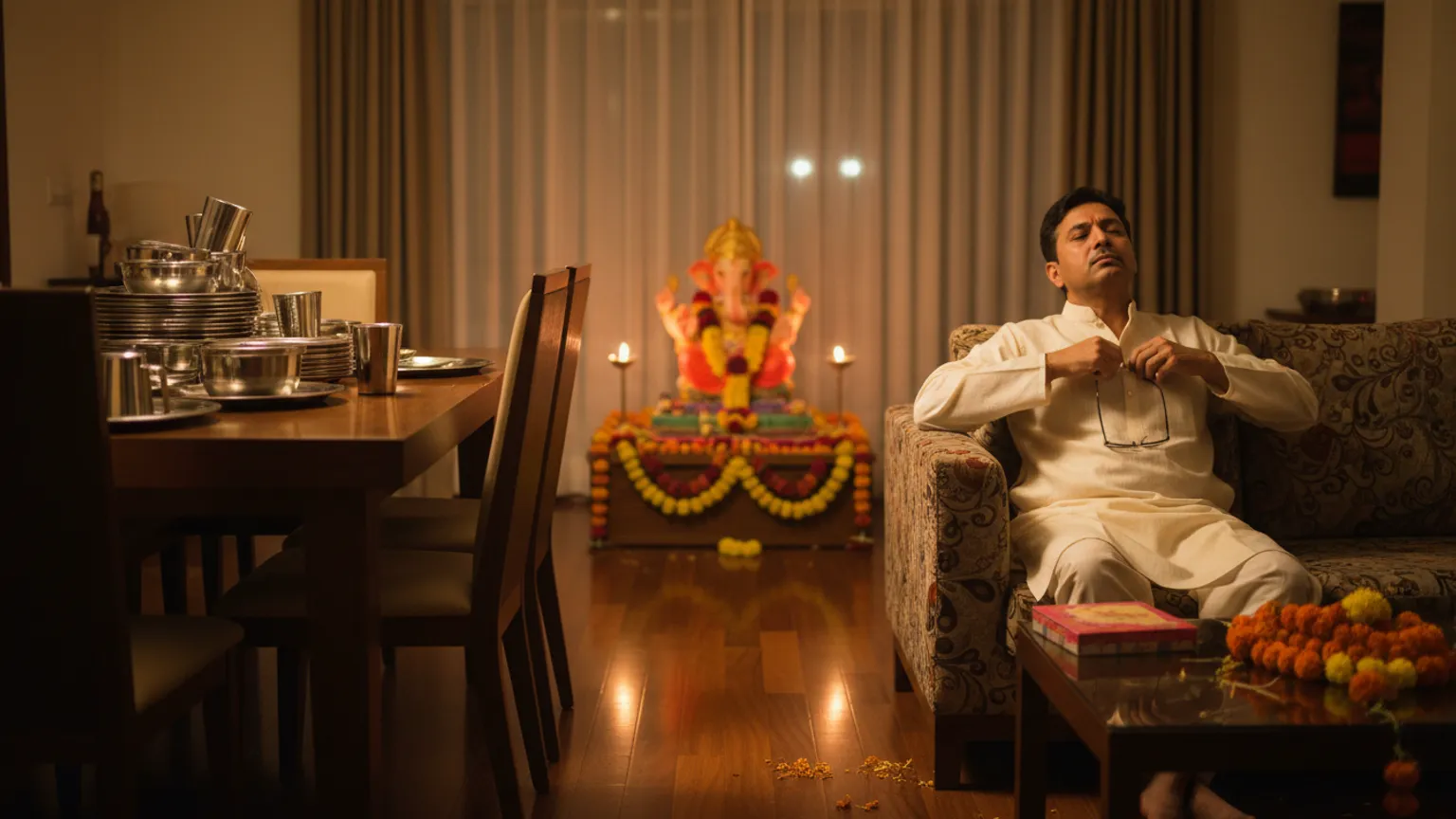
What a house that has fed sixty people looks like at midnight
The midnight after a big Ganpati darshan day, when sixty guests have come and gone. A host's plan for the reset, the leftover prasad and tomorrow's count.
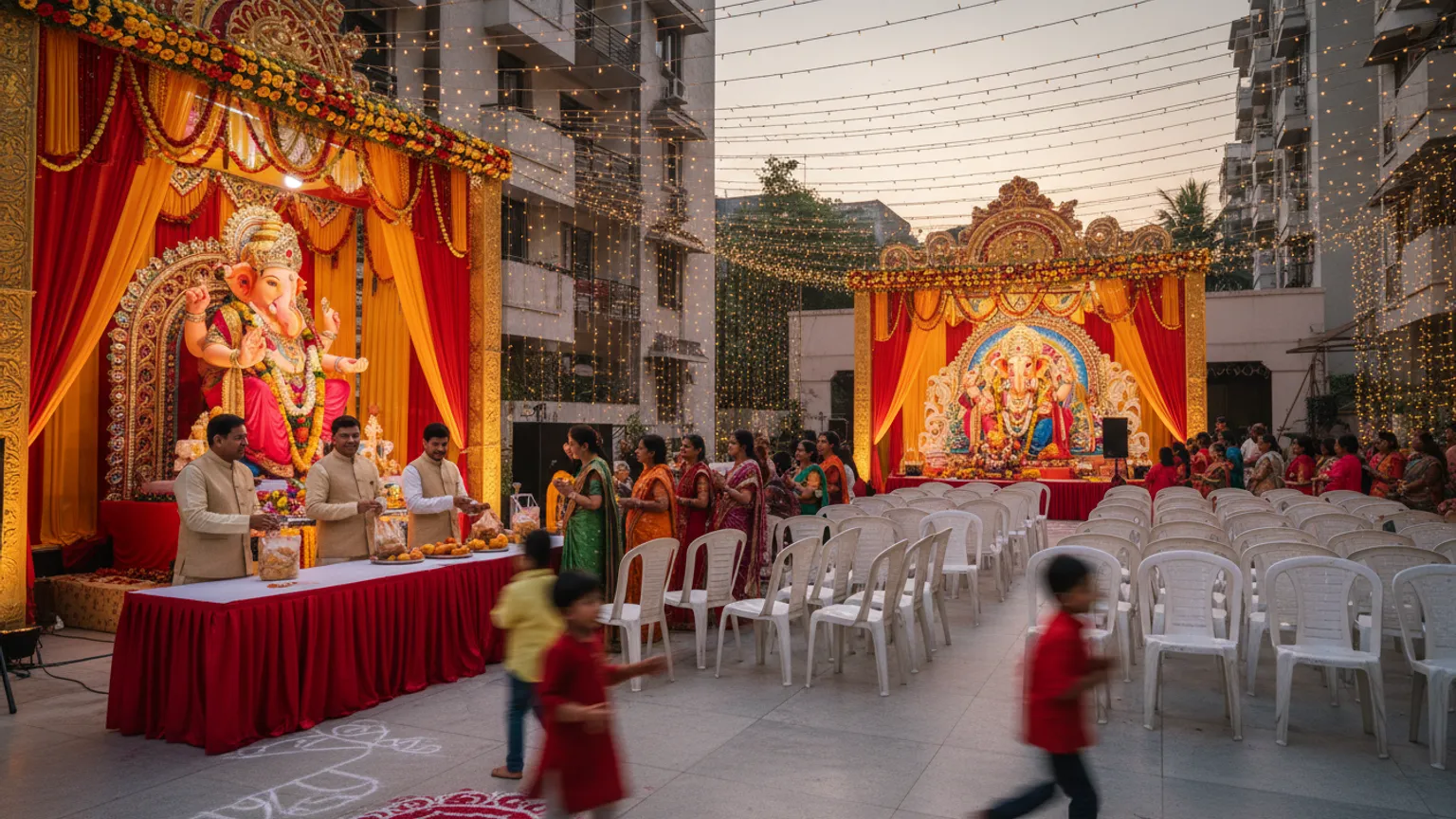
Society Ganpati versus home Ganpati: how the guest list changes
Society Ganpati and home Ganpati are two different hosting jobs. How the guest list, headcount, prasad and coordination change between them, with templates.

How many people come for Ganpati darshan: estimating daily footfall at home
How many people actually come for Ganpati darshan? A host's method to estimate daily footfall at home, a per-day forecast table, and templates to gauge it.