
What a house that has fed sixty people looks like at midnight
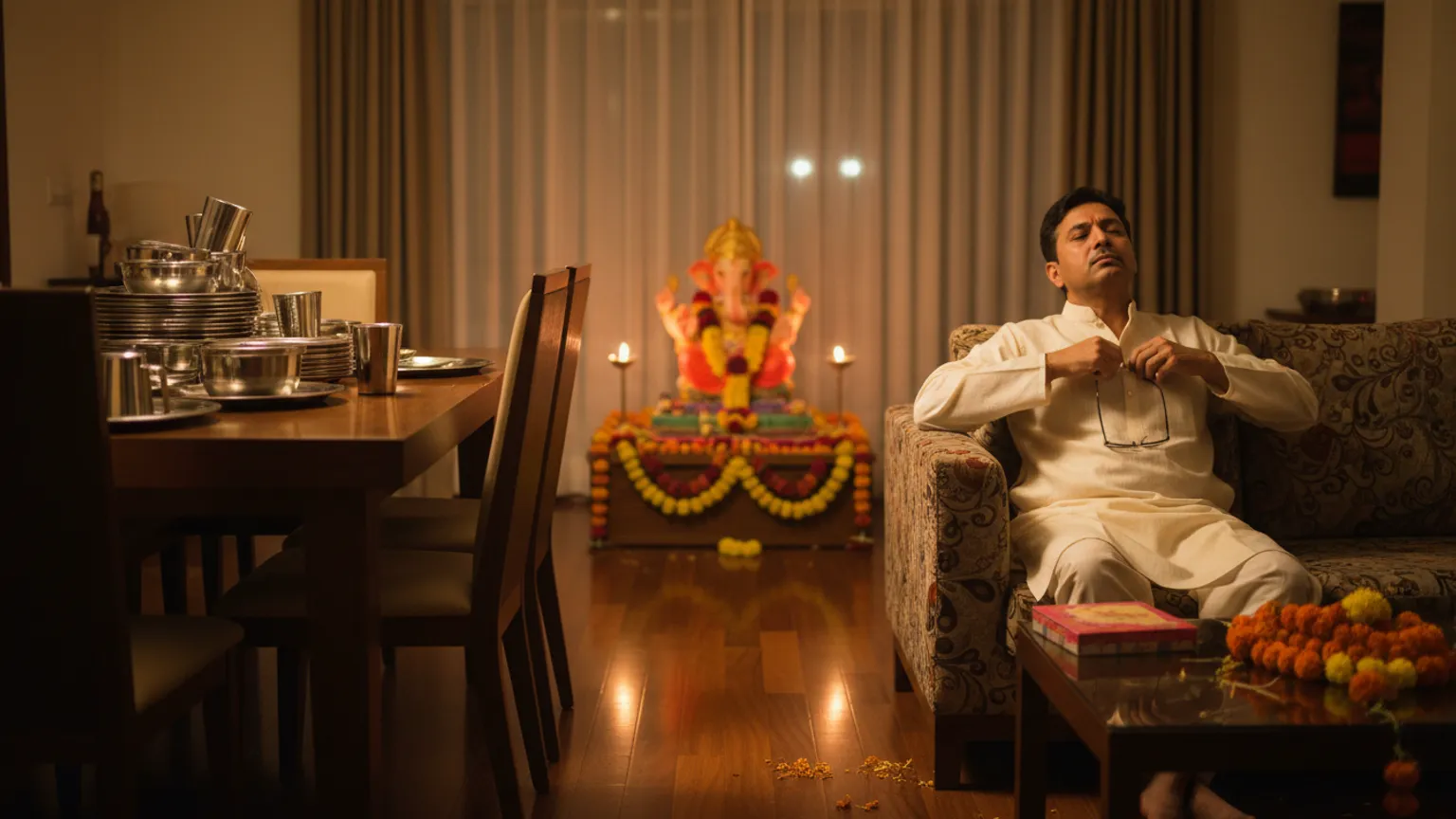
I can tell you exactly what our flat looked like at midnight after the biggest darshan day of our first home Ganpati, because I sat in the middle of it for a while before I could make myself move. Sixty-odd people had come and gone across the day. The steel plates were stacked in three leaning towers by the sink. There was a garland on the sofa arm that nobody had hung. Bappa's platform still glowed, calm as ever, while the rest of the room looked like a small storm had passed through it. And I remember thinking, with the particular clarity that only arrives at midnight: nobody warned me about this hour.
This is written for the version of you who is a week or two out from that day — still picturing the aarti, the prasad, the photos — and not yet picturing midnight. Because midnight is coming too, and it is the part no invitation, no muhurat, no checklist ever mentions. Naming it now is the difference between an hour that flattens you and one you've already made peace with.
The hour nobody plans for
Every guide tells you how to start a darshan day. Almost none tell you how it ends. And the end is a real thing — not the aarti, not the last "achha nikalte hain", but the quiet forty minutes after the door finally stays shut, when the adrenaline drains out and the house is suddenly, loudly empty.
What makes it hard is not the mess itself. It's that the mess arrives at the exact moment you have nothing left. You've been on your feet since the morning aarti. You've said the same "aaiye aaiye" four hundred times. You've refilled the prasad tray until you lost count. And now, drained, you're looking at a kitchen that needs an hour and a body that's done. That gap — between what the room needs and what you have left to give — is the whole problem of midnight. You can't make yourself less tired. But you can decide, in advance, that this hour won't be a full cleanup at all.
The three things midnight is actually holding
Sit in it honestly and the midnight after a full house is only three things stacked together, each pretending to be urgent:
- The mess that looks like more than it is. Plates, glasses, a floor full of petals, chairs at odd angles. It feels like two hours of work at 11:45. In daylight, rested, it's forty minutes. The trap is trying to finish all of it now.
- The prasad and food that won't keep. This is the only genuinely time-sensitive part. Modak, sheera, the sabzi someone's mother sent — some of it needs a fridge tonight or it's gone by morning, and in a house that fed sixty, there is always more left than you expect.
- The count you stopped keeping. Somewhere around the fortieth guest, you lost track of who came and who said "kal aayenge". That unfinished list is the thing that actually follows you to bed — not the plates.
The plates can wait. The food and the count cannot. Knowing which is which, before you're standing there exhausted, is what turns a dreaded hour into a fifteen-minute one.
A midnight reset, decided before the festival
The year after that first storm, I stopped treating midnight as cleanup and started treating it as a reset — the smallest set of things that must happen so tomorrow starts clean, and nothing more. Everything else waits for morning light and a cup of tea. Here's the whole reset, and it's deliberately short:
- All food that needs refrigerating is in the fridge — not "most", all. This is the only non-negotiable.
- Prasad for tomorrow's aarti set aside separately so it isn't eaten as a midnight snack.
- Plates and glasses rinsed and stacked, not washed. Rinsing stops the crust; washing is a morning job.
- Bappa's platform tidied — wilted flowers cleared, lamp checked, so the murti isn't sitting in yesterday's leftovers.
- One glass of water and the phone on charge, because tomorrow is another arrival day.
Notice what isn't on it: mopping, real dishwashing, folding chairs, sorting the shoe pile. None of that changes anything by morning, and doing it at midnight only steals from the sleep you'll need. The reset protects tomorrow. The deep clean can wait for a rested you.
For the leftover food specifically — the part that genuinely spoils — a thirty-second sort saves a real mess:
| What's left | At midnight | By morning |
|---|---|---|
| Fried modak, chaklis, dry farsan | Airtight box, counter | Fine for two–three days |
| Sheera, kheer, milk sweets | Fridge tonight, no exception | Reuse for morning prasad |
| Cooked sabzi, rice, dal | Fridge tonight | Breakfast, not re-served to guests |
| Cut fruit, opened curd | Fridge or bin it | Rarely worth keeping |
The count is the part that steals your sleep
Here's the thing I didn't understand until my third year: the plates weren't what kept me up. It was the not-knowing. Somewhere in that day, twelve people had said "hum kal aayenge" and I had nodded and lost every single one of those names in the crowd. So at midnight I was lying awake doing mental arithmetic — how much prasad to make tomorrow, whether the Sharmas had come or were still pending, whether I needed more disposable plates. During a ten-day festival, that unfinished count doesn't reset. It just rolls into the next morning as a low, permanent hum of guessing.
The fix isn't more effort on the night — you have none left. It's a small message sent before midnight ever arrives, so people tell you their day and you're not reconstructing it from memory. Something like this, sent a day or two before your big darshan day:
Bappa is home! 🙏 Aarti and prasad har shaam 7 baje. Ghar chhota hai, toh agar aap bata dein kis din aa rahe hain, hum us din aapke liye theek se intezaam kar lenge. Koi pressure nahi — bas count ka andaza mil jaata hai. ❤️ Ganpati Bappa Morya!
That one message does at midnight what no amount of cleaning can: it means the count is already known, written down somewhere, instead of living in your tired head. If you're spreading visitors across several days so no single evening drowns, I've written the full choreography for that in managing daily darshan footfall — and the reason to keep a running, per-day count of who's still pending is exactly this midnight. Holding that list across four WhatsApp groups is the part that slips; a single place where each family says which evening they'll come is what Inyeet is built for, and the multi-day home functions it actually helps with are precisely these long festivals. For a fifteen-person Ganpati, a note stuck on the fridge does the same job — use that instead.
When midnight is just midnight
If your Ganpati is small — your family, a few neighbours, one evening aarti — none of this applies, and I'd gently tell you to skip the whole idea of a "reset". Ten plates and a quiet room don't need a system. You'll rinse them half-asleep, switch off the lamp, and sleep the good, heavy sleep of a nice evening. This planning only earns its place when sixty people move through one flat and the aftermath genuinely outruns you.
But if you know that's the day you're heading toward, do the kind thing for your future self now. Decide tonight's reset before the festival starts. Send the count message before the crowd arrives. Then, when midnight comes and the house is wrecked and you're empty, you won't have to think — you'll do the five small things, look up at Bappa in the quiet, and let the rest wait for morning. That version of midnight, I promise you, is a lovely one. Ganpati Bappa Morya.
Related reading
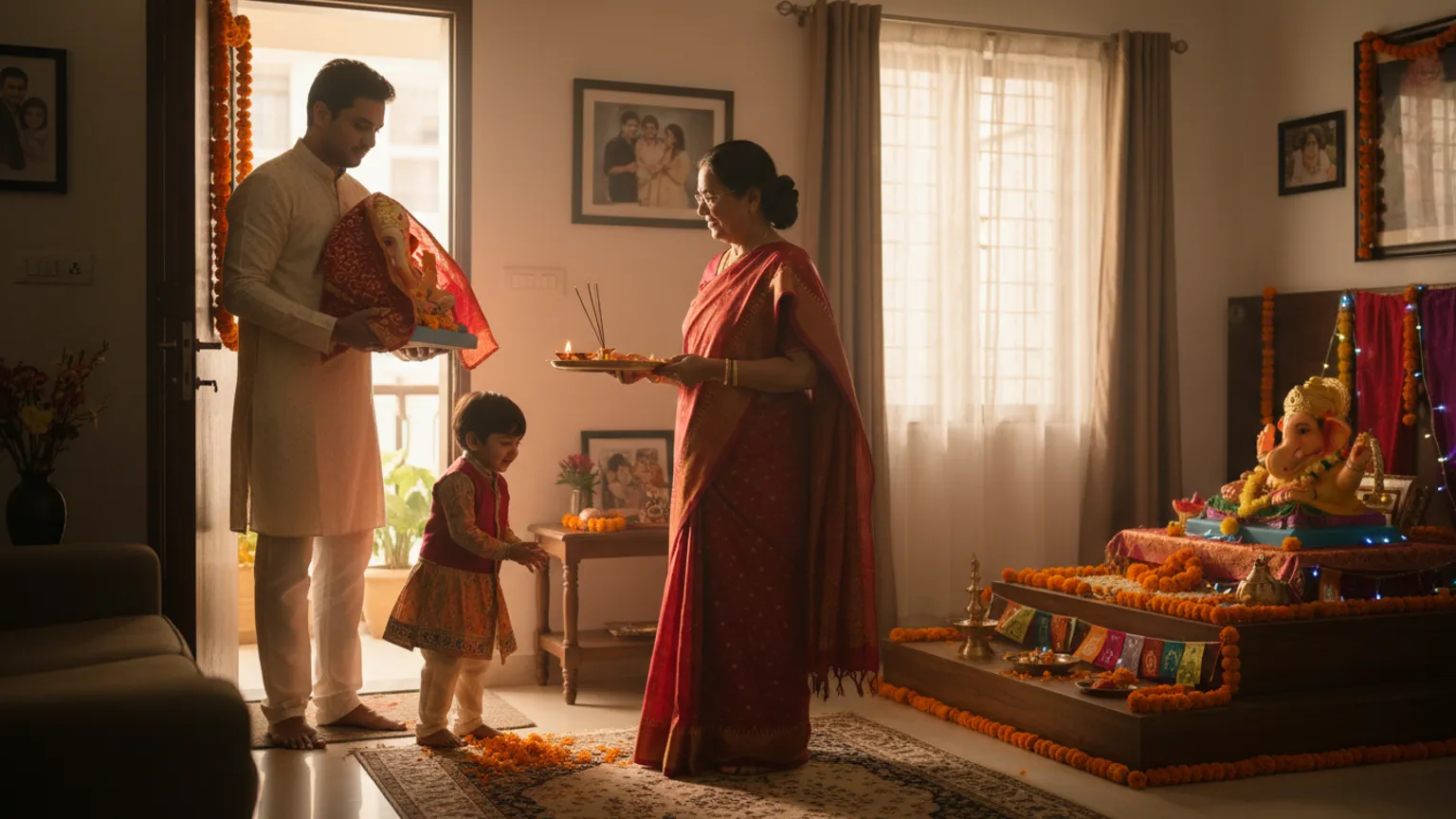
Sthapana morning: from murti arrival to the first aarti
The morning Bappa comes home is four rituals stacked into ninety minutes. A host's plan for the murti, the muhurat, pran pratishtha and the first aarti.
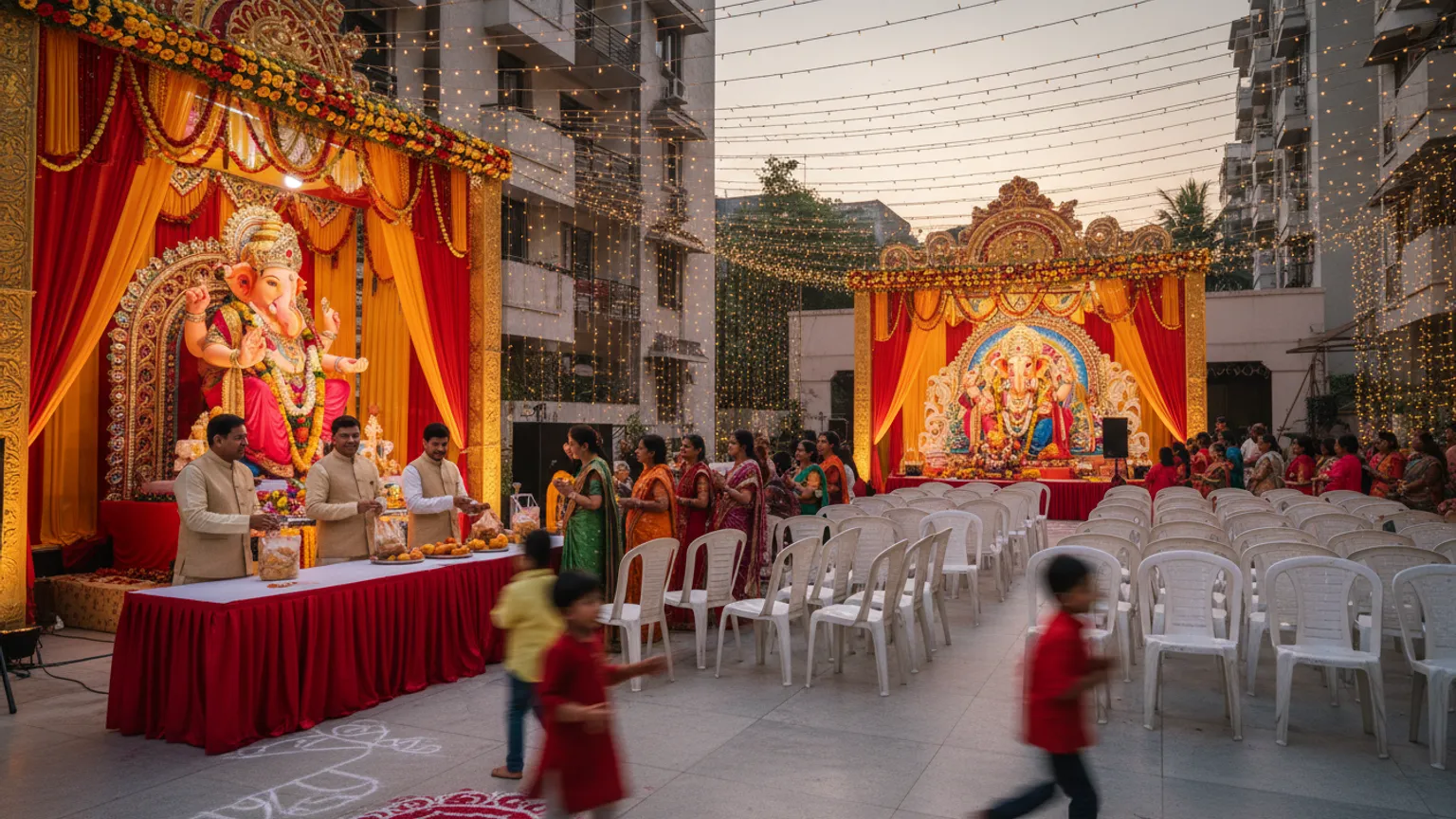
Society Ganpati versus home Ganpati: how the guest list changes
Society Ganpati and home Ganpati are two different hosting jobs. How the guest list, headcount, prasad and coordination change between them, with templates.
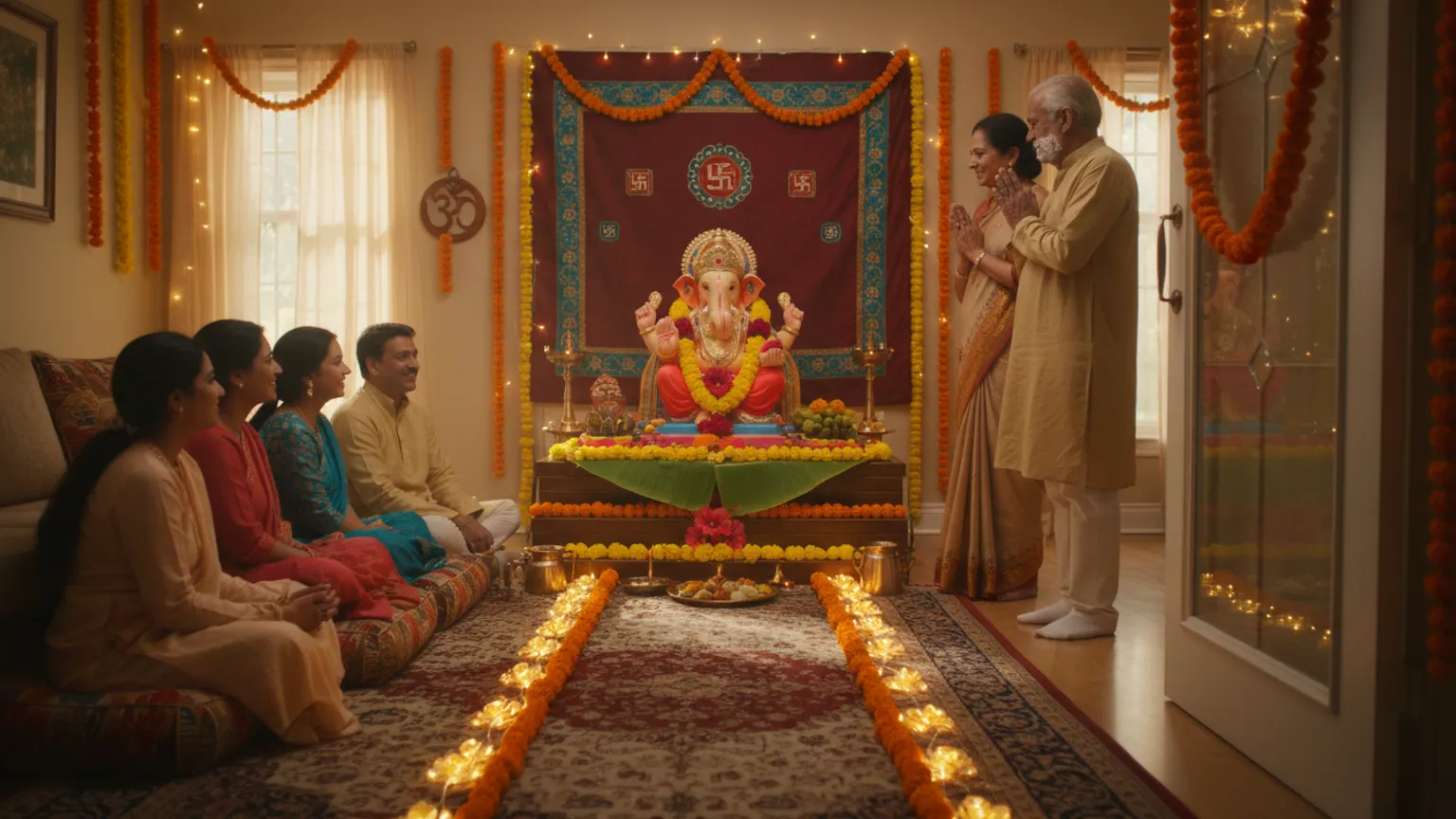
Ganpati decoration and seating: planning space for a stream of visitors
A home Ganpati is a foot-traffic problem, not a decoration one. A host's guide to placing the murti, three-zone seating, and keeping a walkway clear.