
Wedding invitation messages for WhatsApp: formal, warm and Hinglish
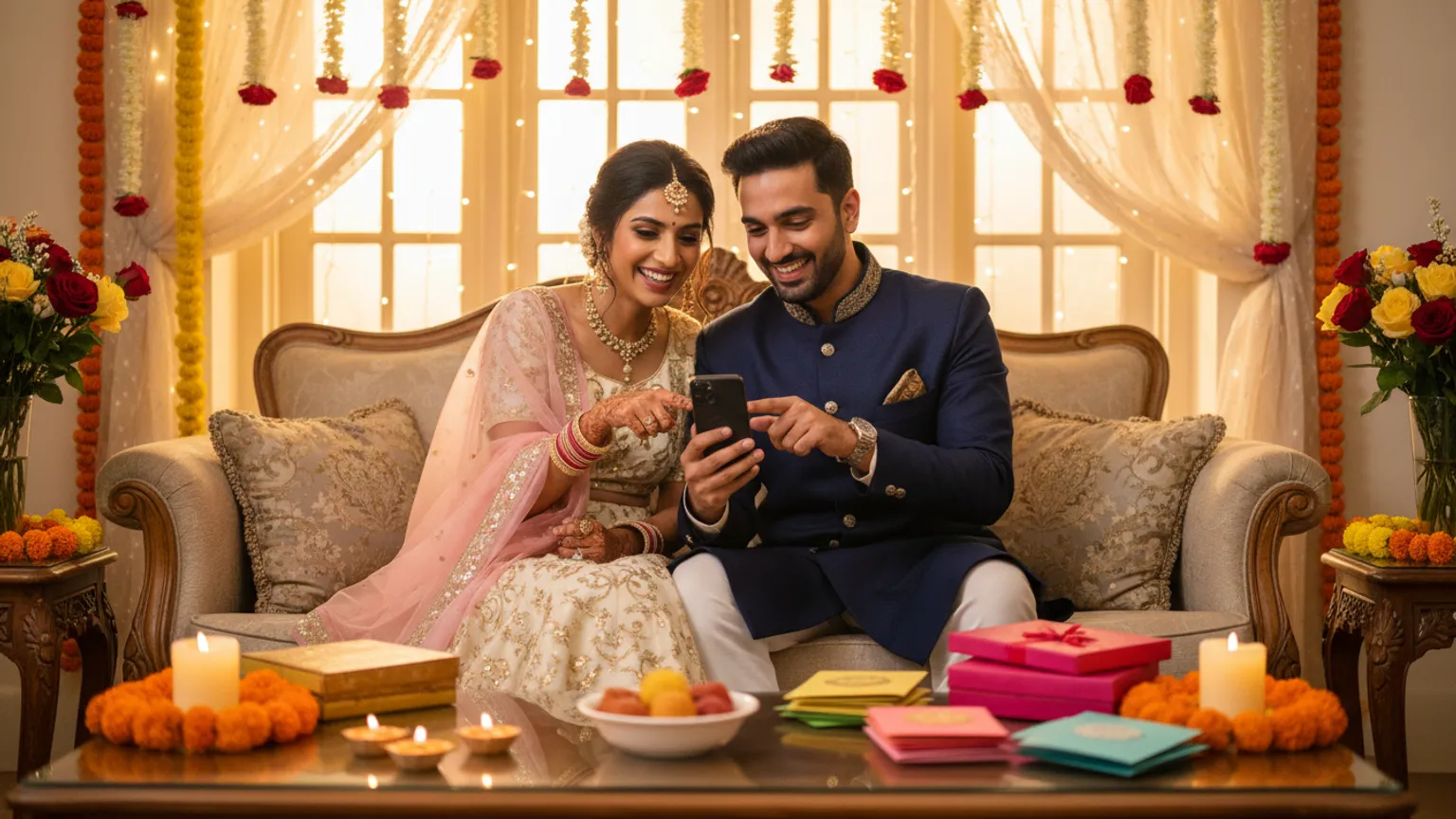
When my cousin got married in Guwahati two winters ago, I offered to "handle the WhatsApp side" — I thought it meant forwarding one card to a few groups. By the end of that week I had typed the words "aap sadar aamantrit hain" so many times my thumb had a cramp, and I still managed to send my very traditional Barua uncle a message that started with "Hey!" He didn't reply for a day. When he finally called, it wasn't to RSVP — it was to gently ask whether the wedding was "a casual thing." One wrong opening line had made a real wedding sound like a house party.
That's the thing about a shaadi invitation on WhatsApp: it isn't one message you write once. It's the same news told in three or four tones, to people who judge you by the tone as much as the date. An elder needs formality and blessings; a school friend needs warmth and a "yaar tu aana zaroor"; a colleague needs the venue, the time, and nothing else. This post is the toolkit I wish I'd had that week — a full set of copy-paste wedding invitation messages, sorted by who's reading, with formal, warm and Hinglish versions for each. Edit the names, keep the tone, hit send.
Send the invitation in layers, not one blast
A wedding is not a single event, so a single message can't carry it. Between the save-the-date, the main invite, the function-specific notes for sangeet or haldi, and the day-before reminder, you're really sending four or five messages over a few weeks. Get the layers right and the whole thing feels effortless. Blast one card to everyone and you'll spend the final week answering "reception kitne baje hai?" one person at a time.
Here's the sequence that has never let me down:
| Layer | When | Who | What it carries |
|---|---|---|---|
| Save-the-date | 6–10 weeks before | Everyone you're sure about | Just the dates and city — "block your calendar." No venue detail needed yet. |
| Main invitation | 3–4 weeks before | Full guest list, tone matched to each circle | The card, the main function's date/time/venue, a Maps pin, a soft RSVP ask. |
| Function-specific note | 1–2 weeks before | Only those invited to that function | Sangeet / haldi / mehndi timing, dress code, "this one's family + close friends only." |
| Reminder | 1–2 days before | Non-responders and confirmed guests | Short, warm, "kal milte hain," parking and timing repeated. |
Not every guest gets every layer. Your office colleagues probably get only the main invite and the reception detail. Your college gang gets everything, including the "haldi pe yellow pehen ke aana" note. Deciding who belongs in which layer is 80% of the work — the templates below are the easy part.
The formal versions (for elders and family seniors)
Formal doesn't mean stiff — it means respectful, complete, and blessing-forward. These work for older relatives, family friends of your parents, and anyone your mother would want you to address properly. Always attach the actual card image; the text is the courtesy wrapper around it.
Template 1 — Formal English (for family elders)
Respected [Uncle/Aunty] ji,
With the blessings of our elders, we are delighted to invite you to the wedding of [Groom] and [Bride] on Sunday, 16th November, at [Venue], [City]. The wedding ceremony begins at 7:30 PM, followed by dinner.
Your presence and blessings would mean a great deal to our family. The invitation card is attached. Kindly do let us know if you'll be able to join us.
Warm regards, [Your name] (on behalf of the [surname] family)
Template 2 — Formal Hindi-Hinglish (for parents' circle)
आदरणीय [नाम] जी, सादर प्रणाम।
Bade harsh ke saath aapko [Groom] aur [Bride] ke shubh vivah mein sadar aamantrit karte hain. Vivah samaroh 16 November, ravivar ko shaam 7:30 baje [Venue], [City] mein hoga, jiske baad bhojan ka prabandh hai.
Aap sabhi ka aashirwad hi hamari sabse badi nidhi hai. Nimantran patra attach hai. Kripya apni upsthiti se hamein anugrahit karein.
Sadar, [surname] parivar
Notice both name a single reader ("aapko," "your presence"), carry the full detail once, and end by inviting a reply without demanding one. For elders, that soft ask matters — many will call to confirm rather than type, and that phone call is their RSVP. Count it and move on.
The warm versions (for friends and cousins)
This is your people — the ones who'll actually dance at the sangeet. Drop the formality, keep the details, add a line that sounds like you.
Template 3 — Warm English (for close friends)
It's finally happening — I'm getting married! 🎉 [Groom] & [Bride], 16th November, [Venue], [City]. Wedding's at 7:30 PM, but honestly I just want you there for all of it. Card's attached. Please tell me you're coming — need my people around me for this one.
Template 4 — Warm Hinglish (for the yaar-dost group, sent personally)
Oye [Name]! Shaadi fix ho gayi 😄 16 November, [City] mein. Tu aur bhabhi/jiju dono ka aana compulsory hai, koi excuse nahi chalega. Card bhej raha hoon — bas ek baar confirm kar de taaki main rooms aur baaki arrangement plan kar sakoon. Baaki milke baat karte hain!
I'll say this plainly: send the warm ones as individual messages, not to the group. A wedding invite dropped in a 60-person group reads as "everyone's invited, figure it out yourselves," and half of them assume they're just spectators. I wrote about why that silence happens in why guests don't RSVP — the short version is that a crowd feels no responsibility to answer, but a person does.
Function-specific messages (sangeet, haldi, mehndi)
The pre-wedding functions have their own guest lists — usually smaller, usually family and close friends. These need their own message so nobody assumes the reception invite covers everything, and nobody who's only invited to the reception feels the sting of a haldi they weren't asked to.
Template 5 — Sangeet invite (Hinglish)
[Name], sangeet ke liye special invite! 14 November, shaam 7 baje se, [Venue]. Full night nach-gaana, dinner, aur thoda drama guaranteed 😁 Dress code: Indian festive. Yeh wala function close logon ke liye hai, isliye tu zaroor aana. Reception ka alag card bhej diya hai.
Template 6 — Haldi / mehndi note (warm, family + close friends)
Subah ki haldi + mehndi ghar pe hai, 15 November, 11 AM se. Yellow aur green pehen ke aana, khoob saara colour lagega 💛 Yeh intimate rakha hai — sirf family aur closest friends. Lunch bhi yahin hai. Aa jao time se!
One honest caveat: don't over-invite to the small functions just because pasting a message is easy. A haldi in a living room seats twenty, not eighty. If space is tight, it's completely fine to keep the pre-wedding functions to family and invite the wider circle only to the wedding and reception. Guests understand "intimate function" — they don't understand being crammed into a hallway.
Save-the-date and reminder messages
Template 7 — Save-the-date (English)
Save the date! [Groom] & [Bride] are getting married on 16th November 2026 in [City]. Formal invite to follow — for now, please block the weekend. Would love to celebrate with you. 💍
Template 8 — Save-the-date (Hinglish)
Ek khushkhabri! 16 November ko meri shaadi hai, [City] mein. Abhi bas date block kar lo, poora card aur details jaldi bhej rahe hain. Aana pakka hai, haan? 😊
Template 9 — Day-before reminder (warm, personal)
[Name], kal bada din hai! Wedding 7:30 PM se, [Venue]. Parking gate 2 ke paas hai. Bas yaad dila raha hoon — aapko dekhne ka wait rahega. Agar koi last-minute change ho toh ek message kar dena. ❤️
The reminder is the message most hosts skip and then regret. In our own beta events, the day-before nudge pulls in more late confirmations than any other single message — because it reaches people right when they're actually planning their Sunday, not three weeks out when the wedding was still abstract.
Which template do I send?
| Guest | Template to grab |
|---|---|
| Family elder, parents' friends | Template 1 (formal English) or 2 (formal Hinglish) |
| Close friends, cousins | Template 3 or 4 (warm) |
| Only invited to sangeet | Template 5 |
| Haldi / mehndi inner circle | Template 6 |
| Everyone, 6–10 weeks out | Template 7 or 8 (save-the-date) |
| Non-responders, day before | Template 9 (reminder) |
| Colleagues, formality invites | Template 1, trimmed to two lines |
When WhatsApp is the wrong channel
For all its convenience, a WhatsApp message is not always the respectful choice. Two cases where I'd put the phone down and pick it up differently:
The elder who expects a card in hand. For your grandparents' generation, a printed invitation delivered personally — ideally with sweets — is the real invitation. The WhatsApp version is a nice reminder, not a replacement. If you're weighing this, we compared both properly in digital vs printed invitations in India.
The relative who only confirms by phone. Some elders will never type "yes." Chasing them on text just creates awkward silence. Call them, note the answer yourself, done. A good guest count is honest, not tidy.
And the counting itself is where things get messy at wedding scale. Twenty guests, a notebook is plenty — you genuinely don't need an app, including ours. Cross two hundred across four functions, though, and the chat scroll stops being a system. That's the specific problem we built Inyeet for: you upload the card you already have, each guest gets a personal invite link over your own WhatsApp, and a live dashboard shows opened / yes / no / maybe with family headcounts per function. If that sounds useful, the app is free to use. If a notebook is working for you, keep the notebook — seriously.
FAQ
How far in advance should I send wedding invitations on WhatsApp?
Send a save-the-date 6–10 weeks out so outstation guests can book travel, then the full invitation with the card 3–4 weeks before. Follow up with a personal reminder one or two days prior. Outstation family and anyone needing leave from work deserve the earliest heads-up.
Should I send the same message to everyone?
No — that's the mistake that made my Barua uncle think the wedding was "casual." Keep the facts identical (date, venue, time) but match the tone to the reader: formal and blessing-forward for elders, warm and personal for friends. It's the same news in a different voice.
How do I track RSVPs across so many functions?
Give one clear, soft deadline in the main invite and log every reply the moment it lands — in a sheet, a notebook, or a tool with columns per function. The failure mode is always the same: relying on memory and the chat scroll, then guessing on catering day. We walked through a call-free way to do it in wedding RSVP tracking without endless calls.
The one thing to take away: a wedding invitation isn't one message — it's the same joy, retold in the right tone to the right person, layered over a few weeks. Save these templates, change only the name and a line, and match the voice to who's reading. Do that, and no uncle will ever wonder whether your wedding is "a casual thing."
Related reading

Mundan ceremony invitation and small-gathering planning guide
Plan a mundan (first haircut) ceremony: home vs temple decision, who to invite, a day-of checklist, and copy-paste WhatsApp templates in Hindi and Hinglish.
Save-the-date messages for Indian weddings: when to send and what to include
When to send a save-the-date for an Indian wedding, what to include (and leave out), plus copy-paste WhatsApp templates with Hinglish and NRI variants.
Naamkaran invitation: customs, timing, and message templates
A naamkaran naming-ceremony invitation guide: when to send, who to invite around a newborn, and copy-paste WhatsApp message templates in Hindi and Hinglish.