
Reception RSVP chaos: why the last 100 confirmations land in the final week
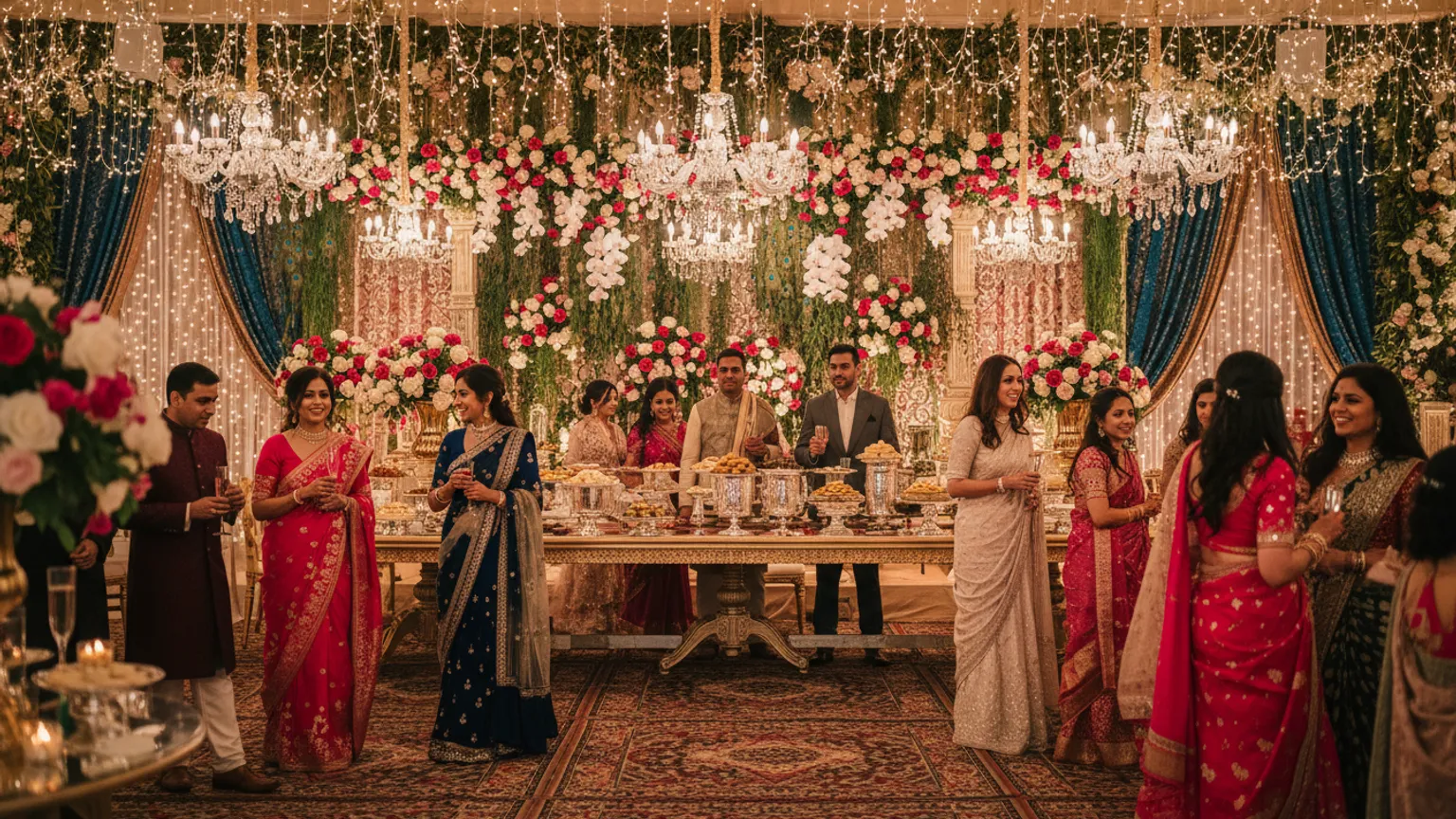
Two Decembers ago I was helping my cousin's family plan a reception in Guwahati — 600 people invited, a lawn near the river, a caterer who wanted a "firm" number ten days out. Ten days before, we had confirmations from about 180 guests. My aunt was convinced the reception would be half empty. My uncle was convinced everyone was coming and we were under-catering. Nobody actually knew.
Then the final week happened. Wednesday: forty replies. Thursday: another sixty. Friday, the day before — the phone did not stop. By Saturday morning we were near 470 confirmed, and roughly 520 people walked in. The reception was full, warm, a little chaotic at the buffet, and lovely. But those last seven days aged all of us by a year.
If you've ever hosted a reception — or a big engagement, a milestone anniversary, a wide-net Diwali dinner — you know this pattern. The confirmations don't trickle in evenly. They arrive in a wave, right at the end, exactly when your nerves can least afford it. After running our beta events at Inyeet and watching a lot of host dashboards fill up in slow motion, I've stopped treating the late wave as a failure. It's a predictable curve. Here's why it happens, and how to plan around it instead of panicking through it.
Why a reception is the hardest function to count
Every wedding function has its own RSVP personality. Haldi and mehndi are close-family affairs — twenty, thirty people who confirm by phone because your mother already called them. The sangeet is friends and cousins; loud, but a knowable list. If you want the full playbook for those, I wrote about managing a sangeet guest list across two families.
The reception is a different animal. It's the one function you invite the world to: colleagues, your father's business contacts, the whole extended family, neighbours from two buildings, college batchmates you last saw in 2015. These are what I think of as loose-tie guests — people who care about you enough to be invited, but not enough to reorganise their week the moment the card arrives.
And loose-tie guests are exactly the ones who decide last. A close cousin knows on day one that she's coming. Your manager, your neighbour, your dad's old colleague — they'll come if the weekend stays free, and they genuinely don't know that until the weekend is nearly here. It isn't rudeness. It's just that a reception sits low on their priority list until it's imminent, and then it climbs fast.
The confirmation curve, roughly
I can't give you a scientific study, because I don't have one and I won't invent one. But across the reception-scale events I've watched, the shape of the curve is consistent enough to plan by. Here's an illustrative version for a 600-invite reception — treat the numbers as a picture of the shape, not a precise forecast for your event:
| Time before event | Confirmations in so far (illustrative) | What's happening |
|---|---|---|
| 3–4 weeks out | ~15% | Close family and the eager few reply instantly. |
| 2 weeks out | ~30% | A slow trickle. This is where hosts start panicking. |
| 1 week out | ~50% | The loose-tie guests finally look at their weekend. |
| 2–3 days out | ~80% | The real wave. Most decisions land here. |
| Day of / walk-ins | ~95%+ | Last confirmations, plus the people who never replied and just show up. |
The mistake almost every first-time host makes is reading the "2 weeks out, 30%" line as a disaster. It isn't. It's Tuesday. The curve is designed to scare you in the middle and reward you at the end.
The four reasons the last 100 arrive late
The weekend isn't real to them yet. A guest can't confirm Saturday until they know what Saturday holds — a kid's match, a relative visiting, a work thing that might get scheduled. They're not ignoring you; they're waiting for their own week to take shape.
Reception invites go wide, so no single guest feels essential. When someone knows 500 others are invited, their individual yes or no feels low-stakes. "They won't miss me in that crowd" is a real, if unflattering, thought. The scale that makes a reception grand is the same scale that makes each RSVP feel optional.
Plus-ones and family counts are genuinely uncertain. "Will both kids come? Will my husband be back from his trip? Should I bring my visiting mother-in-law?" A guest can't give you a headcount until these settle, and they settle late — so they hold the whole reply rather than send a wrong number.
Everyone assumes a reception has infinite room. Nobody imagines a reception "running out" of anything, so there's no urgency to lock a seat — unlike a 30-seat intimate dinner, where guests reply fast because they can feel the scarcity. Abundance kills urgency.
None of these are fixable by being annoyed. They're fixable by planning for the wave and nudging it gently forward — which is the rest of this post.
Plan for the curve, don't fight it
The single most useful shift: stop trying to force an even RSVP flow, and start building a plan that survives a back-loaded one. Three practical moves.
1. Give the caterer a range, not a false certainty. Most caterers can work with a guaranteed minimum plus a "prepare-for" ceiling if you talk to them like a human. The honest conversation sounds like: "Confirmed abhi 300 hain, but reception hai, so final week mein 150–200 aur aayenge. Can you guarantee food for 480 and keep buffer ingredients ready for 550?" A good caterer would much rather hear this than a fake-firm "exactly 600" that collapses.
2. Use a confirmed-plus-buffer formula instead of guessing. Here's the arithmetic I now use for reception catering, roughly one week out:
| Bucket | How to count it |
|---|---|
| Confirmed "yes" | Count at 100%. |
| "Maybe" / soft yes | Count at 50%. |
| Invited but silent (loose-tie) | Count at 20–30%, because a chunk always walk in. |
| Elders who'll confirm by phone late | Add as a manual block; they rarely tap a link. |
Add those up, then add a 5–10% garnish on top for genuine walk-ins. It won't be perfect, but it's a defensible number built from your actual list — not from your aunt's optimism or your uncle's dread.
3. Set an internal deadline earlier than the real one. If the caterer needs numbers by Thursday, tell guests "please confirm by Tuesday." That gap is your buffer to chase the last wave without a same-day heart attack. Never publish your true drop-dead date; always keep a two-day cushion for yourself.
A staggered reminder sequence for receptions
For a reception, one reminder is not enough and five is nagging. I use a three-touch sequence, spaced out, each with a different tone. Copy, change the names, send from your own WhatsApp — a personal message, not a group blast.
Touch 1 — the warm early invite (send 3 weeks out)
"Namaste [Name] ji 🙏 [Couple]'s reception hai [date] ko, [venue] par, shaam [time] baje se. Aap sabhi ka aana bahut zaroori hai — aapke bina raunak adhoori hai. Invitation link neeche hai, jab plan clear ho jaaye to ek tap mein confirm kar dijiyega. Milte hain! 😊"
No pressure, no deadline yet — just a warm, personal ask that lands the date in their head.
Touch 2 — the gentle nudge with a reason (send 1 week out)
"Hi [Name], bas ek chhota reminder — [Couple]'s reception ab agle [day] ko hai. Catering aur seating plan karne ke liye humein thoda numbers ka andaza chahiye. Aap kitne log aa rahe hain, ek tap mein bata dijiyega? Na aa pao to bhi zaroor batana — koi baat nahi, hum samajhte hain 🙂 [Link]"
This is the touch that converts the loose-tie crowd, because it gives them a real, relatable reason (catering, seating) to decide now.
Touch 3 — the final, gracious call (send 2–3 days out)
"[Name], reception bilkul paas aa gaya! Kal caterer ko final count de rahe hain. Aap aa rahe hain ya nahi — dono bilkul theek hai, bas ek clarity chahiye taaki bhojan aur baithne ki vyavastha theek se ho. Aapka intezaar rahega 💫 [Link]"
Notice what it does: names a real cut-off, removes all guilt from a "no," and keeps the warmth. Most of your final wave replies to this exact message.
For your ten or fifteen most important guests — close relatives, your parents' dearest friends, the boss whose absence would be noticed — skip the template. Call them, or send a voice note. A reception is too big and too public to leave the people who matter most to a link alone.
When a tool earns its place (and when it doesn't)
I'll be honest about where technology fits, because I build one of these tools and I still don't think you always need it.
For a 40-person engagement where everyone's in two family groups and confirms by phone, an app is overkill. A notebook and a few calls will do. Don't add software to a problem that warmth already solves.
But a 600-person reception is exactly where the manual method breaks. You cannot hold a back-loaded wave of 300 late confirmations across three WhatsApp chats and a paper list without losing count — I've tried, and I lost count. This is the one function where a live dashboard earns its keep: every guest gets a private link, you send it from your own number, and you watch opened / yes / no / maybe / pending fill in with family headcounts attached, instead of re-counting at midnight. You can see that flow on the how it works page, and the reception scenario on our use cases page.
If you want the deeper mechanics of getting honest headcounts across all the wedding functions, my companion piece on tracking wedding RSVPs without a dozen phone calls goes further than I can here — and it's useful even if your whole system is a diary and a pen.
FAQ
Should I panic if I'm two weeks out with only a third confirmed?
No. That's the normal middle of the curve. Loose-tie guests decide in the final week; a low count at two weeks tells you almost nothing about your final turnout. Plan for the wave, keep nudging, and re-count three days out.
How do I count guests who never reply at all?
Assume a meaningful fraction of your silent, loose-tie invitees still walk in — I plan for roughly a fifth to a third of them. Build that into your catering buffer rather than either ignoring them or counting them all.
Is it rude to send three reminders for a reception?
Not if they're spaced out, personal, and each carries a genuine reason. Three touches over three weeks — warm invite, gentle nudge, gracious final call — reads as a considerate host, not a pushy one. Five messages in a week is where it tips into nagging.
The takeaway
The last 100 confirmations arriving in the final week isn't a sign you did anything wrong. It's the natural shape of a wide-net reception, where loose-tie guests can only decide once their own weekend comes into focus. Once I stopped fighting that curve and started planning for it — a range for the caterer, a confirmed-plus-buffer count, an internal deadline two days early, and a three-touch reminder sequence — the final week stopped being a crisis and became just a busy few days.
This week, if you've got a reception coming: talk to your caterer in ranges, set your own deadline before the real one, and get your three reminder messages drafted now so you're not writing them at 11 p.m. on the Friday. And if you'd like the Android app we built for exactly this kind of counting, it's free to use.
Related reading
How to track wedding RSVPs without 50 phone calls
Get honest headcounts for haldi, sangeet, shaadi and reception — private WhatsApp invite links, a live dashboard, and follow-up scripts that don't offend.
Ganpati invitation message for WhatsApp: 50+ templates in Marathi, Hindi and English
Ready Ganpati invitation messages for every moment — sthapana, darshan, aarti, mahaprasad, Gauri and visarjan — in Marathi, Hindi and English, each written to get a countable reply instead of a thumbs-up.
Gauri aavahan: the day your Ganpati guest list doubles
Gauri brings married daughters and half the family back home mid-Ganpati — the day a host's guest list quietly doubles. A plan for who comes and feeding them.