
What makes guests actually open your invitation link
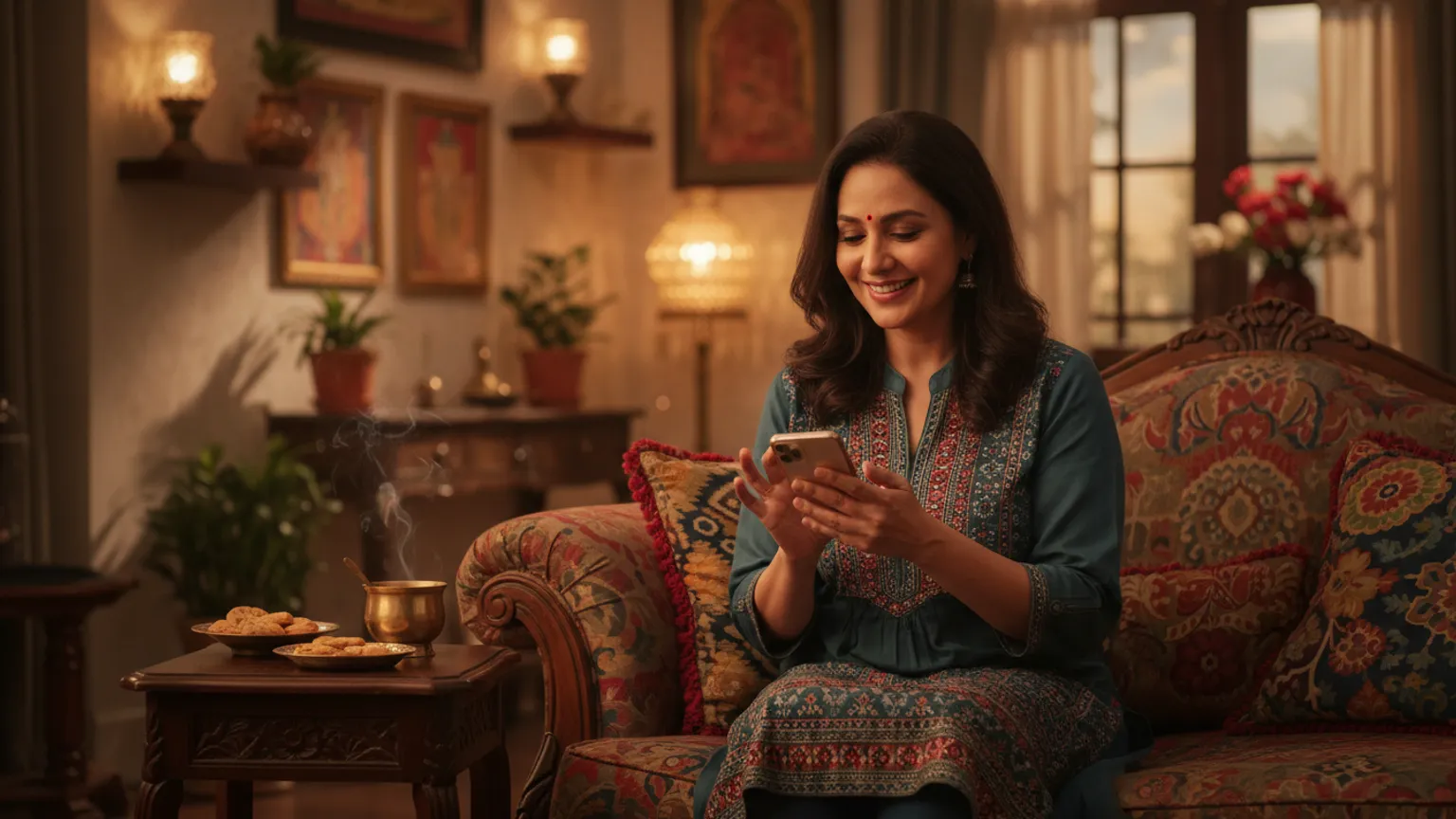
Last Diwali I sent our house-party invitation link to about sixty people. I'd spent two evenings getting the card right — a nice photo, the timings, a little map pin. I dropped it into individual chats, sat back, and waited for the dashboard to light up with opens.
It didn't. By the next morning, barely half had tapped it. And these weren't strangers — these were cousins, neighbours, the friends I'd shared actual meals with. The invite was fine. The wrapper around it was the problem: a bare link, sent at 11 p.m., under a photo that WhatsApp had shrunk into an unreadable thumbnail. People had seen "Hrishikesh sent a link" and thought baad mein dekhta hoon — later — which, as every host knows, means never.
That week I stopped obsessing over how the card looked and started studying the two seconds before the card. Because an invitation nobody opens is just a nicely designed secret. This is everything I've learned since about getting the tap — the design of the message and the timing of the send — with templates you can copy tonight.
Why a good invite link still goes unopened
A link lands in a chat and competes with everything else on that person's phone. Before they ever see your beautiful card, they make a snap decision based on almost no information. Here's what's working against you.
The preview looks like spam. A raw link with no context reads like a forward or a marketing blast. If the little link-preview thumbnail is a cropped, illegible slice of your card, it actively looks less trustworthy, not more.
There's no reason to tap now. "You're invited" with no time-anchor gives the brain permission to postpone. And a postponed tap is a dead tap — it gets buried under twelve newer chats by evening.
It arrived at the wrong moment. A link sent at midnight, or at 9:30 on a Monday morning during the office rush, gets seen and swiped past. The person fully intends to open it later. They don't.
They can't tell it's really from you. In a world of forwarded "Congratulations 🎉" chains, a link with no personal line makes people wonder if you even sent it on purpose, or if it's one of those auto-generated things doing the rounds.
None of this is about the card's design. It's about the half-second of judgement that happens before the card ever loads. Fix that half-second and your open rate roughly takes care of itself.
The four-line message that gets the tap
After a lot of trial and error, I landed on a simple shape for the text I put around the link. Four short lines, in this order:
- Their name. "Riya," or "Sharma ji," — one word that says this is for you, not a broadcast.
- The occasion in plain words. "We're doing Vaibhav's mundan on the 24th." Not "You are cordially invited to grace the occasion."
- One concrete reason to open now. "Timing and venue are all in the card 👇" or "Muhurat is early morning, details inside."
- The link, on its own line, with a tiny 👇 pointing at it.
Here's the difference in practice:
| Weak send | Strong send |
|---|---|
| [bare link] | Riya, we'd love to have you at Vaibhav's mundan on the 24th 🙏 Timings + venue are all in the card 👇 [link] |
| Dear all, you are invited. [link] | Sharma ji, Diwali get-together at our place this Saturday evening. Card has the address and time 👇 [link] |
| Pls open and confirm [link] | Bhai, quick one — Aarav's 1st birthday next Sunday. Tap for details, would mean a lot if you come 🎂 [link] |
The strong version isn't longer. It's just aimed. It tells the reader who it's for, what it is, and why opening it right now is worth two seconds.
Copy-paste templates (English and Hinglish)
Steal these, change the names, send. Keep the link on its own line so WhatsApp renders the preview cleanly.
Warm family invite (Hinglish)
[Name] ji, hum [event] kar rahe hain [date] ko 🙏 Aapka aana zaroori hai — poori details card mein hain, ek tap mein khul jaayega 👇 [link]
Close friend, casual (Hinglish)
Oye [Name], [event] hai [day] ko! Zyada suspense nahi rakhta — sab kuch card mein hai, khol ke dekh 👇 [link]
Formal / senior colleague (English)
Dear [Name], we're hosting [event] on [date] and would be honoured to have you. The card below has the venue, timing and a map 👇 [link]
Reminder for the unopened (light, no guilt)
[Name], chhota sa reminder — humne [event] ka card bheja tha, shayad reh gaya ho. Ek tap 👇 aur aap details dekh paoge 🙂 [link]
That last one matters more than people think. On most of my events, a single gentle reminder to the not-yet-opened list — sent a day or two later — recovers a big chunk of the people who simply lost the message in the scroll. They were never saying no. They just never got to it.
Timing: when the tap actually happens
The same message performs completely differently depending on when it lands. These aren't laws of physics — they're the send windows that have worked best for me across birthdays, a griha pravesh, and two Diwali parties. Treat them as a sensible starting point, not gospel.
| Send window | How it tends to go |
|---|---|
| Weekday 11 a.m.–1 p.m. | Solid. People check phones before/around lunch and have a free hand to tap. |
| Weekday 7–9 p.m. | Best for most invites — home, relaxed, phone in hand, willing to browse a card. |
| Weekend 10 a.m.–12 p.m. | Great for family. Unhurried mornings, second cup of chai, time to actually read. |
| Weekday 9–10 a.m. | Poor. Commute and office rush; seen and swiped past. |
| After 10:30 p.m. | Poor. Seen at 11, forgotten by morning. Winds up permanently buried. |
Two habits on top of the windows. First, don't send all sixty at once — space them out so you can actually reply to the "kitne baje?" questions that come back, instead of drowning. Second, for the people who matter most, follow the link with a quick voice note or call a day later: "Card bheja tha, dekh liya kya?" The link does the informing; your voice does the convincing. That combination opens more cards than any design tweak I've tried.
A 60-second pre-send checklist
Before you hit send on the first one, run down this list. It takes a minute and saves you the slow, sinking dashboard I described at the start.
- The message opens with the person's name, not "Dear all".
- The occasion and date are in the text itself, not hidden only inside the link.
- There's one concrete reason to open now (timing, venue, muhurat).
- The link sits on its own line so the preview renders properly.
- You're sending in a good window (weekday evening or weekend morning), not at midnight.
- You've got a plan for one gentle reminder to whoever hasn't opened in two days.
- You're sending individually or in small batches, not into one giant group.
When none of this matters
Honesty check, because I don't want you optimising the wrong thing. If your event is a 15-person intimate puja where everyone confirms by phone anyway, forget all of this — just call them. The open-rate game is worth playing when your list crosses forty-odd people across family, friends and colleagues, and you genuinely can't tell who's seen what.
And a link only earns the tap if the relationship is already warm. If someone doesn't really want to come, no preview text or perfect send window is going to change that — and that's completely fine. The goal here isn't to trick anyone into opening. It's to make sure the people who do want to come aren't lost to a badly-timed, badly-framed message. Getting the tap is only step one; what happens after they open — actually replying — is a whole separate battle I wrote about in why guests don't RSVP (and what actually works).
I'll mention, once, that this is roughly the thinking we baked into Inyeet: every guest gets their own private link that you send from your own WhatsApp, so it reads as personal rather than a broadcast, and a live dashboard shows you exactly who has opened versus who's still pending — which is what tells you who to nudge. You can see how that flow works on the how it works page, and the features page has the rest. But the templates and timing above work perfectly well with a plain link and a notepad, too.
If you'd like the Android app we built for this, it's free to use.
The takeaway
Your invitation card is the easy part. The hard part is the two seconds before it loads — the name, the reason, the timing that decides whether anyone ever sees your work. This week, before your next function, rewrite your send message into those four lines, pick a weekday evening, and keep one reminder in reserve for the people who scroll past. You'll watch the opens climb, and you'll stop wondering whether that beautiful card is quietly sitting unread in sixty different chats.
Related reading
How to set an RSVP deadline without sounding rude
A deadline feels pushy — until you anchor it to a real reason. Here's how to pick the date, phrase it warmly, and get honest counts. Scripts included.
The 'dekhte hain' decoder: what soft answers really mean
A field dictionary of India's softest RSVP replies — dekhte hain, aate hain, try karenge — with what each really means and a three-step way to convert them.
Why guests don’t RSVP (and what actually works)
Guests aren't rude — they're stuck in 'dekhte hain' mode. The psychology of non-response, plus scripts that get real RSVPs before the caterer calls.