
How to set an RSVP deadline without sounding rude
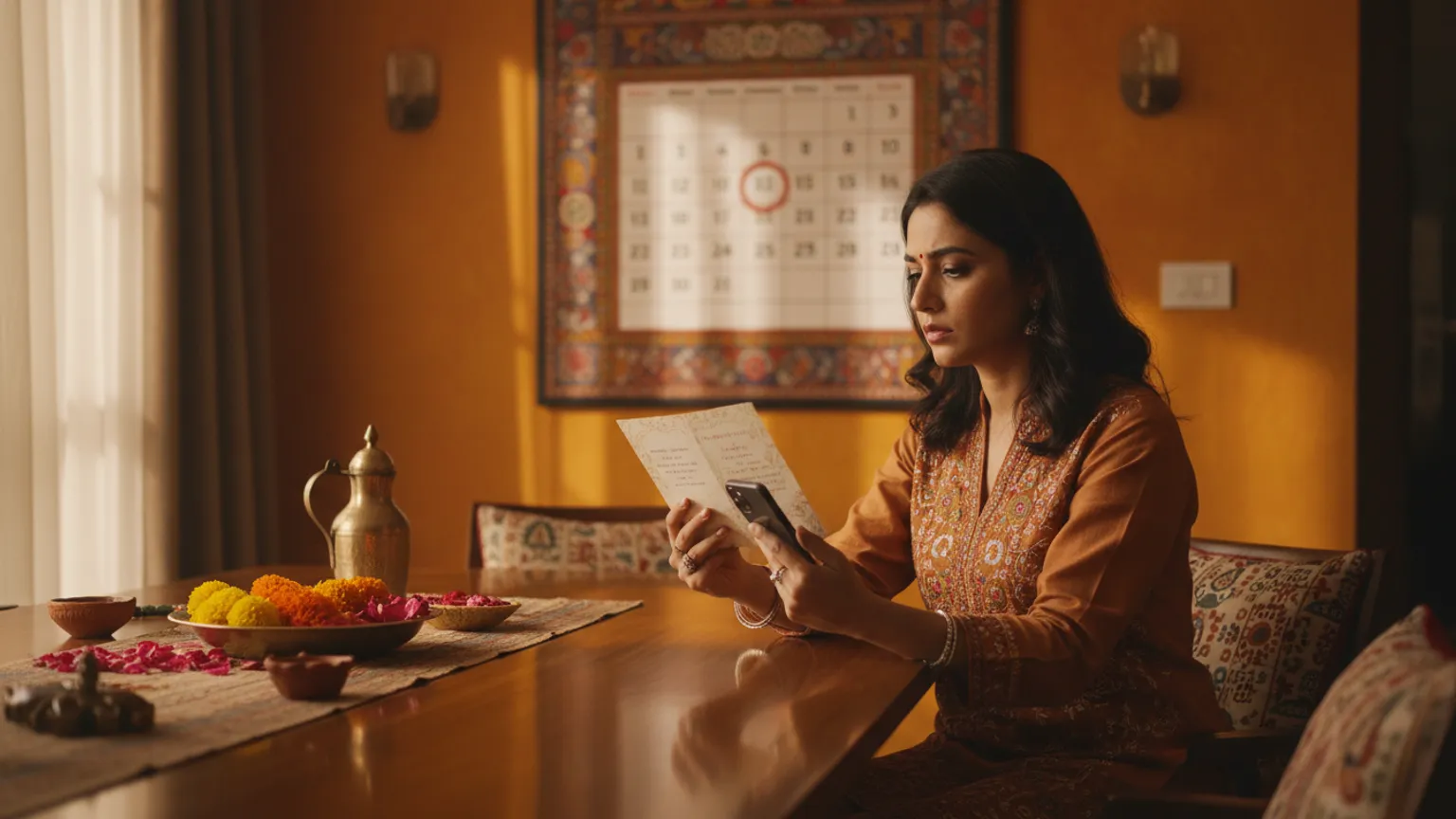
Two winters ago I put a line at the bottom of a puja invitation that I still cringe about: "Kindly RSVP by 10th, no replies will be counted after." I thought I was being efficient. My father read it over my shoulder and said one thing — "Yeh nimantran hai ya court ka notice?" Is this an invitation or a court summons?
He was right. The line was accurate and completely tone-deaf. In Indian hosting, a deadline that sounds like a threat makes warm people go cold. But the opposite mistake — no deadline at all — is worse. Then you're the one calling forty relatives at 9 p.m. the night before, begging for a number the caterer needed yesterday.
So the real skill isn't choosing between "pushy" and "no deadline." It's setting a firm date that still feels like an invitation. After a lot of trial, error and a few frosty replies from aunts, here's exactly how I do it now — the date math, the phrasing, and copy-paste scripts you can send tonight.
Why "reply by X" feels rude (and why silence is worse)
A bare deadline lands badly for a specific reason: it shifts the emotional frame from "we'd love to have you" to "comply by this date." You've turned a warm ask into an administrative one. The guest feels processed, not invited.
But hosts over-correct into the other ditch — no deadline at all, just "let us know." That sounds gracious and it quietly destroys your planning. "Let us know" has no urgency, so it gets filed under "later," and later never comes. I wrote a whole piece on the psychology of that silence — why guests don't RSVP — but the short version is: without a real by-when, even people who fully intend to come simply forget to reply.
The fix isn't to drop the deadline. It's to make the deadline feel like it's protecting them — their food, their seat, their family's comfort — not policing them.
The two-deadline trick: your date vs their date
The single most useful thing I've learned: keep two deadlines in your head.
- Your real deadline — the day you actually must hand a number to the caterer, the venue, the cab coordinator. This is non-negotiable and vendor-driven.
- The date you tell guests — always 2 to 3 days earlier than your real one.
That buffer is where the magic lives. Because you know a chunk of replies will trickle in "just after" any date you state, you build the slippage into the plan instead of panicking over it. When your stated Wednesday passes and four people reply Friday, you smile — your real cut-off was Saturday anyway. You never chase, and you never sound desperate, because you gave yourself room.
Tell no one about the buffer. It's your cushion, not a negotiation.
Work backwards to pick the date
Most hosts pick a deadline out of thin air ("um, the 15th?"). Don't. Anchor it to the one vendor with the earliest, strictest cut-off — usually the caterer — and count backwards. Here's the table I use to set the stated date.
| Event size | Vendor cut-off (your real deadline) | Tell guests | First invite goes out |
|---|---|---|---|
| Intimate (under 25) | 3 days before | Same day — a quick call round | 1–2 weeks before |
| Family function (25–75) | 5–6 days before | 8 days before | 3 weeks before |
| Big function (75–200) | 8–10 days before | 12 days before | 4–5 weeks before |
| Wedding-scale (200+) | 12–14 days before | 16 days before | 6 weeks before |
The logic: the bigger the event, the earlier vendors lock in and the longer the tail of late replies, so you need a bigger head start and a bigger buffer. For a 20-person satyanarayan katha you can honestly just phone everyone — a stated deadline is overkill. For a 400-guest reception, a soft "let us know" is planning suicide.
The phrasing formula: date + because + permission + warmth
A deadline stops sounding rude the moment it carries four things. Miss any one and it reads as a demand.
- A specific date — "by Thursday evening," not "soon."
- A because — the real-world reason. "So the caterer can lock final counts and we don't pay for empty plates." Every Indian uncle and aunty instantly relates to not wasting food money.
- Explicit permission to say no — "Na aa pao to bhi bata dena, koi baat nahi." Counter-intuitively, giving people an easy exit gets you more honest replies, not fewer.
- Warmth around it — the deadline should be sandwiched between "we'd love to have you" and a smile, never left naked at the bottom like a footnote.
"Kindly RSVP by 10th" has the date and nothing else. That's why it feels like my father's court notice.
Scripts you can copy tonight
Edit the names and details, then send from your own WhatsApp — one guest at a time, not a group blast. A deadline in a broadcast feels like a rule for the crowd; the same words in a personal chat feel like a friend asking.
Embed it in the first invitation (warm, formal)
"Namaste [Name] ji, [Host] here. We're hosting [event] on [date] at [venue], and it would mean a lot to have you and your family with us. If you could share by [stated date] roughly how many of you will come, it helps us arrange the food and seating comfortably for everyone. Details and the card are here: [link]."
The deadline is in the middle, tied to their comfort ("food and seating comfortably for everyone"), never as a warning.
Embed it in the first invitation (Hinglish, warm)
"Hi [Name]! [Event] rakha hai [date] ko [venue] par 🎉 Aap logon ke bina adhura lagega. Bas ek chhoti si request — [stated date] tak bata dena kitne log aa rahe ho, taaki khaana aur baithne ka intezaam theek se ho jaaye. Card aur saari details yahaan hain: [link]. Na aa pao to bhi zaroor batana 🙂"
The mid-point nudge (a few days before your stated date)
"[Name], bas ek gentle reminder — [stated date] tak caterer ko final numbers dene hain. Aapka naam list mein dekhkar accha lagega 😊 Ek tap mein confirm ho jaayega: [link]. Aur agar plan nahi ban raha, tab bhi ek line bata do — bilkul chalega."
The final call, with a gracious exit (evening before your stated date)
"Namaste [Name], kal shaam tak hum final count de rahe hain. Aap aa rahe ho ya nahi — dono theek hai, bas ek clarity chahiye taaki bhojan ka prabandh sahi rahe. Na aa paye to agli baar pakka 🙏 [link]"
For elders — phone first, always
Don't send Nani or Bauji a link with a deadline; it reads as cold and they won't tap buttons anyway. Call. "Bauji, [date] ko function hai, aap zaroor aaiyega. Bas itna bata dijiye ki aap dono aa rahe hain ya aur koi bhi, taaki gaadi aur khaana theek se lag jaaye." Then you mark their answer down. Elders are phone-first in a link-first world, and forcing a digital deadline on them is the fastest way to sound rude without meaning to.
A simple timeline you can reuse
- First invite (see table for timing): deadline embedded softly, tied to seating/food comfort.
- Halfway to your stated date: the mid-point nudge to anyone still silent.
- Evening before your stated date: the final call with a gracious exit.
- Stated date passes: stop chasing. Treat continued silence as a soft no.
- 2–3 days later — your real deadline: hand the caterer your confirmed count plus roughly half of the outstanding "maybes." Late repliers landed in your buffer; no panic.
Two reminders, spaced out, is the ceiling. More than that and you've crossed from host into debt-collector. A celebration should never feel like a follow-up campaign.
When you shouldn't bother with a deadline at all
Be honest with yourself about scale. If you're hosting fifteen people who all pick up your call, a stated RSVP deadline is theatre — just phone them over two evenings and you'll have a better count than any date ever gives you. Deadlines earn their keep once the list crosses roughly 40–50 people spread across family, friends and colleagues, when no single conversation can hold the whole picture in your head.
That crossover is also where a little structure helps. This is the mess Inyeet came out of — you send your existing card as a private link from your own WhatsApp, guests tap yes/no/maybe with a family headcount, and one live dashboard shows who's in, who's pending, and how the count is tracking against your date. You can see how that flows on the how it works page, and what's included on the features page. But the app only counts; the warmth in the scripts above is still yours to send. If everyone in your circle already replies by phone, you genuinely don't need it — a notepad and two calls will do.
FAQ
Is it rude to put a deadline on the invitation card itself?
Not if it's phrased as a kindness. "Kindly share your count by [date] so we can arrange food and seating comfortably" is warm and clear. "RSVP by [date], no exceptions" is the court-notice trap. Same information, opposite feeling.
What if someone replies after the deadline?
Welcome them warmly — that's what your 2–3 day buffer is for. The stated date manages the crowd; your real date has the slack. Just don't advertise the buffer, or the stated date loses all meaning.
How do I handle relatives who never give a straight answer?
Decode the soft reply before you re-ask — I keep a full field guide in the 'dekhte hain' decoder. Then send one personal nudge with your date and a because. If silence follows, count it as a gentle no and move on.
The takeaway
A deadline isn't rude — a naked deadline is. Give it a date, a real reason, an easy way to say no, and a little warmth, and the same sentence that felt like a summons becomes a considerate ask. Set your two dates, work backwards from the caterer, send the scripts one guest at a time, and stop chasing once your stated date passes. You'll get honest counts and keep every relationship intact.
If you'd like the Android app that keeps this count for you, it's on Google Play and free to use.
Related reading

The 'dekhte hain' decoder: what soft answers really mean
A field dictionary of India's softest RSVP replies — dekhte hain, aate hain, try karenge — with what each really means and a three-step way to convert them.

When guests bring extra people: preventing the +4 surprise politely
The 'haan aa rahe hain' that quietly becomes six people. How to ask headcount without sounding stingy — with WhatsApp scripts, a table and a checklist.

Following up with elders: phone-first etiquette in a link-first world
Elders won't tap RSVP links, and that's fine. Here's how to invite, follow up and count them the way they actually reply — by phone, with respect and scripts.