
Ganpati decoration and seating: planning space for a stream of visitors
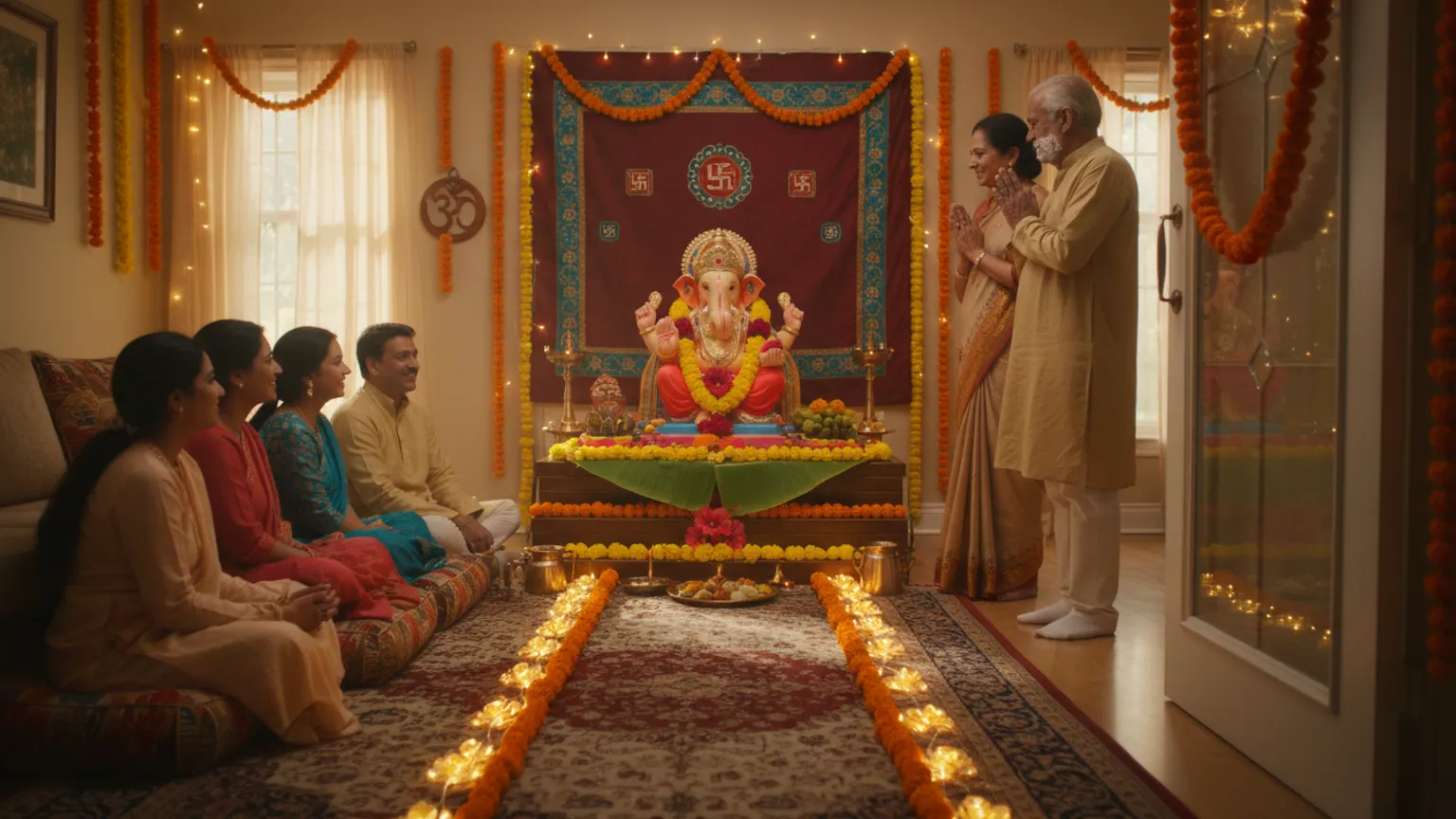
The first year I brought Bappa home, I spent two evenings on the decoration and about four minutes on the floor plan. The result was a beautiful murti wedged into the corner behind our TV unit — gorgeous in photos, impossible in practice. To do darshan, a person had to walk in, squeeze past the sofa, do a little sideways shuffle around the coffee table, fold their hands, and then reverse out the same way they came, straight into whoever was arriving next. By 7:30 on the first evening there was a small human traffic jam between my front door and the corner, and a pile of chappals so deep that a cousin lost one for twenty minutes.
Nobody complained. That's the thing about family — they'll stand in a jam and call it cosy. But I watched my wife spend the whole evening playing traffic cop instead of enjoying the aarti, and I understood something that no decoration tutorial had told me: a home Ganpati is not a decoration problem, it's a foot-traffic problem. You are not staging a photo. You are running a small, warm railway station for two to ten days, and the murti is the platform everyone walks to and away from. This guide is how I plan the space now — where the murti goes, how the room splits into zones, how many people can actually fit, and the one walkway I never let anyone block.
Place the murti for a queue, not for a photograph
The most common mistake — the one I made — is choosing the murti spot for how it looks on day one, before anyone has arrived. The camera loves a corner: symmetrical backdrop, drape on two walls, idol tucked in. But a corner is a dead end. People approach, and then they have to turn around and walk back out through the arriving crowd. That collision is the whole problem.
What you want instead is a spot where darshan flows through, not in and out:
- Against the middle of a long wall, not jammed in a corner. This lets a small line form parallel to the wall and dissolve sideways, so arriving and departing guests aren't fighting for the same square foot.
- Approachable from the front with a metre of clear floor before it. That metre is the darshan space — where someone stands, folds hands, maybe bends to touch the platform. If your sofa is one foot from the murti, that whole ritual happens with a person's back pressed into someone else's knees.
- Visible from the front door. When a guest can see Bappa the moment they enter, they orient themselves instantly — shoes off, straight to darshan, then step aside. When the murti is hidden around a corner, every guest stops in the doorway to ask "kahan hai?", and the doorway is the worst place in the house to have people standing still.
- Away from the kitchen doorway and the main walkway. The prasad and the aarti thali will move between kitchen and murti dozens of times. Don't make that path cross the darshan line.
The platform itself should be raised — a table, a wooden chowki, or a sturdy trunk with a clean cloth — so that a standing person and a seated person both get clean darshan without a scrum at floor level.
The three zones every Ganpati room needs
Once the murti has a good spot, mentally divide whatever room you have into three zones. Even a small flat has these three; the only question is how much space each one gets. Draw it on paper the day before — it takes ten minutes and saves the whole evening.
| Zone | What happens here | How much space | The rule |
|---|---|---|---|
| Darshan zone | Standing, folding hands, touching the platform, quick photos | ~1 metre of clear floor directly in front of the murti | Never put seating or a table here. It must stay empty so the line can form and clear. |
| Seating / rest zone | Elders and close family who stay a while sit here; where aarti singers gather | To one side of the darshan zone — floor cushions, dari, or chairs against the far wall | Keep it beside the darshan line, never in it, so sitting guests aren't blocking standing ones. |
| Flow + prasad zone | Arriving/leaving path, chappal area at the door, prasad table just inside | The walkway from door to darshan zone, plus a small table near the exit | This is the artery. Keep it clear at all costs — see the walkway rule below. |
The trap is letting the seating zone eat the darshan zone. Elders sit down comfortably, pull their chairs forward for a better view, and within an hour the standing line has nowhere to stand. Set the chairs slightly back and to the side before anyone arrives, and gently keep them there.
Seating and standing: how many people actually fit
Hosts wildly overestimate how many people a living room holds once there's a murti, a platform, an aarti thali and a walkway eating into the floor. Here's a rough, honest guide for a typical Indian flat — treat it as "comfortable at one time", not "maximum you can cram":
| Room / flat size | Comfortable at one time | Realistic peak for aarti | Note |
|---|---|---|---|
| 1 BHK living area | 6–8 | 12–14 (standing, tight) | Plan darshan in a trickle; discourage everyone arriving for the same aarti. |
| 2 BHK hall | 10–14 | 20–25 | Floor cushions beat chairs — they flex with the crowd. |
| 3 BHK / large hall | 18–25 | 35–40 | You still need the walkway; big rooms fill up faster than you expect. |
| Building society hall | 40+ | 80+ | A different game — you're managing a venue, not a room. |
Two practical points behind these numbers. First, floor seating almost always beats chairs for a home Ganpati: a dari and cushions absorb a growing crowd, chairs create fixed islands that block flow and can't be nudged. Second, the peak is short. Aarti is when everyone converges; the rest of the evening is a trickle. Plan the room for the trickle and simply accept that aarti will be shoulder-to-shoulder for fifteen minutes — that closeness is part of it.
If you genuinely don't know how many will show up on which evening, that estimate is its own small skill. I wrote a full method for it in how many people come for Ganpati darshan — worth reading before you finalise the seating, because the room you plan depends entirely on the crowd you expect.
The walkway rule: one clear path, always
If you remember nothing else from this piece, remember this: keep one clear, unobstructed path from the front door to the darshan zone, and never let it get colonised. Not by chappals, not by a chair someone pulled over, not by the cooler, not by kids' cricket kit. That single corridor is what keeps sixty visitors over an evening from ever feeling like sixty people at once.
Three things constantly try to eat the walkway:
- Chappals at the door. Thirty pairs of shoes will spread across your entire entrance and into the corridor if you let them. Put a large mat or an old bedsheet to one side of the door, and — this actually works — a polite handwritten note: "Chappal yahan rakhein 🙏". A shoe rack outside the door is even better if you have one.
- The prasad table. Tempting to place it front and centre. Don't — put it just inside, off the main path, so people collect prasad on their way out and it never blocks the way in.
- Well-meaning relatives. Someone will always stand right in the middle of the walkway to chat. A gentle "chalo idhar baith jao, raasta khula rehne do" moves them without offence. Assign one family member — not the main host — to be the informal flow-keeper for the busy hours.
Decorating so it survives a crowd (and stays safe)
Decoration matters — Bappa deserves a beautiful setting. But decorate for a room that will be full of moving people, some of them children, some of them elders in bare feet.
- Keep diyas and the camphor aarti on the raised platform, never at floor level where a passing dupatta or a running child can reach them. An open flame at ankle height in a crowd is the one genuine hazard of a home puja.
- Tuck away every wire. Fairy lights and extension boards are the classic trip hazard. Tape cords to the skirting, run them behind furniture, and keep the multi-plug off the walkway floor.
- Hang the backdrop and torans high enough that a tall guest doing darshan doesn't get marigold in the face. Sounds obvious; happens every year.
- Leave the floor around the platform bare and non-slip. Spilt water from the kalash, ghee, a dropped modak — a slippery patch right where everyone stands is trouble. A cotton dari grips better than a shiny rug.
- Plan for kids. They will sit closest to the murti and touch everything. Keep the fragile decoration and the flames above their reach, and you can relax instead of hovering.
The space-readiness checklist (do this the evening before)
- Murti placed against a wall with a clear metre in front, visible from the door.
- Darshan zone marked out (mentally or with the dari edge) and kept empty.
- Seating set to the side and slightly back, floor cushions preferred.
- One clear walkway from door to murti — walk it yourself to check.
- Chappal mat and note at the door, to one side.
- Prasad table just inside the exit, off the main path.
- All wires taped down; multi-plug off the floor.
- Diyas and camphor only on the raised platform.
- One family member briefed as the flow-keeper for peak hours.
A message that manages the flow before guests arrive
Half of good space management happens before anyone reaches your door — in how you word the invite. A note about aarti timing and parking spreads people out and keeps your walkway from turning into a shoe shop. Copy and adapt:
Hinglish — arrival and aarti note
Ganpati Bappa Morya! 🙏 Bappa is home with us from Saturday. Aarti daily at 7:30 PM — if you'd like to join the aarti, do come by 7:15. Anytime else in the evening (6–9 PM) is perfect for darshan too, thoda aaraam se.
Flat 402, Shanti Residency. Please park along the service lane — society se request hai ki gate ke saamne gaadi na ho. Chappal ke liye door ke bahar rack rakha hai. See you, aur haan — Bappa ke liye kuch laane ki zaroorat nahi, aapka aana hi kaafi hai. 🌼
Short reminder — day of, Hinglish
Aaj shaam darshan ke liye zaroor aaiye — 6 se 9 baje tak. Aarti 7:30 pe. Flat 402, service lane mein parking. Aaram se aaiye, jam nahi hoga. 🙏
Staggering the crowd across an evening, rather than pointing everyone at the 7:30 aarti, is the single biggest thing you can do for a small room. And if you're bringing Bappa for multiple days, actively pushing different circles to different days keeps every single evening breathable — I've laid out exactly how in managing darshan timings across three days.
When your flat is simply too small
Be honest with yourself. If you're in a compact 1 BHK and you expect fifty people on the first evening, no seating plan will fix that — you'll be uncomfortable and so will they. Two better options: either bring a smaller murti and consciously invite in slots across more days, or, if your building has one, do the sthapana at home and hold the big evening aarti in the society hall where there's actual room. There's no rule that says a home Ganpati must cram every visitor into your living room. Matching the space to the crowd is the whole job.
And if the reason the room feels chaotic is that you genuinely don't know who's coming or when, that's a knowing-your-headcount problem more than a furniture problem. Keeping a simple, live count of who's confirmed for which evening is exactly the kind of thing Inyeet was built to make easy — but for a gathering of ten close relatives, a notebook and a phone call work perfectly well, and you don't need us or any app at all. Reach for a tool only when the guest coordination starts outgrowing your chat scroll.
FAQ
Where should I keep the Ganpati murti in a small flat?
Against the middle of a long wall that's visible from the front door, with about a metre of clear floor in front of it for darshan. Avoid corners and avoid the spot right beside the kitchen doorway or the main walkway — those create bottlenecks the moment more than a few people arrive.
How many people can I fit for Ganpati aarti at home?
Fewer than you'd think once the murti, platform and walkway take their share. As a rough guide: a 1 BHK hall is tight at 12–14 standing, a 2 BHK hall handles 20–25 at peak, a 3 BHK around 35–40. Plan the room for the steady trickle and accept that the fifteen minutes of aarti will be shoulder-to-shoulder.
Chairs or floor seating for a home Ganpati?
Floor seating — a dari and cushions — almost always works better. It flexes as the crowd grows and shrinks, and it doesn't create fixed islands that block the darshan line the way chairs do. Keep a couple of chairs aside for elders who can't sit on the floor, placed to the side and slightly back.
The one thing to take away: decorate second, plan the flow first. Give the murti a spot people can approach and leave without colliding, keep one walkway permanently clear, set seating to the side, and spread your guests across the evening in the invite itself. Do that, and a full house feels warm instead of jammed — and you get to actually stand in your own aarti instead of directing traffic behind it.
Related reading

How many people come for Ganpati darshan: estimating daily footfall at home
How many people actually come for Ganpati darshan? A host's method to estimate daily footfall at home, a per-day forecast table, and templates to gauge it.
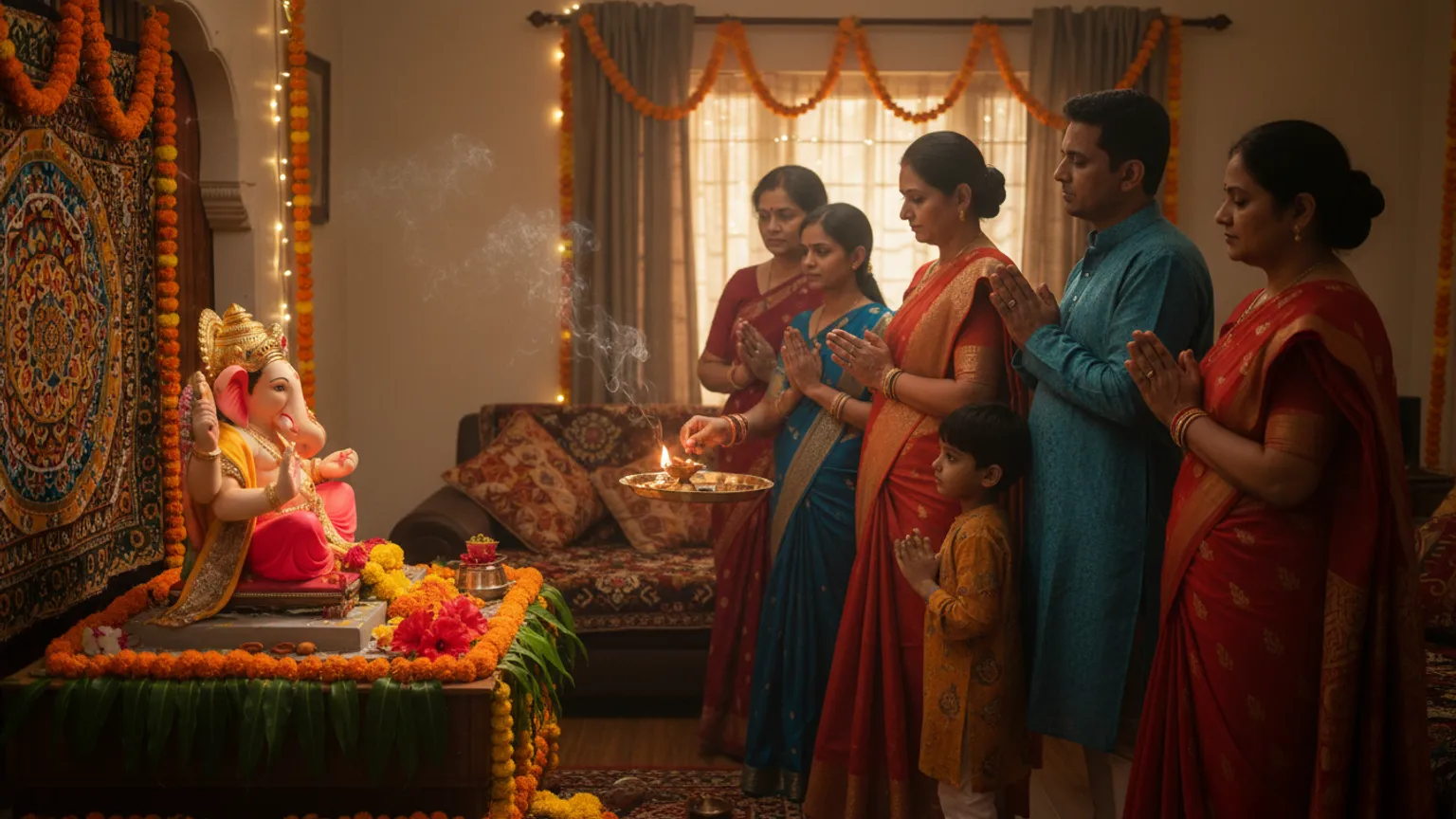
Ganpati sthapana invites: managing darshan timings across three days
How to invite people to a three-day home Ganpati without one crowded evening — a darshan schedule by circle, aarti timings, and ready WhatsApp templates.
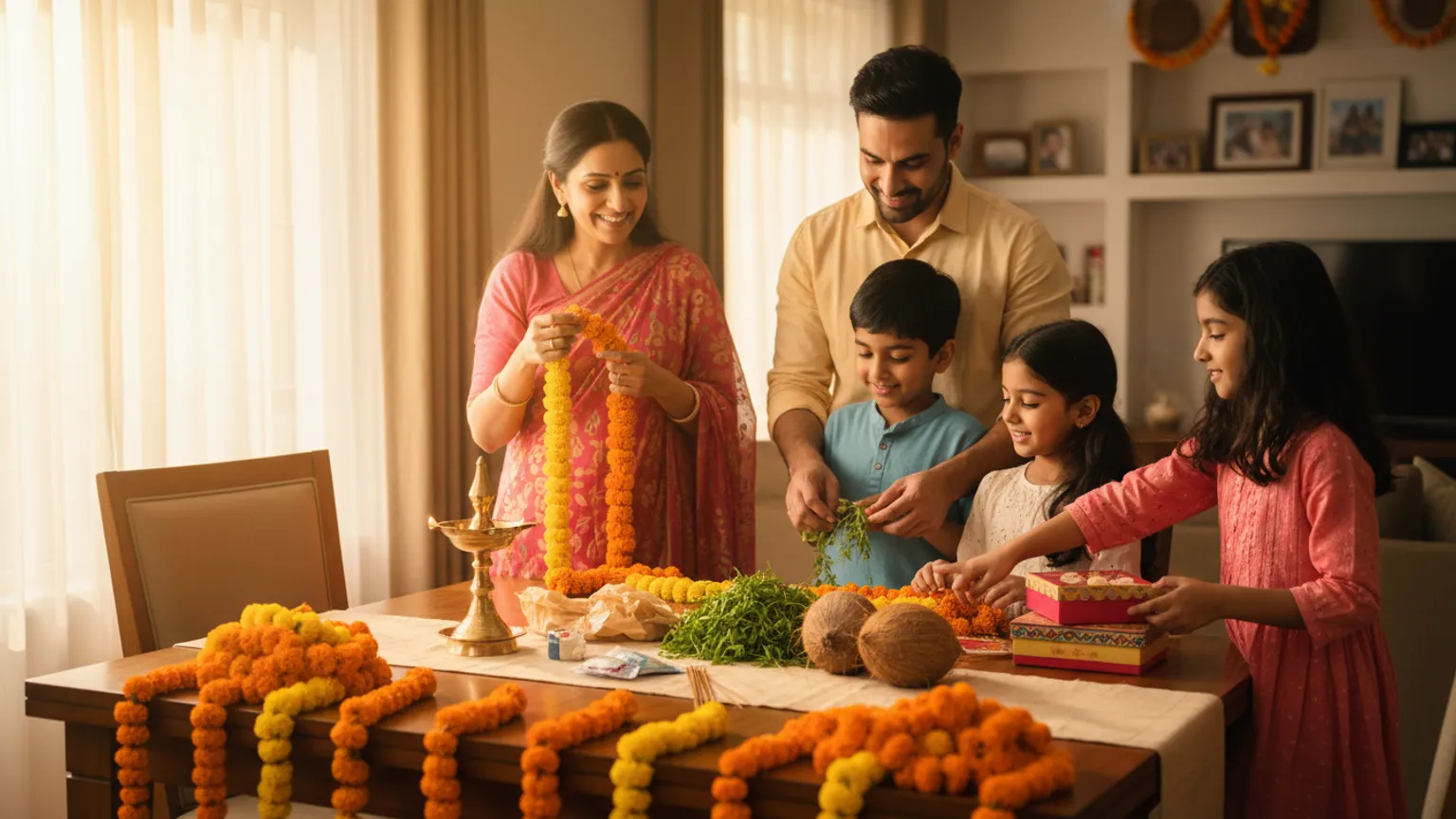
Ganesh Chaturthi puja samagri list with quantities for a home setup
A complete Ganesh Chaturthi samagri list for a home setup — puja items, decoration and daily consumables with real quantities, a printable checklist and WhatsApp templates.