
"Aashirwad hi kaafi hai": handling gifts and shagun in your invite
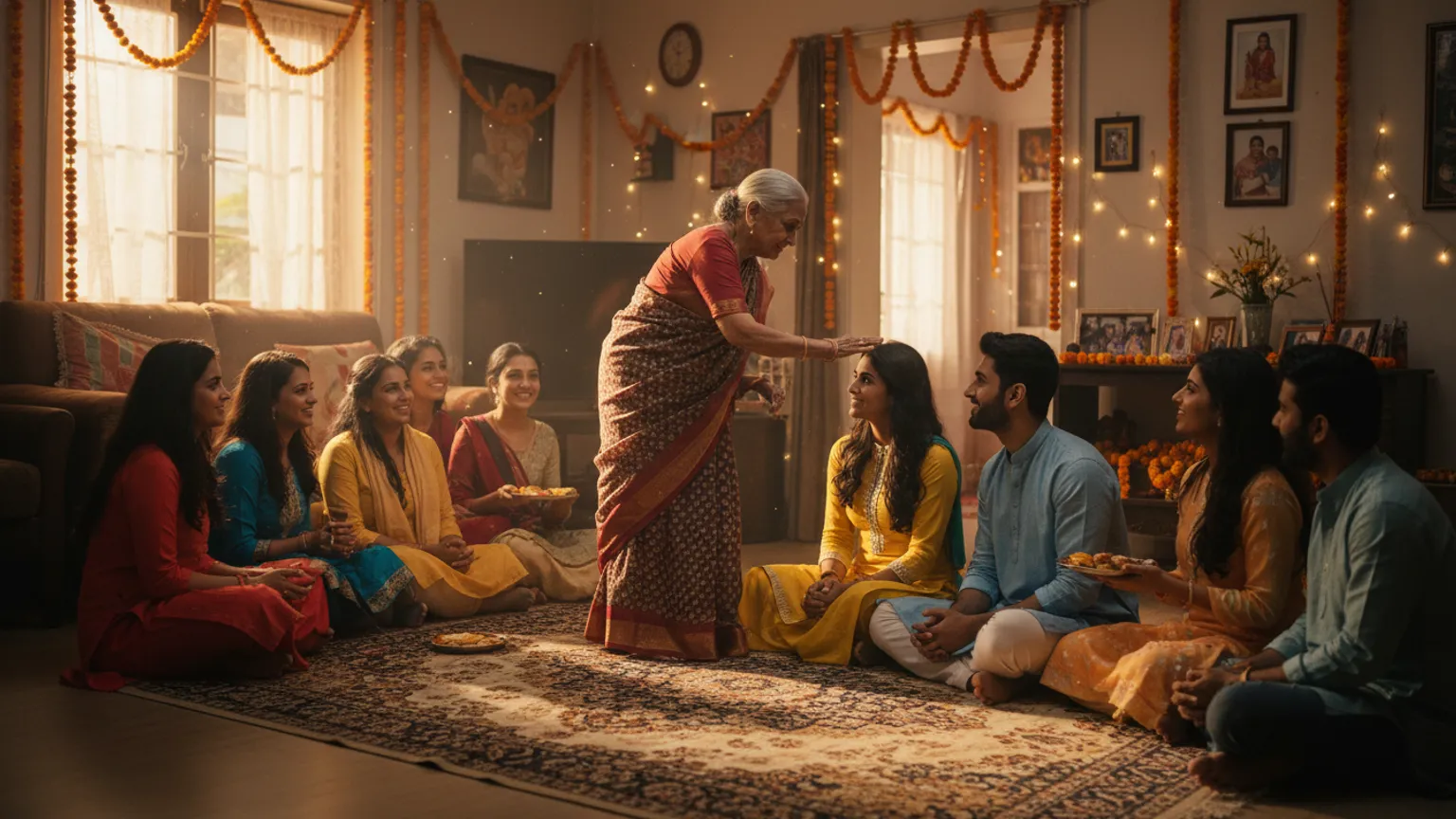
At my cousin's simple roka last year, I watched my chacha have the same three-minute argument at the door eleven times. He'd put "no gifts please, only your blessings" on the invite, and every single guest arrived with an envelope, held it out, heard "arre nahi nahi, iski koi zaroorat nahi thi," and then — after a small tug-of-war — left it on the side table anyway. By evening there was a neat pile of shagun envelopes next to the shoe rack that nobody had planned for, nobody had recorded, and nobody quite knew what to do with.
That pile taught me something I wish the invite had known: in Indian celebrations, "no gifts" is never a full stop. It's the opening line of a negotiation. Writing "aashirwad hi kaafi hai" doesn't stop shagun — it changes its shape. This piece is about writing that line honestly, so it does the work you actually want it to do, and about handling what walks through the door regardless.
First, decide what you actually mean
Before you pick words, get clear on the intent — because "no gifts" on an Indian card can mean four very different things, and guests can't read your mind.
- "Genuinely bring nothing." Rare, and honestly hard to enforce at a wedding or griha pravesh. Works best for casual events — a birthday, a farewell, a kitty party.
- "No physical gifts, but shagun/cash is fine." Extremely common and usually the real intent for weddings, engagements, and milestone functions. Elders will give an envelope no matter what your card says.
- "Don't spend on us — put it toward a cause." The donation redirect. Increasingly popular, feels graceful, but needs a specific instruction or it collapses into "nothing."
- "We mean it, please respect it." A firm no-gifts, often for second weddings, retirement dos, or hosts who genuinely have everything. This one needs the warmest wording of all, because a firm line can read as cold.
Pick one before you write a syllable. The most awkward invites I've seen are the ones where the host hadn't decided, so the line said "no gifts" while the family fully expected shagun — and guests were left guessing.
The honest truth about shagun
Here's the part most "elegant wording" articles skip: at weddings and big-ticket functions, refusing shagun outright can quietly offend the people who love you most. For a lot of elders, that envelope isn't a transaction — it's a blessing with a rupee note folded inside, the ₹101 or ₹501 that makes it shagun and not just cash. Telling your nani "please don't," and meaning it, can land as "your blessing isn't welcome here."
So my rule of thumb, learned the slightly hard way:
- Casual and mid-size events (birthdays, farewells, house chai, anniversaries): a real "no gifts" is fine and kind. People are relieved.
- Weddings, engagements, first-child functions: don't fight shagun. Soften it — "your presence is the real gift" — but let the envelope happen with grace, and be ready to record it (more on that below).
- When you truly want nothing: give people somewhere else to point the impulse. A blank "no" leaves them anxious; a redirect gives them relief.
Being honest about this saved me a lot of doorway theatre. You are not obligated to accept every gift — but at certain functions, a graceful acceptance is the more loving choice than a principled refusal.
Wording that works, occasion by occasion
The right line changes with the event and the circle. Here's a table you can lift straight into your card or message.
| Occasion | Intent | Line to use |
|---|---|---|
| Birthday / kids' party | Truly no gifts | "No gifts please — bas bacche ka blessings de dijiye. Aap aa jao, wahi kaafi hai." |
| Griha pravesh | No gifts, blessings only | "Aapki shubh kaamnayein hi hamari sabse badi bhet hain — koi uphaar laane ki zaroorat nahi." |
| Engagement / roka | Soften, don't refuse shagun | "Your presence and aashirwad mean everything to us. Please don't feel any need to bring more than that." |
| Wedding | Accept shagun gracefully | "Aap sab ka aana aur aashirwad hi humare liye sab kuch hai." (Leave shagun unmentioned — the soft default.) |
| Retirement / 60th | Firm no gifts, warm tone | "Papa ne sab kuch de diya hai jo chahiye tha. Aap bas aaiye, hum saath mein ek shaam bitayenge — koi gift nahi." |
| Any event, donation redirect | Redirect to a cause | "In lieu of gifts, if you wish, you could support [cause/link] — but honestly, your presence is more than enough." |
Two small craft notes. First, always tie the "no gift" to a positive ask — "please come," "your blessings" — so the sentence ends on warmth, not a restriction. Second, put it near the end of the invite, after the details, never in the headline. Leading with "NO GIFTS" reads like a rule at the door; tucking it in at the close reads like a host being considerate.
Copy-paste WhatsApp templates
Edit the names and details and send. These are the exact shapes I use.
Template 1 — Griha pravesh / puja (Hinglish, blessings only)
Hum apne naye ghar ka griha pravesh Sunday, 24th ko kar rahe hain, aur aapko saath chahte hain. 🙏
Puja: 8:00 AM · Lunch: 12:30 PM onwards Address + Maps pin: [paste]
Ek chhoti si request — aapki shubh kaamnayein hi humare liye sabse badi bhet hain. Please koi gift laane ki zaroorat mat samajhiye. Bas aap aaiye. ❤️
Template 2 — Birthday (Hinglish, genuinely no gifts)
Aarav is turning 5! 🎉 Come celebrate with us Saturday, 4:30 PM at [venue].
Sirf ek baat — no gifts please. Aap logon ka aana aur bachhon ki masti, bas wahi chahiye. Cake ki extra slice pakki hai. 😄
Bas ye bata dena ki aap kitne log aa rahe ho, taaki hum uss hisaab se arrangement kar lein.
Template 3 — Retirement / milestone (firm but warm)
We're throwing a small evening for Papa's retirement on 30th, 7 PM at home.
34 saal ki service ke baad, unke paas sab kuch hai — so genuinely, no gifts. Aapka aana, do purani kahaniyan, aur ek cup chai — bas yahi celebration hai. Please respect this, hum sach mein serious hain. 🙏
Template 4 — Donation redirect (English/Hinglish)
Instead of gifts this year, we'd love it if you pointed that kindness somewhere it's needed — [cause + link]. Koi pressure nahi, and no need to tell us. Aapka aana hi kaafi hai.
Template 5 — The gentle deflection at the door (say this out loud)
"Arre iski kya zaroorat thi — par aap laaye ho toh aashirwad samajh ke rakh lete hain. Thank you, sach mein."
That last one matters more than any card line. When someone insists — and at weddings they will — a graceful yes beats a stubborn no. Accept, thank warmly, and move on. The doorway is not the place to win the argument.
What to actually do with the shagun that arrives
This is the mechanical bit nobody plans for, and it's where my chacha's side-table pile went wrong. If you're hosting anything wedding-sized, envelopes will come. Handle them like this:
- Assign one person to the envelope job. A cousin or sibling, not the host. Their entire task: quietly take each envelope, and note who it's from before it disappears into a pile.
- Record it the moment it arrives. Name and, if it's cash shagun, the amount — because Indian families reciprocate. When their function comes, tradition is often to return the shagun plus a little more, and you cannot do that from memory six months later.
- Keep it off the main floor. A designated bag or box in a back room. Loose envelopes on a side table near the entrance is how they get misplaced — or worse.
- Send thank-yous within a week. A short personal WhatsApp per person beats a group "thank you all." "Aapka shagun aur zyada aapka aana — dono ke liye dil se shukriya."
Here's a simple ledger format you can keep in a notes app or a sheet:
| Guest | From which side | Shagun/gift | Amount (if cash) | Thank-you sent? |
|---|---|---|---|---|
| Sharma uncle | Papa's office | Envelope | ₹1,100 | ✅ |
| Meena bua | Family | Steel dinner set | — | ⬜ |
| Rohan & Priya | Friends | Envelope | ₹2,100 | ⬜ |
If your list is fifteen people, this notebook-and-pen approach is honestly all you need — no app required, including ours. It's only when the guest list runs past a hundred across both families, and the same tool is already tracking your RSVPs and headcounts, that keeping the shagun notes beside the "who's coming" list starts to save real effort. That's the level where a single dashboard earns its place; below it, a notes app is genuinely fine, and I'd rather tell you that than upsell you.
When "no gifts" is the wrong call
A few honest counter-cases, because a blanket rule helps no one:
- When elders would be hurt. If refusing shagun would genuinely wound a grandparent or a close relative, let the envelope happen. The relationship outranks the principle.
- When it's a first function for a young couple starting out. Sometimes shagun is quietly meaningful help. A rigid "no" can deny people the joy of contributing.
- When you can't enforce it anyway. If you know your circle will bring gifts regardless, a loud "NO GIFTS" only creates doorway awkwardness. Better to stay soft and manage the acceptance gracefully.
Say "no gifts" when you mean it and can hold it kindly. Soften it when the culture around you will override it. And skip it entirely when mentioning gifts at all would create the very awkwardness you were trying to avoid.
The one line that does the most work
If you take nothing else from this: decide your intent first, tie the request to a warm "please come," and put it at the end of the invite. Then let the doorway be the doorway — accept what arrives with grace, record it if the event is big, and thank people properly afterward. The goal was never to police gifts. It was to make sure that on your day, the only thing anyone remembers giving, and receiving, was time together.
For more on the softer mechanics of Indian invitations, I've written about why guests don't RSVP and the full choreography of a griha pravesh invitation. And if you want to see how we keep guest lists, headcounts and notes in one place, take a look at how it works or the features page.
Related reading

Inviting NRI and outstation guests: timing, travel info and RSVP
How to invite NRI and outstation guests: when to send, what travel details to include, honest RSVP windows, plus copy-paste WhatsApp templates for each circle.
Your first guest list from scratch: the master-list method
First time hosting? The master-list method helps new hosts capture every guest before you cut anyone: sources, a ready template, and family-sweep scripts.

Save-the-date messages for Indian weddings: when to send and what to include
When to send a save-the-date for an Indian wedding, what to include (and leave out), plus copy-paste WhatsApp templates with Hinglish and NRI variants.